
FREE FRENCH PILOTS TO FLY WITH SOVIET AIR FORCE

Moscow, Soviet Union · November 28, 1942

On this date in 1942 twelve Free French pilots and their ground crews, flying from newly lib­er­ated Syria in the East­ern Med­i­ter­ra­nean, landed at their Iva­novo training cen­ter, 125 miles north­east of the Soviet capital, Moscow. Earlier in the year, in March, Gen. Charles de Gaulle, leader of the Free French govern­ment-in-exile, had ordered into being a new group of French fighter pilots and ground crew and offered their ser­vices to Soviet leader Joseph Stalin to fight along­side the Soviet Air Force. The admin­is­tration of U.S. Presi­dent Franklin D. Roose­velt had turned down a simi­lar offer of ser­vices de Gaulle made after the Japa­nese attack on Pearl Harbor.

Flying Soviet-built Yak fighters that sported Soviet markings and the French Nor­mandy em­blem, the Nor­mandie-Niémen Squad­ron saw its first com­bat mission in March 1943 when it flew escort for Soviet ground-attack bombers. On April 5, 1943, Nor­mandie pilots had their first two kills. The next month, Field Marshal Wil­helm Keitel, chief of the Oberkommando der Wehrmacht (Supreme High Com­mand of the Ger­man Armed Forces), signed an order that Normandie pilots were to be shot if captured.

The French squad­ron scored impres­sive victories with the Red Air Force in the epic Battle of Kursk (July 1943), when 2,000 Soviet planes en­gaged 1,800 Ger­man air­craft, and in the 1944 Soviet offen­sive in East Prussia. In one two-day period in mid-Octo­ber 1944, the volun­teer squad­ron, now grown to 50‑plus opera­tional pilots, downed 38 Ger­man air­craft to one of their own. (The French pilot was rescued.) In two years of service, 42 of their number were killed but over 30 became aces. Four were awarded the title of Hero of the Soviet Union. The squad­ron’s com­bat record of kills was the second highest in the Soviet Air Force. Collec­tively they downed a con­firmed 273 enemy air­craft with many more pro­bables. During 5,240 missions they also destroyed 27 trains, 22 loco­mo­tives, and 154 trucks and staff cars as well as an unknown number of tanks and armored vehicles.

The Nor­mandie-Niémen Squad­ron’s last assign­ment for the Soviets was clearing the skies of the rem­nants of the Luft­waffe during the battle for the German Baltic city of Koenigs­berg in April 1945. As a reward for their ser­vices, sym­bolic and in­signi­fi­cant in the grand scheme of the air war, Stalin pre­sented 40 Yak‑3s to the French pilots to use in returning home. The Yaks formed the nucleus of France’s postwar air force.


Free French Normandie-Niémen Airmen on Eastern Front, 1942–1945
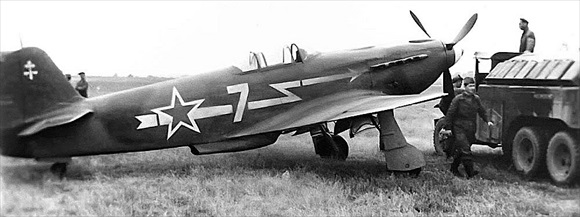
Normandie-Niémen Yak

Above: A Normandie-Niémen Yak. The cross of Lorraine has been painted on its tail. The accom­plish­ments of the Nor­man­die-Niémen are a source of great pride in France, and visitors can tour a museum at Le Bourget Airport in Paris that celebrates the squadron’s feats.

Normandie-Niémen pilots

Above: Normandie-Niémen pilots pose beside their Soviet fighter. De Gaulle, leader of the Free French Forces, believed it was impor­tant for French service­men to serve on all fronts in the war. The Norman­die-Niémen regi­ment was one of only two air com­bat units from an Allied West­ Euro­pean coun­try to par­tici­pate on the East­ern Front during World War II, the other being the British No. 151 Wing RAF. The Brit­ish pilots were stationed near the Soviets’ northern port of Murmansk during Septem­ber–Octo­ber 1941, pro­viding air cover for Arctic mer­chant con­voys and later pilot con­ver­sion training for Red Army Air Force pilots training on the Hawker Hurri­cane, the first Allied Lend-Lease aircraft to be delivered to the Soviet Union.

Monument to Normandie-Niémen pilots, Lefortovo Park, Moscow

Above: Monument to Normandie-Niémen Pilots. Russian President Vladimir Putin and French President Nicolas Sarkozy unveiled the monument to the Free French airmen in Moscow’s Lefortovo Park in 2007.

French Film Tells the Story of the Normandie-Nié­men Free French Pilots Who Fought on the Eastern Front from 1943 to 1945

httpv://youtu.be/x64KdF3-b78

Similar Posts

  • LUFTWAFFE KICKS OFF EAGLE DAY OVER BRITAIN

    London, England • August 13, 1940 Although the Battle of Britain (July 10 to October 31, 1940) had inten­si­fied days earlier, the Luft­waffe’s air attacks had been launched in poor weather and were mostly limited to the south of England. How­ever, on this date, August 13, 1940, a Tues­day, the Luft­waffe sent 5 waves of fighters, dive…

  • BUDAPEST GARRISON NOW SOVIET CAPTIVES

    Budapest, Hungary · February 14, 1945 On December 29, 1944, Soviet and Romanian troops (Romania was now a Soviet ally) began laying siege to Buda­pest, the capi­tal of Adolf Hitler’s vas­sal state of Hun­gary. Buda­pest, split in two by the River Danube, was a city of over 800,000 resi¬dents and refu­gees, in­cluding well over 100,000…

  • Les jeux à jackpot progressif Malina Casino qui valent le détour

    Découvrez l’univers des jackpots progressifs sur Malina Casino Les jeux à jackpot progressif sont une catégorie phare pour tous les amateurs de casinos en ligne. Sur https://malinascasino.fr/, cette offre est particulièrement mise en avant, avec une sélection variée et des jackpots qui peuvent atteindre des sommes astronomiques. Ces jeux se distinguent par leur capacité à…

  • Franklin Delano Roosevelt

    “No president since the founders has done more to shape the character of American government,” notes Alan Brinkley in this magnificent biography of America’s thirty-second president. “And no president since Lincoln has served through darker or more difficult times. Roosevelt thrived in crisis. It brought out his greatness, and his guile. It triggered his almost uncanny ability to communicate effectively with people of all kinds. And at times, it helped him excoriate his enemies, and to revel in doing so.”
    This brilliant, compact biography chronicles Franklin Delano Roosevelt’s rise from a childhood of privilege to a presidency that forever changed the face of international diplomacy, the American party system, and the government’s role in global and domestic policy. Brinkley, the National Book Award-winning New Deal historian, provides a clear, concise introduction to Roosevelt’s sphinx-like character and remarkable achievements. In a vivid narrative packed with telling anecdotes, the book moves swiftly from Roosevelt’s youth in upstate New York–characterized by an aristocratic lifestyle of trips to Europe and private tutoring–to his schooling at Harvard, his brief law career, and his initial entry into politics. From there, Brinkley chronicles Roosevelt’s rise to the presidency, a position in which FDR remained until death, through an unparalleled three-plus terms in office. Throughout the book, Brinkley elegantly blends FDR’s personal life with his professional one, providing a lens into the President’s struggles with polio and his somewhat distant relationship with the first lady.
    Franklin Delano Roosevelt led the United States through the worst economic crisis in the nation’s history and through the greatest and most terrible war ever recorded. His extraordinary legacy remains alive in our own troubled new century as a reminder of what bravery and strong leadership can accomplish.

  • ALLIES DISRUPT GERMAN DEFENSES IN FRANCE

    London, England · June 1, 1944 In June 1942 members of the French Resis­tance pro­vided British intel­li­gence with a copy of the top-secret blue­print of portions of Adolf Hitler’s Atlan­tic Wall—part of the defenses against the anti­ci­pated Allied in­va­sion of West­ern Europe. The map had been spirited from the office of the Ger­man public works…

  • HUGE NAVAL BATTLE IN CORAL SEA

    Port Moresby, Papua New Guinea · May 4, 1942 On this date in 1942 the five-day Battle of the Coral Sea began. A Japa­nese in­va­sion fleet was steaming toward the capital of Aus­tra­lian Papua New Gui­nea, Port Mores­by, which had the poten­tial of becoming, after Rabaul’s cap­ture ear­lier in Janu­ary, another major Japa­nese staging point…