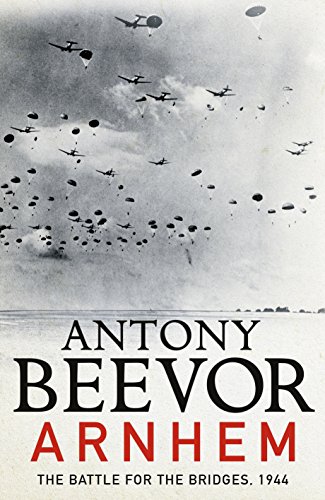
Arnhem: The Battle for the Bridges, 1944
ASIN: 0241326761
[amzn_product_post]

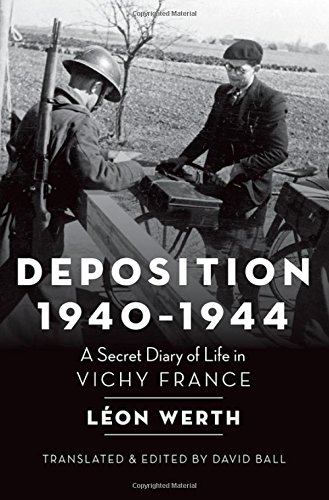
Historians agree: the diary of Léon Werth (1878-1955) is one of the most precious–and readable–pieces of testimony ever written about life in France under Nazi occupation and the Vichy regime. Werth was a free-spirited and unclassifiable writer. He is the author of eleven novels, art and dance criticism, acerbic political reporting, and memorable personal essays. He was Jewish, and left Paris in June 1940 to hide out in his wife’s country house in Saint-Amour, a small village in the Jura Mountains. His short memoir 33 Days recounts his struggle to get there. Deposition tells of daily life in the village, on nearby farms and towns, and finally back in Paris, where he draws the portrait of a Resistance network in his apartment and writes an eyewitness report of the insurrection that freed the city in August, 1944.
From Saint-Amour, we see both the Resistance in the countryside, derailing troop trains, punishing notorious collaborators–and growing repression: arrests, torture, deportation, and executions. Above all, we see how Vichy and the Occupation affect the lives of farmers and villagers and how their often contradictory attitudes evolve from 1940-1944. Werth’s ear for dialogue and novelist’s gift for creating characters animate the diary: in the markets and in town, we meet real French peasants and shopkeepers, railroad men and the patronne of the café at the station, schoolteachers and gendarmes. They come off the page alive, and the countryside and villages come alive with them.
With biting irony, Werth records, almost daily, what Vichy-German propaganda was saying on the radio and in the press. We follow the progress of the war as people did then, day by day. These entries make interesting, often amusing reading, a stark contrast with his gripping entries on the persecution and deportation of the Jews. Deposition is a varied and complex piece of living history, and a pleasure to read.
Antwerp, Belgium • September 4, 1944 Almost three months after D-Day British troops, assisted by members of the Belgian resistance, entered Antwerp on this date in 1944. They seized Belgium’s port on the Scheldt River before the Germans could destroy its installations. Opening Western Europe’s largest deep-water port, whose 10 square miles of docks, 20 miles of…
London, England • April 13, 1939 Following the Nazi occupation of Czechoslovakia’s German-speaking Sudetenland in October 1938 and the invasion and incorporation of the rest of Czechoslovakia into the Reich in mid-March 1939, Great Britain, France, Poland, Greece, and Romania entered into mutual assistance pacts in case of a military invasion by “a European power,”…
Near Holtzwihr, Colmar Area, Northeastern France · January 26, 1945 On this date in 1945 U.S. Army Second Lt. Audie Murphy, age 20, commanded an infantry company when it came under attack from two hundred German infantrymen and a half dozen tanks on the outskirts of Holtzwihr, near Colmar in northeastern France. Armed with an M1 carbine,…
Fort McClellan, Alabama • October 15, 1942 On this date in 1942 the 92nd Infantry Division was reactivated at Fort McClellan, Alabama. The famed African American infantry division, nicknamed “Buffalo Soldiers Division,” had served in World War I in France from July 1918 until it returned to the United States to be deactivated in February…
Belgrade, Yugoslavia • April 6, 1941 At the tail end of February 1941 British Commonwealth forces from Nigeria captured Mogadishu, capital of Italian Somaliland (part of today’s Somalia), after Benito Mussolini’s armies had abandoned any pretense of defending their East African colony. The Italian colony in the Horn of Africa, which in August 1940 absorbed…