France & French Resistance

  • They Fought Alone: The True Story of the Starr Brothers, British Secret Agents in Nazi-Occupied France

    “Highly detailed and fast-paced, Charles Glass’s They Fought Alone is a must-read for those whose passion is the Resistance literature of World War II.” —Alan Furst, author of A Hero of France

    From the bestselling author of Americans in Paris and The Deserters, the astounding story of Britain’s Special Operations Executive, one of World War II’s most important secret fighting forces

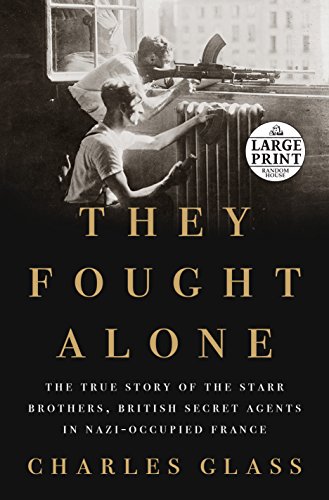
    As far as the public knew, Britain’s Special Operations Executive (SOE) did not exist. After the defeat of the French Army and Britain’s retreat from the Continent in June 1940, Prime Minister Winston Churchill created the top-secret espionage operation to “set Europe ablaze.” The agents infiltrated Nazi-occupied territory, parachuting behind enemy lines and hiding in plain sight, quietly but forcefully recruiting, training, and arming local French résistants to attack the German war machine. SOE would not only change the course of the war, but the nature of combat itself. Of the many brave men and women conscripted, two Anglo-American recruits, the Starr brothers, stood out to become legendary figures to the guerillas, assassins, and saboteurs they led.

    While both brothers were sent across the channel to organize against the Germans, their fates in war could hardly have been more different. Captain George Starr commanded networks of résistants in southwest France, cutting German communications, destroying weapons factories, and delaying the arrival of Nazi troops to Normandy by seventeen days after D-Day. Younger brother Lieutenant John Starr laid groundwork for resistance in the Burgundy countryside until he was betrayed, captured, tortured, and imprisoned by the Nazis in France and sent to a series of concentration camps in Germany and Austria. Feats of boldness and bravado were many, but appalling scandals, including George’s supposed torture and execution of Nazis prisoners, and John’s alleged collaboration with his German captors, overshadowed them all. At the war’s end, Britain, France, and the United States awarded both brothers medals for heroism, and George would become one of only three among thousands of SOE operatives to achieve the rank of colonel. Yet, their battle honors did little to allay postwar allegations against them, and when they returned to England, their government accused both brothers of heinous war crimes.

    Here, for the first time, is the story of one of the great clandestine organizations of World War II, and of two heroic brothers whose ordeals during and after the war challenged the accepted myths of Britain’s wartime resistance in occupied France. Written with complete and unrivaled access to only recently declassified documents from Britain’s SOE files, French archives, family letters, diaries, and court records, along with interviews from surviving wartime Resistance fighters, They Fought Alone is a real-life thriller. Renowned journalist and war correspondent Charles Glass exposes a dramatic tale of spies, sabotage, and the daring men and women who risked everything to change the course of World War II.
  • De Gaulle

    “A masterly study of Charles de Gaulle…that leaves not a scintilla of doubt about his greatness.”
    Sunday Times

    “In crafting the finest one-volume life of de Gaulle in English, Julian Jackson has come closer than anyone before him to demystifying this conservative at war with the status quo, for whom national interests were inseparable from personal honor.”
    ―Richard Norton Smith, Wall Street Journal

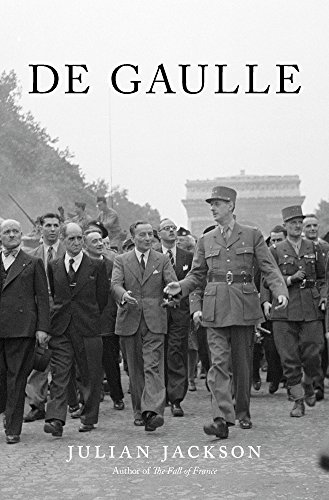
    In the early summer of 1940, when France was overrun by German troops, one junior general who had fought in the trenches in Verdun refused to accept defeat. He fled to London, where he took to the radio to address his compatriots back home. “Whatever happens,” he said, “the flame of French resistance must not be extinguished and will not be extinguished.” At that moment, Charles de Gaulle entered history.

    For the rest of the war, de Gaulle insisted he and his Free French movement were the true embodiment of France. Through sheer force of personality he inspired French men and women to risk their lives to resist the Nazi occupation. Sometimes aloof but confident in his leadership, he quarreled violently with Churchill and Roosevelt. Yet they knew they would need his help to rebuild a shattered Europe. Thanks to de Gaulle, France was recognized as one of the victorious Allies when Germany was finally defeated. Then, as President of the Fifth Republic, he brought France to the brink of a civil war over his controversial decision to pull out of Algeria. He challenged American hegemony, took France out of NATO, and twice vetoed British entry into the European Community in his pursuit of what he called “a certain idea of France.”

    Julian Jackson’s magnificent biography, the first major reconsideration in over twenty years, captures this titanic figure as never before. Drawing on the extensive resources of the recently opened de Gaulle archives, Jackson reveals the conservative roots of de Gaulle’s intellectual formation, sheds new light on his relationship with Churchill, and shows how he confronted riots at home and violent independence movements from the Middle East to Vietnam. No previous biography has so vividly depicted this towering figure whose legacy remains deeply contested.

  • They Fought Alone: The True Story of the Starr Brothers, British Secret Agents in Nazi-Occupied France

    From the bestselling author of Americans in Paris and The Deserters, the untold story of Britain’s Special Operations Executive, one of World War II’s most important secret fighting forces

    As far as the public knew, Britain’s Special Operations Executive did not exist. After the defeat of the French Army, Prime Minister Winston Churchill created the top-secret espionage operation to “set Europe ablaze,” and the SOE remained below the radar until the end of World War II. The agents infiltrated Nazi-occupied France, parachuting behind enemy lines and hiding in plain sight, quietly but forcefully recruiting, training, and arming the local French résistants willing to aid in sabotage of the German war machine. The SOE would not only change the course of the war, but the very nature of combat itself. Of the many brave men and women conscripted, two Anglo-American recruits, the Starr brothers, stood out to become legendary figures to the guerillas, assassins, and saboteurs they led.

    While both brothers were sent across the channel to organize against the Germans, their fates in war could hardly have been more different. Captain George Starr commanded networks of résistants in southwest France, cutting German communications, destroying weapons factories, and delaying the arrival of Nazi troops to Normandy by seventeen days after D-Day. Younger brother Lieutenant John Starr laid groundwork for resistance in the Burgundy countryside until he was betrayed, captured, tortured and imprisoned at Gestapo headquarters and forced labor camps. Feats of boldness and bravado were many, but appalling scandals, including George’s supposed torture and execution of Nazis prisoners, and John’s alleged collaboration with his German captors, overshadowed them all. At the war’s end, Britain, France, and the United States awarded both brothers medals for heroism, and George would become one of only three among thousands of SOE operatives to achieve the rank of colonel. Yet, their battle honors did little to allay post-war allegations against them, and when they returned to England, their government accused both brothers of war crimes.

    Here, for the first time, is the story of one of the last secret organizations of World War II, and of two brothers whose ordeals during and after the war challenged the accepted myths of Britain’s wartime resistance in occupied France. Written with complete and unrivaled access to only recently declassified documents from Britain’s SOE, family letters, diaries, and court records, along with interviews from surviving wartime Resistance fighters, They Fought Alone is a real-life thriller. Renowned journalist and war correspondent Charles Glass exposes a dramatic tale of spies, sabotage, and the daring men and women who risked everything to change the course of World War II.
  • Deposition 1940-1944: A Secret Diary of Life in Vichy France

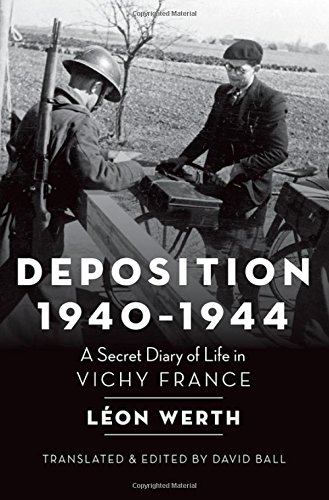
    Historians agree: the diary of Léon Werth (1878-1955) is one of the most precious–and readable–pieces of testimony ever written about life in France under Nazi occupation and the Vichy regime. Werth was a free-spirited and unclassifiable writer. He is the author of eleven novels, art and dance criticism, acerbic political reporting, and memorable personal essays. He was Jewish, and left Paris in June 1940 to hide out in his wife’s country house in Saint-Amour, a small village in the Jura Mountains. His short memoir 33 Days recounts his struggle to get there. Deposition tells of daily life in the village, on nearby farms and towns, and finally back in Paris, where he draws the portrait of a Resistance network in his apartment and writes an eyewitness report of the insurrection that freed the city in August, 1944.

    From Saint-Amour, we see both the Resistance in the countryside, derailing troop trains, punishing notorious collaborators–and growing repression: arrests, torture, deportation, and executions. Above all, we see how Vichy and the Occupation affect the lives of farmers and villagers and how their often contradictory attitudes evolve from 1940-1944. Werth’s ear for dialogue and novelist’s gift for creating characters animate the diary: in the markets and in town, we meet real French peasants and shopkeepers, railroad men and the patronne of the café at the station, schoolteachers and gendarmes. They come off the page alive, and the countryside and villages come alive with them.

    With biting irony, Werth records, almost daily, what Vichy-German propaganda was saying on the radio and in the press. We follow the progress of the war as people did then, day by day. These entries make interesting, often amusing reading, a stark contrast with his gripping entries on the persecution and deportation of the Jews. Deposition is a varied and complex piece of living history, and a pleasure to read.

  • Case Red: The Collapse of France

    Although the story of the German Fall Gelb offensive against France, Belgium, and Holland in May 1940 is well known, most accounts tend to stop with the conclusion of the evacuation of the British Expeditionary Force (BEF) from Dunkirk on June 4, 1940. The German operation that actually conquered metropolitan France, Fall Rot (Case Red), is usually glossed over in brief. Nor are many people aware today that there was a second BEF in France, which was also successfully evacuated by sea. The current literature on the Western campaign of 1940 essentially spotlights the German drive to the English Channel and the Dunkirk evacuation then skips ahead to the French armistice, skipping over the military, political, and human drama of France’s collapse in June 1940.

    Indeed, some of the most interesting military operations of the 1940 campaign were conducted in June 1940, as the Allies mounted a vigorous counterattack at Abbeville (including the British 1st Armoured Division–the first time that the British Army employed an armored division in combat) and then mounted a tough defense along the Somme River. Unlike the easy breakthrough at Sedan, the Germans had to fight hard to break through the Weygand Line. Churchill decided to send a second BEF to France to support the French, but the Germans finally achieved a decisive breakthrough before it could be effectively deployed. The British were forced to mount a second evacuation from the ports of Le Havre, Cherbourg, Brest, and St. Nazaire, which rescued over 200,000 troops, although the transport RMS Lancastria was sunk by German bombers, with the loss of over 4,000 troops. While France was in its death throes, politicians and soldiers debated what to do–flee to England or North Africa or to seek an armistice.

    The drama of the final three weeks of military operations in France in June 1940 has never effectively been captured on paper, but this is a story that needs to be told since it had great impact on the course of World War II and inter-Allied relations. This book will also address the initial German exploitation of France and how the windfall of captured military equipment, fuel and industrial resources enhanced the Third Reich’s ability to attack its next foe–the Soviet Union.

  • Les Parisiennes: How the Women of Paris Lived, Loved, and Died Under Nazi Occupation

    “Anne Sebba has the nearly miraculous gift of combining the vivid intimacy of the lives of women during The Occupation with the history of the time. This is a remarkable book.” ―Edmund de Waal, New York Times bestselling author of The Hare with the Amber Eyes

    New York Times bestselling author Anne Sebba explores a devastating period in Paris’s history and tells the stories of how women survived―or didn’t―during the Nazi occupation.

    Paris in the 1940s was a place of fear, power, aggression, courage, deprivation, and secrets. During the occupation, the swastika flew from the Eiffel Tower and danger lurked on every corner. While Parisian men were either fighting at the front or captured and forced to work in German factories, the women of Paris were left behind where they would come face to face with the German conquerors on a daily basis, as waitresses, shop assistants, or wives and mothers, increasingly desperate to find food to feed their families as hunger became part of everyday life.

    When the Nazis and the puppet Vichy regime began rounding up Jews to ship east to concentration camps, the full horror of the war was brought home and the choice between collaboration and resistance became unavoidable. Sebba focuses on the role of women, many of whom faced life and death decisions every day. After the war ended, there would be a fierce settling of accounts between those who made peace with or, worse, helped the occupiers and those who fought the Nazis in any way they could.

  • | |

    Nazi Paris: The History of an Occupation, 1940-1944

    CHOICE OUTSTANDING ACADEMIC TITLE 2009

    “…an essential book. It provides precise facts and figures for many issues that have heretofore been presented in impressionistic terms.” · The International History Review

    Basing his extensive research into hitherto unexploited archival documentation on both sides of the Rhine, Allan Mitchell has uncovered the inner workings of the German military regime from the Wehrmacht’s triumphal entry into Paris in June 1940 to its ignominious withdrawal in August 1944. Although mindful of the French experience and the fundamental issue of collaboration, the author concentrates on the complex problems of occupying a foreign territory after a surprisingly swift conquest. By exploring in detail such topics as the regulation of public comportment, economic policy, forced labor, culture and propaganda, police activity, persecution and deportation of Jews, assassinations, executions, and torture, this study supersedes earlier attempts to investigate the German domination and exploitation of wartime France. In doing so, these findings provide an invaluable complement to the work of scholars who have viewed those dark years exclusively or mainly from the French perspective.