Missions & Campaigns

  • Normandy ’44: D-Day and the Epic 77-Day Battle for France

    D-Day, June 6, 1944, and the seventy-six days of bitter fighting in Normandy that followed the Allied landing, have become the defining episode of World War II in the west―the object of books, films, television series, and documentaries. Yet as familiar as it is, as James Holland makes clear in his definitive history, many parts of the OVERLORD campaign, as it was known, are still shrouded in myth and assumed knowledge.

    Drawing freshly on widespread archives and on the testimonies of eye-witnesses, Holland relates the extraordinary planning that made Allied victory in France possible; indeed, the story of how hundreds of thousands of men, and mountains of materiel, were transported across the English Channel, is as dramatic a human achievement as any battlefield exploit. The brutal landings on the five beaches and subsequent battles across the plains and through the lanes and hedgerows of Normandy―a campaign that, in terms of daily casualties, was worse than any in World War I―come vividly to life in conferences where the strategic decisions of Eisenhower, Rommel, Montgomery, and other commanders were made, and through the memories of paratrooper Lieutenant Dick Winters of Easy Company, British corporal and tanker Reg Spittles, Thunderbolt pilot Archie Maltbie, German ordnance officer Hans Heinze, French resistance leader Robert Leblanc, and many others.

    For both sides, the challenges were enormous. The Allies confronted a disciplined German army stretched to its limit, which nonetheless caused tactics to be adjusted on the fly. Ultimately ingenuity, determination, and immense materiel strength―delivered with operational brilliance―made the difference. A stirring narrative by a pre-eminent historian, Normandy ‘44 offers important new perspective on one of history’s most dramatic military engagements and is an invaluable addition to the literature of war.
  • Countdown to Pearl Harbor: The Twelve Days to the Attack

    A Smithsonian Top History Book of 2016
    A Japan Times Best Book About Japan of 2016

    A fascinating look at the twelve days leading up to the Japanese attack on Pearl Harbor—the warnings, clues and missteps—by a Pulitzer Prize–winning reporter.

    In Washington, DC, in late November 1941, admirals compose the most ominous message in Navy history to warn Hawaii of possible danger, but they write it too vaguely. They think precautions are being taken, but never check to see if they are. A key intelligence officer wants more warnings sent, but he is on the losing end of a bureaucratic battle and can’t get the message out. American sleuths have pierced Japan’s most vital diplomatic code, and Washington believes it has a window on the enemy’s soul—but it does not.

    In a small office at Pearl Harbor, overlooking the battleships at the heart of America’s seafaring power, the Commander of the Pacific Fleet tries to figure out how much danger he really faces. His intelligence unit has lost track of Japan’s biggest aircraft carriers, but assumes they are resting in a port far away. The admiral thinks Pearl is too shallow for torpedoes, so he never puts up a barrier. As he frets, a Japanese spy is counting the warships in the harbor and reporting to Tokyo.

    There were false assumptions, and racist ones: The Japanese aren’t very good aviators and they don’t have the nerve or the skill to attempt a strike so far from their home. There were misunderstandings, conflicting desires, painful choices. And there was a naval officer who, on his very first mission as captain of his very first ship, did exactly the right thing. His warning could have averted disaster, but his superiors reacted too leisurely. Japanese planes arrived moments later.

    Twomey’s telescoping of the twelve days leading to the attack unravels the crucial characters and moments, and produces an edge-of-your seat drama with fascinating details about America at this moment in its history. By the end, the reader understands how assumption is the root of disaster, and how sometimes a gamble pays off.

  • The 101st Airborne in Normandy: June 1944 (Casemate Illustrated)

    101st Airborne Division was activated in August 1942 in Louisiana, and its first combat mission was Operation Overlord. On D-Day—June 6, 1944—101st and 82nd Airborne dropped onto the Cotentin peninsula hours before the landings, tasked with capturing bridges and positions, taking out German strongpoints and batteries, and securing the exits from Utah and Omaha Beaches. Things did not initially go smoothly for 101st Airborne, with cloud and antiaircraft fire disrupting the drops, resulting in some units landing scattered over a large area outside their designated drop zones and having to waste time assembling—stymied by lost or damaged radio equipment—or trying to achieve their objectives with severely reduced numbers.

    Casualties were high in some areas due to heavy pre-registered German fire. Nevertheless, the paratroopers fought on and they did manage to secure the crucial beach exits, even if they only achieved a tenuous hold on some other positions. A few days later, 101st Airborne were tasked with attacking the German-held city of Carentan as part of the consolidation of the US beachheads and establishment of a defensive line against the anticipated German counteroffensive. The 101st forced their way into Carentan on 10 and 11 June. The Germans withdrew the following day, and a counteroffensive was put down by elements of the 2nd Armored Division.

    This fully illustrated book details the planning of the airborne element of D-Day, and the execution of the plans until the troops were withdrawn to prepare for the next big airborne operation, Market Garden.

    Table of Contents

    Planning and Preparation
    Airborne Invasion
    “E” is for Easy
    The 101st in Carentan

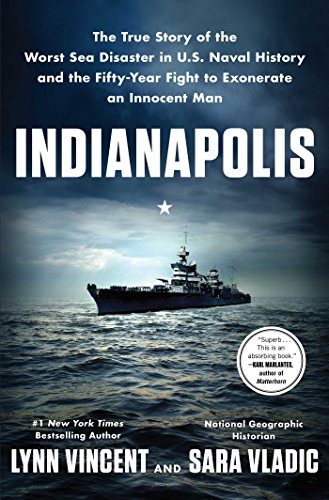
  • Indianapolis: The True Story of the Worst Sea Disaster in U.S. Naval History and the Fifty-Year Fight to Exonerate an…

    A human drama unlike any other—the riveting and definitive full story of the worst sea disaster in United States naval history.

    “ENTHRALLING.” —Kirkus Reviews (starred review) • “OUTSTANDING…A MUST-READ.” —Booklist (starred review) • “GRIPPING.” —Publishers Weekly

    Just after midnight on July 30, 1945, days after delivering the components of the atomic bomb from California to the Pacific Islands in the most highly classified naval mission of the war, USS Indianapolis is sailing alone in the center of the Philippine Sea when she is struck by two Japanese torpedoes. The ship is instantly transformed into a fiery cauldron and sinks within minutes. Some 300 men go down with the ship. Nearly 900 make it into the water alive. For the next five nights and four days, almost three hundred miles from the nearest land, the men battle injuries, sharks, dehydration, insanity, and eventually each other. Only 316 will survive.

    For the better part of a century, the story of USS Indianapolis has been understood as a sinking tale. The reality, however, is far more complicated—and compelling. Now, for the first time, thanks to a decade of original research and interviews with 107 survivors and eyewit­nesses, Lynn Vincent and Sara Vladic tell the complete story of the ship, her crew, and their final mission to save one of their own.

    It begins in 1932, when Indianapolis is christened and launched as the ship of state for President Franklin Roosevelt. After Pearl Harbor, Indianapolis leads the charge to the Pacific Islands, notching an unbroken string of victories in an uncharted theater of war. Then, under orders from President Harry Truman, the ship takes aboard a superspy and embarks on her final world-changing mission: delivering the core of the atomic bomb to the Pacific for the strike on Hiroshima. Vincent and Vladic provide a visceral, moment-by-moment account of the disaster that unfolds days later after the Japanese torpedo attack, from the chaos on board the sinking ship to the first moments of shock as the crew plunge into the remote waters of the Philippine Sea, to the long days and nights during which terror and hunger morph into delusion and desperation, and the men must band together to survive.

    Then, for the first time, the authors go beyond the men’s rescue to chronicle Indianapolis’s extraordinary final mission: the survivors’ fifty-year fight for justice on behalf of their skipper, Captain Charles McVay III, who is wrongly court-martialed for the sinking. What follows is a captivating courtroom drama that weaves through generations of American presidents, from Harry Truman to George W. Bush, and forever entwines the lives of three captains—McVay, whose life and career are never the same after the scandal; Mochitsura Hashimoto, the Japanese sub commander who sinks Indianapolis but later joins the battle to exonerate McVay; and William Toti, the captain of the modern-day submarine Indianapolis, who helps the survivors fight to vindicate their captain.

    A sweeping saga of survival, sacrifice, justice, and love, Indianapolis stands as both groundbreaking naval history and spellbinding narrative—and brings the ship and her heroic crew back to full, vivid, unforgettable life. It is the definitive account of one of the most remarkable episodes in American history.

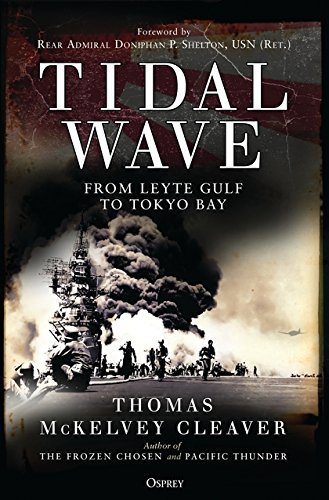
  • Tidal Wave: From Leyte Gulf to Tokyo Bay

    The United States Navy won such overwhelming victories in 1944 that, had the navy faced a different enemy, the war would have been over at the conclusion of the Battle of Leyte Gulf.

    However, in the moment of victory on 25 October 1944, the US Navy found itself confronting an enemy that had been inconceivable until it appeared. The kamikaze, ‘divine wind’ in Japanese, was something Americans were totally unprepared for; a violation of every belief held in the West. The attacks were terrifying: regardless of the damage inflicted on an attacking airplane, there was no certainty of safety aboard the ship until that airplane was completely destroyed.

    Based on first-person accounts, Tidal Wave is the story of the naval campaigns in the Pacific from the victory at Leyte Gulf to the end of the war, in which the US Navy would fight harder for survival than ever before.

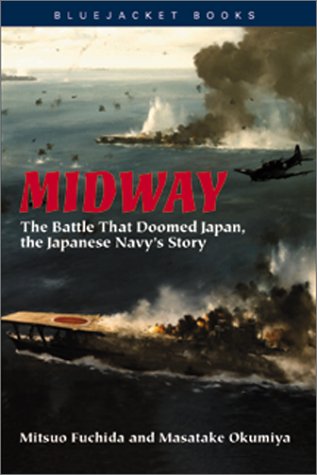
  • Midway: The Battle That Doomed Japan, the Japanese Navy’s Story (Bluejacket Books)

    This landmark study was first published in English by the Naval Institute in 1955 and was added to the Classics of Naval Literature series in 1992. Widely acknowledged for its valuable Japanese insights into the battle that turned that tide of war in the Pacific, the book has made a great impact on American readers over the years. Two Japanese naval aviators who participated in the operation provide an unsparing analysis of what caused Japan’s staggering defeat.

    Mitsuo Fuchida, who led the first air strike on Pearl Harbor, commanded the Akagi carrier air group and later made a study of the battle at the Japanese Naval War College. Masatake Okumiya, one of Japan’s first dive-bomber pilots, was aboard the light carrier Ryujo and later served as a staff officer in a carrier division. Armed with knowledge of top-secret documents destroyed by the Japanese and access to private papers, they show the operation to be ill-conceived and poorly planned and executed, and fault their flag officers for lacking initiative, leadership, and clear thinking. With an introduction by an author known for his study of the battle from the American perspective, the work continues to make a significant contribution to World War II literature.

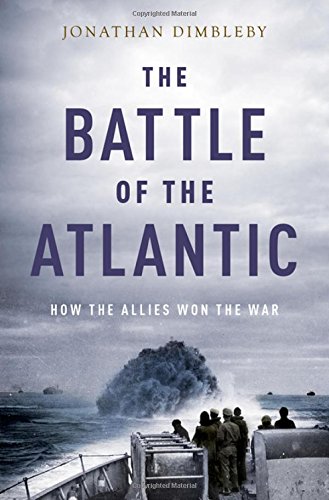
  • The Battle of the Atlantic: How the Allies Won the War

    “The only thing that ever really frightened me during the war was the U-boat peril,” wrote Winston Churchill in his monumental history of World War II. His fear was shared by many. The North Atlantic was arguably the true front of the war for Europe, and the stakes there were terrifyingly high. Had Germany succeeded in cutting off the supply of American ships, England might not have held out. In a cable to Churchill in May 1941, Franklin Roosevelt put it plainly, “I believe the outcome of this struggle is going to be decided in the Atlantic and unless Hitler can win there he cannot win anywhere in the world in the end.”

    Hitler knew what was at stake. The shipping lanes of the Atlantic became the main target of the Kriegsmarine operations early in the war. Between 1940 and 1945 the death rate there was higher than in any other theater of the entire war, for both sides. The enemy was always and constantly there and waiting, lying just over the horizon or lurking beneath the waves. The conflict consisted of not one battle but hundreds, ranging from hours to days in duration, and forcing both sides into constant innovation and white-knuckled, nightmarish second-guessing, trying desperately to gain the advantage of every encounter. Some of this took place in treacherous seas with mountainous swells, in water so cold that survival in it could be counted in mere minutes.

    Jonathan Dimbleby’s The Battle of the Atlantic offers a detailed and immersive account of this massive and decisive campaign, placing it within the context of the war as a whole. Dimbleby delves into the politics on both sides of the Atlantic, revealing the role of Bletchley Park and the complex and dynamic relationship between America and England. He uses contemporary diaries and letters from leaders and sailors to chilling effect, evoking the lives and experiences of those who fought. This is the definitive account of the longest battle of World War II.

  • Arnhem: The Battle for the Bridges, 1944

    The great airborne battle for the bridges in 1944 by Britain’s Number One bestselling historian and author of the classic Stalingrad On 17 September 1944, General Kurt Student, the founder of Nazi Germany’s parachute forces, heard the growing roar of aero engines. He went out on to his balcony above the flat landscape of southern Holland to watch the vast air armada of Dakotas and gliders,carrying the British 1st Airborne and the American 101st and 82nd Airborne Divisions. He gazed up in envy at the greatest demonstration of paratroop power ever seen. Operation Market Garden, the plan to end the war by capturing the bridges leading to the Lower Rhine and beyond, was a bold concept: the Americans thought it unusually bold for Field Marshal Montgomery. But the cost of failure was horrendous, above all for the Dutch who risked everything to help. German reprisals were cruel and lasted until the end of the war. The British fascination for heroic failure has clouded the story of Arnhem in myths, not least that victory was possible when in fact the plan imposed by Montgomery and General ‘Boy’ Browning was doomed from the start. Antony Beevor, using many overlooked and new sources from Dutch, British, American, Polish and German archives, has reconstructed the terrible reality of this epic clash. Yet this book, written in Beevor’s inimitable and gripping narrative style, is about much more than a single dramatic battle. It looks into the very heart of war.