CHURCHILL ADDRESSES U.S. AND CANADIAN LAWMAKERS
Ottawa, Canada · December 30, 1941
On December 28, 1941, British Prime Minister Winston Churchill left Washington’s Union Station for Canada. Six days earlier Churchill and his military and civilian advisers had arrived in the nation’s capital to meet with their American and Canadian counterparts. The visit by the two heads of state between Christmas and mid‑January 1942 was the first strategic conference Churchill and President Franklin D. Roosevelt had had since the Japanese surprise attack on U.S. military installations at Pearl Harbor, Hawaii, a little more than three weeks earlier, and it came at Churchill’s urgent request. The principal topics raised during December’s Arcadia Conference, also called the First Washington Conference, concerned the formation of a combined Allied command (ABDA, or American-British-Dutch-Australian), the inclusion of Joseph Stalin’s Soviet Union in the Lend-Lease Program signed into law the previous March by Roosevelt, assistance to U.S. forces besieged by Japanese forces in the Philippines, placing U.S. personnel in the Danish possession of Iceland in the mid‑Atlantic and in Great Britain, and the wording of the United Nations Declaration, issued on January 1, 1942, which was a pledge by 26 Allied countries to commit the bulk of their resources to subduing Nazi Germany first. The pledge followed on a decision by Roosevelt, Churchill, and their staff to pursue a “Europe first” strategy in executing the war against the Axis. (In reality, the U.S. concentrated most of its resources to halting, then reversing Japanese advances in the Pacific, deploying 70 percent of the U.S. Navy and all the Marine Corps in the Pacific; not until 1944 was the majority of U.S. resources directed toward defeating Germany.) In the Canadian capital of Ottawa, Churchill addressed Parliament on this date in 1941 in a masterful performance similar to the one he gave before a joint session of the U.S. Congress several days earlier, except this time he spoke in English and French. Between passing from the Canadian House of Commons chamber to an anteroom, Churchill paused two minutes before the camera of an Armenian-born Canadian. Yousuf Karsh’s iconic “bulldog” photo of a scowling, belligerent, head-thrust-forward Churchill become one of the most memorable portrait images in history.
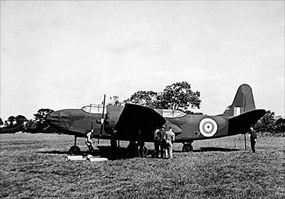
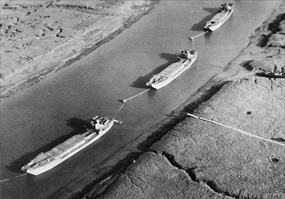
The large-scale Normandy invasion surprised the Germans. “When they [the Allies] have established bridgeheads in the Normandy and Brittany peninsulas and have sized up their prospects,” Hitler predicted with assurance to Japanese ambassador Baron Hiroshi Ōshima on May 27, 1944, at his Bavarian residence, “they will then come forward with an all-out second front across the Straits of Dover.” (For his part, Rommel stopped believing in a second Allied front.) For nearly seven weeks, the Allies’ ruse de guerre led Hitler to delay sending reinforcements from the Pas-de-Calais region to Normandy. On July 1, Hitler’s chief of staff on the OKW, Field Marshal Wilhelm Keitel, telephoned Field Marshal Gerd von Rundstedt, Commander-in-Chief West, frantically seeking advice on what to do next. Rundstedt did not mince words: “The writing [is] on the wall, make peace you fools.” Rundstedt was relieved of his command within the month, his sage advice ignored for nearly a year.
Operation Fortitude: Western Allies’ Strategic Deception Warfare, January–August 1944
 |
 |
Left: A dummy
[fblike]
[amazon_carousel widget_type=”ASINList” width=”600″ height=”200″ title=”Recommended Reading” market_place=”US” shuffle_products=”False” show_border=”False” asin=”0805023968,0143112643,140007732X,0786888709,0306821974,081099643X,0812971442,0812993330,1844861198,0143117998″ /]
Winston Churchill’s Visit to the U.S. Congress and the Canadian Parliament, December 1941
 |
Above: Yousuf Karsh’s iconic portrait of Churchill appeared on the cover of Life Magazine on May 21, 1945. The image of Churchill brought Karsh international prominence and is reputed to be the most reproduced photographic portrait in history. Nice work for a man who claimed he was filled with dread meeting Churchill, whose scowl deepened when the photographer dared to remove Churchill’s trademark cigar out of the great man’s mouth.
Churchill’s Address to a Joint Session of the U.S. Congress, December 26, 1941: “Now We Are the Masters of Our Fate”
httpv://youtu.be/SOQwa73KXbs