
NAZIS JAIL OUTSPOKEN PASTOR NIEMOELLER

Berlin, Germany · July 1, 1937

On this date in 1937 the Gestapo (German secret police) arrested out­spoken Lutheran theo­logian and pastor Martin Nie­moeller. The next year Nie­moeller was tried for acti­vi­ties against the State. Released after the trial, Nie­moeller was rearrested—presumably because Deputy Fuehrer Rudolf Hess decided to take “merci­less action” against the clergy­man when the court didn’t. Nie­moeller spent the next eight years in Sach­sen­hausen and Dachau concen­tra­tion camps as a “per­sonal pri­soner” of Adolf Hitler.

Initially a sup­porter of Hitler, Nie­moeller became (like his col­league-in-faith, theo­logian Dietrich Bon­hoeffer) one of the founders of Ger­many’s Con­fessing Church (Beken­nende Kirche), which arose in the 1930s in oppo­si­tion to state-spon­sored efforts to Nazify Ger­man churches and “dejudaize” Jesus and the New Testa­ment. He opposed the Nazis’ Aryan Para­graph, which first appeared in the April 1933 Reich Civil Ser­vice Law but found its way into all sorts of public and eccle­si­as­tical sta­tutes that stig­matized and mar­gin­alized non-German Volk and Ger­mans of Jewish descent. For in­stance, the Aryan Para­graph removed “non-Aryan” clergy from offi­cial church posi­tions and rosters lest their theo­logy under­mine the nation’s Christian faith and family life.

The 1930s “Deutsche Christen” move­ment of clergy and lay people pro­pa­gated anti-Semitic, voelkisch (chau­vinist) ideas in Ger­man schools, on church councils, and in other social arenas. Few cleri­cal or lay leaders departed from the Nazi Party line that a Jewish “prob­lem” existed and that it required restric­tions on the “exces­sive” influ­ence of German Jews. In this way the Ger­man church both reflected and con­tri­buted to the poli­tical, social, and racial milieu that made the Holocaust possible.

Nie­moeller is best known for penning the poem “First they came for…” (see below), an in­dict­ment of Ger­man intel­lec­tuals like him­self for not doing enough to stop Hitler and the Nazis from liqui­dating their oppo­nents from Ger­man society. (The sub­stance and order of the groups men­tioned in the poem vary from version to version, as Nie­moeller for­mu­lated them differ­ently depending on his audi­ence.) Released from im­pri­son­ment in 1945 by the Allies, Nie­moeller con­tin­ued his career in Ger­many as a clergy­man and as a leading voice of penance and recon­ci­li­ation for the German people after World War II.
[fblike]

“First They Came . . .” by Martin Niemoeller

First they came for the socialists
And I didn’t speak out because I wasn’t a socialist.
Then they came for the trade unionists
And I didn’t speak out because I wasn’t a trade unionist.
Then they came for the Jews
And I didn’t speak out because I wasn’t a Jew.
Then they came for me
And there was no one left to speak for me.


[amazon_carousel widget_type=”ASINList” width=”600″ height=”200″ title=”Recommended Reading” market_place=”US” shuffle_products=”False” show_border=”False” asin=”1590176812,158980063X,0802869025,0800629310,0807845604,1107663334,0275970450,0803221657,1573834173,0195053060″ /]

German Stamps Commemorating Theologians Martin Niemoeller and Dietrich Bonhoeffer
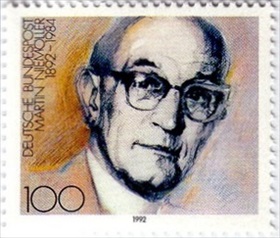
Niemoeller (1892–1984) 1996 stamp Bonhoeffer (1906–1945) 1964 stamp

Left: Martin Niemoeller, 1892–1984. After his imprison­ment Nie­moeller often spoke of his deep regret about not having done enough to help the vic­tims of the Nazis. In the 1950s he became a vocal paci­fist and anti­war acti­vist and a com­mitted cam­paigner for nuclear dis­arma­ment. From 1961–1968 he served as Presi­dent of the World Council of Churches. In 1966 he was awarded the Soviet Union’s Lenin Peace Prize.

Right: Dietrich Bonhoeffer, 1906–1945. Unlike Niemoeller, who was impri­soned from 1937 to 1945, Bon­hoeffer was free to en­gage in anti­state acti­vi­ties while serving in the Ger­man Ab­wehr (Mili­tary Intelli­gence) under the pro­tection of its chief, Adm. Wil­helm Cana­ris, right up to his impri­son­ment in April 1943. Both Cana­ris and Bon­hoeffer were impli­cated in the July 20, 1944, bomb plot to kill Hitler and both were exe­cuted at Flossen­buerg Prison on April 9, 1945, two weeks before the Allies arrived in the area.

Biography of Martin Niemoeller. (Amateur production but worth watching.)

httpv://youtu.be/y6QPzjuqf8E
Similar Posts

  • GERMAN PARATROOPERS SEIZE CRETE

    Crete, Eastern Mediterranean · May 20, 1941 With the start of marathon German oper­a­tions against the Soviet Union, code­named Operation Bar­ba­rossa, a month away, Adolf Hitler needed to en­sure that his Roma­nian oil supplies in and around Ploiești would not come under bomber attack from sta­tion­ary bases in the East­ern Medi­ter­ranean. The most likely source…

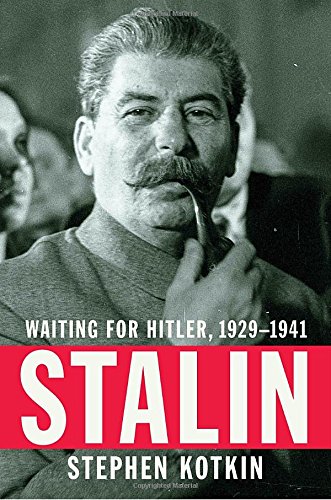
  • Stalin: Waiting for Hitler, 1929-1941

    Pulitzer Prize-finalist Stephen Kotkin has written the definitive biography of Joseph Stalin, from collectivization and the Great Terror to the conflict with Hitler’s Germany that is the signal event of modern world history
     
    In 1929, Joseph Stalin, having already achieved dictatorial power over the vast Soviet Empire, formally ordered the systematic conversion of the world’s largest peasant economy into “socialist modernity,” otherwise known as collectivization, regardless of the cost.
     
    What it cost, and what Stalin ruthlessly enacted, transformed the country and its ruler in profound and enduring ways. Building and running a dictatorship, with life and death power over hundreds of millions, made Stalin into the uncanny figure he became. Stephen Kotkin’s Stalin: Waiting for Hitler, 1929–1941 is the story of how a political system forged an unparalleled personality and vice versa.
     
    The wholesale collectivization of some 120 million peasants necessitated levels of coercion that were extreme even for Russia, and the resulting mass starvation elicited criticism inside the party even from those Communists committed to the eradication of capitalism. But Stalin did not flinch. By 1934, when the Soviet Union had stabilized and socialism had been implanted in the countryside, praise for his stunning anti-capitalist success came from all quarters. Stalin, however, never forgave and never forgot, with shocking consequences as he strove to consolidate the state with a brand new elite of young strivers like himself. Stalin’s obsessions drove him to execute nearly a million people, including the military leadership, diplomatic and intelligence officials, and innumerable leading lights in culture.
     
    While Stalin revived a great power, building a formidable industrialized military, the Soviet Union was effectively alone and surrounded by perceived enemies. The quest for security would bring Soviet Communism to a shocking and improbable pact with Nazi Germany. But that bargain would not unfold as envisioned. The lives of Stalin and Hitler, and the fates of their respective dictatorships, drew ever closer to collision, as the world hung in the balance.
     
    Stalin: Waiting for Hitler, 1929–1941 is a history of the world during the build-up to its most fateful hour, from the vantage point of Stalin’s seat of power. It is a landmark achievement in the annals of historical scholarship, and in the art of biography.

  • CHURCHILL ADDRESSES U.S. AND CANADIAN LAWMAKERS

    Ottawa, Canada · December 30, 1941 On December 28, 1941, British Prime Minister Winston Chur­chill left Wash­ing­ton’s Union Sta­tion for Canada. Six days ear­lier Chur­chill and his mili­tary and civil­ian advisers had arrived in the nation’s capi­tal to meet with their Amer­i­can and Cana­dian counter­parts. The visit by the two heads of state between Christ­mas…

  • CHERBOURG’S CAPTURE TO REPLACE LOST MULBERRY

    Cherbourg, France · June 26, 1944 On June 19–21, 1944, a violent gale hit the two huge Mul­berry arti­ficial har­bors that the Allies had built in Eng­land, towed across the Eng­lish Chan­nel under danger of wind, weather, and enemy air attack, and planted off the Nor­mandy invasion beaches on D‑Day-plus eight (June 14). The pre­fab­ri­cated har­bors…

  • HITLER, AUSTRIAN HEAD TO CONFER

    Salzburg, Austria · February 11, 1938 On this date in 1938 Austrian Chancellor Kurt Schusch­nigg arrived in Salzburg for a quick trip over the German border to confer with Adolf Hitler at his Bava­rian Alps resi­dence, the Berg­hof. An Aus­trian native, Hitler had been granted Ger­man citizen­ship in 1932. The following Janu­ary the Nazi Party…