• IWO JIMA BOMBING CONTINUES

    Saipan Island, Northern Marianas · January 7, 1945 In early October 1944 the U.S. high command decided that, after securing the Philip­pine island of Leyte (done before the end of Decem­ber), Gen. Douglas Mac­Arthur was to lib­er­ate neigh­boring Lu­zon Is­land, while Fleet Adm. Ches­ter Nimitz, from his station in the Cen­tral Pacific, would attack the…

  • FDR PUSHES FOUR FREEDOMS, LEND-LEASE ON NATION

    Washington, D. C. · January 6, 1941 On this date in 1941 in Washington, D.C, President Franklin D. Roosevelt used his State of the Union Address to the U.S. Con­gress to out­line his desire for a world based not on a “new order of tyran­ny”—an allusion to the “new Euro­pean order” cham­pioned by Adolf Hitler’s…

  • HITLER PRESSES POLAND OVER DANZIG ENCLAVE

    Berlin, Germany · January 5, 1939 On this date in 1939, eight months before the armed forces of Nazi Ger­many surged over Polish borders to launch World War II in Europe, Ger­man Chan­cellor Adolf Hitler told Poland’s visiting Foreign Min­is­ter Józef Beck that Ger­many would guar­an­tee his coun­try’s fron­tiers were a “final settle­ment” reached over the…

  • GERMANS TRAPPED IN HUNGARIAN CAPITAL

    Budapest, Hungary · January 4, 1945 In March 1944 Adolf Hitler ordered the Wehrmacht to occupy his wavering Axis ally Hun­gary, whose Nagy­kanizsa (German, Gross­kirchen) oil reserves and fuel storage tanks south­west of the capi­tal Buda­pest in the Lake Balaton (German, Plattensee) area had grown stra­te­gi­cally more impor­tant to the Ger­man war ma­chine—this following pun­ishing…

  • EIGHTH AIR FORCE BLASTS U-BOAT PENS IN FRANCE

    London, England · January 3, 1943 By the end of 1942 U-boats operating from ports in Germany and occupied Europe had sunk just over 1,160 ships (see Battle of the Atlantic). U‑boats claimed nearly 70 per­cent of all Allied and neu­tral shipping losses (about 7.8 million tons), and the Kriegs­marine appeared to be winning the ton­nage race, sinking…

  • JAPAN CAPTURES ISLAND CAPITAL

    Manila, Philippines · January 2, 1942 Japan intended to occupy the Philippine Islands as part of its plan for a “Greater East Asia War.” The nation’s Southern Expeditionary Army Group was tasked with seizing the islands, British Malaya (today’s Malaysia), and the Netherlands East Indies (now Indonesia) simul­taneously with the Japanese Navy’s assault on the…

  • 26 REPS IN CAPITAL AFFIRM “UNITED NATIONS”

    Washington, D.C. · January 1, 1942 On August 14, 1941, President Franklin D. Roose­velt and British Prime Minister Winston Chur­chill signed the Atlantic Charter on a war­ship off the Cana­dian coast. The two leaders hoped that, fol­lowing the defeat of Adolf Hitler’s Ger­many, coun­tries around the world would re­nounce the use of force in inter­national…

  • |

    The Devil’s Disciples: Hitler’s Inner Circle

    The Nazi regime was essentially a religious cult relying on the hypnotic personality of Adolf Hitler, and it was fated to die with him. But while it lasted, his closest lieutenants competed feriously for power and position as his chosen successor. This peculiar leadership dynamic resulted in millions of deaths and some of the worst excesses of World War II. This book examines these lieutenants, both as individuals and as a group. It focuses on the three most important Nazi paladins – Goring, Goebbels and Himmler – with their nearest rivals – Bormann, Speer and Ribbentrop – in close attendance. It shows how these personalities developed, and how their constant jealousies and intrigues affected the regime, the war and Hitler himself.

  • | |

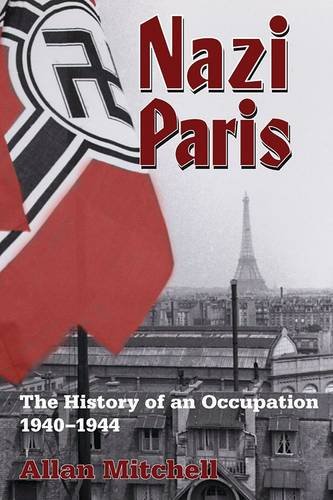
    Nazi Paris: The History of an Occupation, 1940-1944

    CHOICE OUTSTANDING ACADEMIC TITLE 2009

    “…an essential book. It provides precise facts and figures for many issues that have heretofore been presented in impressionistic terms.” · The International History Review

    Basing his extensive research into hitherto unexploited archival documentation on both sides of the Rhine, Allan Mitchell has uncovered the inner workings of the German military regime from the Wehrmacht’s triumphal entry into Paris in June 1940 to its ignominious withdrawal in August 1944. Although mindful of the French experience and the fundamental issue of collaboration, the author concentrates on the complex problems of occupying a foreign territory after a surprisingly swift conquest. By exploring in detail such topics as the regulation of public comportment, economic policy, forced labor, culture and propaganda, police activity, persecution and deportation of Jews, assassinations, executions, and torture, this study supersedes earlier attempts to investigate the German domination and exploitation of wartime France. In doing so, these findings provide an invaluable complement to the work of scholars who have viewed those dark years exclusively or mainly from the French perspective.