BIOGRAPHY

  • GERMANS PREPARE SURPRISE OFFENSIVE IN ARDENNES FOREST

    Cologne, Germany • November 15, 1944 As the Allied offensive wore on west of the Rhine River, dozens of German tank and infan­try divi­sions gathered on this date in 1944 in assem­bly areas north­west of the city of Cologne and in the thick forest cover of the Eiffel moun­tains. Con­ceived by Adolf Hitler, the multi-stage…

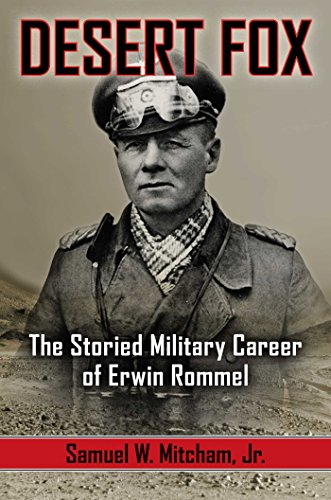
  • Desert Fox: The Storied Military Career of Erwin Rommel

    Just who was Erwin Rommel?

    War hero or war criminal? Hitler  flunky or man of integrity? Military genius or just lucky?

    Now, bestselling military historian Samuel W. Mitcham Jr. gets to the heart of the mysterious  figure respected and even admired by the people of the Allied nations he fought against. Mitcham recounts Rommel’s improbable and meteoric military career, his epic battles in North Africa, and his fraught relationship with Hitler and the Nazi Party. Desert Fox: The Storied Military Career of Erwin Rommel reveals:

    • How Rommel’s victories in North Africa were sabotaged by Hitler’s incompetent interference
    • How Rommel burned orders telling him to commit war crimes
    • Why it wouldn’t have helped Patton if he really had read Rommel’s book
    • How Rommel was responsible for the Germans’ defense against the D-Day landing
    • Why the plot to overthrow Hitler was fatally compromised when Rommel was gravely injured in an Allied attack
    • The reason Rommel agreed to commit suicide after his part in the plot was discovered by Hitler 

    Mitcham’s gripping account of Rommel’s life takes you through the amazing adventure of the World War II battles in North Africa. Again and again, Rommel outfoxed the Allies—until the war of attrition and Hitler’s blunders doomed the Axis cause. Illustrated with dozens of historical photos, this illuminating biography paints a fascinating and tragic picture of the man known as the Desert Fox.

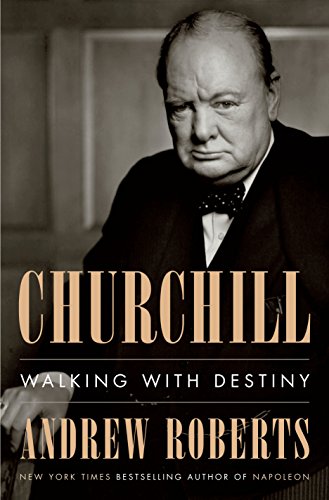
  • Churchill: Walking with Destiny

    NEW YORK TIMES BESTSELLER

    One of The Wall Street Journal’s Ten Best Books of 2018
    One of The Economist’s Best Books of 2018
    One of The New York Timess Notable Books of 2018

    “Unarguably the best single-volume biography of Churchill . . . A brilliant feat of storytelling, monumental in scope, yet put together with tenderness for a man who had always believed that he would be Britain’s savior.” —Wall Street Journal

    In this landmark biography of Winston Churchill based on extensive new material, the true genius of the man, statesman and leader can finally be fully seen and understood–by the bestselling, award-winning author of Napoleon and The Storm of War.

    When we seek an example of great leaders with unalloyed courage, the person who comes to mind is Winston Churchill: the iconic, visionary war leader immune from the consensus of the day, who stood firmly for his beliefs when everyone doubted him. But how did young Winston become Churchill? What gave him the strength to take on the superior force of Nazi Germany when bombs rained on London and so many others had caved? In Churchill, Andrew Roberts gives readers the full and definitive Winston Churchill, from birth to lasting legacy, as personally revealing as it is compulsively readable.

    Roberts gained exclusive access to extensive new material: transcripts of War Cabinet meetings, diaries, letters and unpublished memoirs from Churchill’s contemporaries. The Royal Family permitted Roberts–in a first for a Churchill biographer–to read the detailed notes taken by King George VI in his diary after his weekly meetings with Churchill during World War II. This treasure trove of access allows Roberts to understand the man in revelatory new ways, and to identify the hidden forces fueling Churchill’s legendary drive.

    We think of Churchill as a hero who saved civilization from the evils of Nazism and warned of the grave crimes of Soviet communism, but Roberts’s masterwork reveals that he has as much to teach us about the challenges leaders face today–and the fundamental values of courage, tenacity, leadership and moral conviction.


  • Beneath a Scarlet Sky: A Novel

    Soon to be a major motion picture from Pascal Pictures, starring Tom Holland.

    Based on the true story of a forgotten hero, the #1 Amazon Charts bestseller Beneath a Scarlet Sky is the triumphant, epic tale of one young man’s incredible courage and resilience during one of history’s darkest hours.

    Pino Lella wants nothing to do with the war or the Nazis. He’s a normal Italian teenager—obsessed with music, food, and girls—but his days of innocence are numbered. When his family home in Milan is destroyed by Allied bombs, Pino joins an underground railroad helping Jews escape over the Alps, and falls for Anna, a beautiful widow six years his senior.

    In an attempt to protect him, Pino’s parents force him to enlist as a German soldier—a move they think will keep him out of combat. But after Pino is injured, he is recruited at the tender age of eighteen to become the personal driver for Adolf Hitler’s left hand in Italy, General Hans Leyers, one of the Third Reich’s most mysterious and powerful commanders.

    Now, with the opportunity to spy for the Allies inside the German High Command, Pino endures the horrors of the war and the Nazi occupation by fighting in secret, his courage bolstered by his love for Anna and for the life he dreams they will one day share.

    Fans of All the Light We Cannot See, The Nightingale, and Unbroken will enjoy this riveting saga of history, suspense, and love.

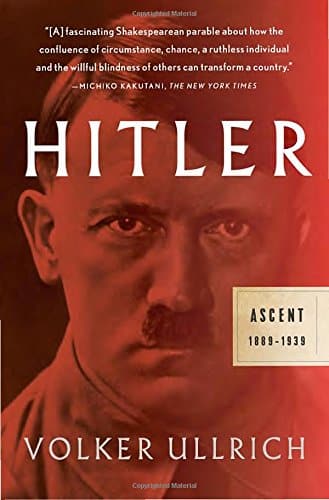
  • Hitler: Ascent, 1889-1939

    Winner of the Los Angeles Times Book Prize for Biography

    A New York Times bestseller, this major new biography of Hitler puts an emphasis on the man himself: his personality, his temperament, and his beliefs.

    Volker Ullrich’s Hitler, the first in a two-volume biography, has changed the way scholars and laypeople alike understand the man who has become the personification of evil. Drawing on previously unseen papers and new scholarly research, Ullrich charts Hitler’s life from his childhood through his experiences in the First World War and his subsequent rise as a far-right leader. Focusing on the personality behind the policies, Ullrich creates a vivid portrait of a man and his megalomania, political skill, and horrifying worldview. Hitler is a landmark biography with unsettling resonance in these times.

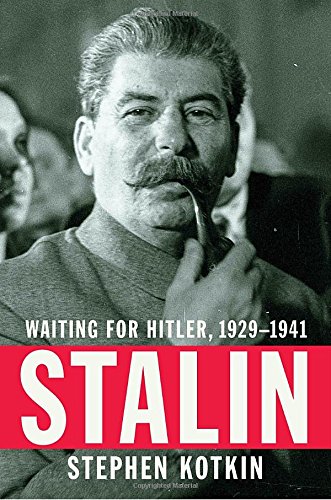
  • Stalin: Waiting for Hitler, 1929-1941

    Pulitzer Prize-finalist Stephen Kotkin has written the definitive biography of Joseph Stalin, from collectivization and the Great Terror to the conflict with Hitler’s Germany that is the signal event of modern world history
     
    In 1929, Joseph Stalin, having already achieved dictatorial power over the vast Soviet Empire, formally ordered the systematic conversion of the world’s largest peasant economy into “socialist modernity,” otherwise known as collectivization, regardless of the cost.
     
    What it cost, and what Stalin ruthlessly enacted, transformed the country and its ruler in profound and enduring ways. Building and running a dictatorship, with life and death power over hundreds of millions, made Stalin into the uncanny figure he became. Stephen Kotkin’s Stalin: Waiting for Hitler, 1929–1941 is the story of how a political system forged an unparalleled personality and vice versa.
     
    The wholesale collectivization of some 120 million peasants necessitated levels of coercion that were extreme even for Russia, and the resulting mass starvation elicited criticism inside the party even from those Communists committed to the eradication of capitalism. But Stalin did not flinch. By 1934, when the Soviet Union had stabilized and socialism had been implanted in the countryside, praise for his stunning anti-capitalist success came from all quarters. Stalin, however, never forgave and never forgot, with shocking consequences as he strove to consolidate the state with a brand new elite of young strivers like himself. Stalin’s obsessions drove him to execute nearly a million people, including the military leadership, diplomatic and intelligence officials, and innumerable leading lights in culture.
     
    While Stalin revived a great power, building a formidable industrialized military, the Soviet Union was effectively alone and surrounded by perceived enemies. The quest for security would bring Soviet Communism to a shocking and improbable pact with Nazi Germany. But that bargain would not unfold as envisioned. The lives of Stalin and Hitler, and the fates of their respective dictatorships, drew ever closer to collision, as the world hung in the balance.
     
    Stalin: Waiting for Hitler, 1929–1941 is a history of the world during the build-up to its most fateful hour, from the vantage point of Stalin’s seat of power. It is a landmark achievement in the annals of historical scholarship, and in the art of biography.

  • Franklin Delano Roosevelt

    “No president since the founders has done more to shape the character of American government,” notes Alan Brinkley in this magnificent biography of America’s thirty-second president. “And no president since Lincoln has served through darker or more difficult times. Roosevelt thrived in crisis. It brought out his greatness, and his guile. It triggered his almost uncanny ability to communicate effectively with people of all kinds. And at times, it helped him excoriate his enemies, and to revel in doing so.”
    This brilliant, compact biography chronicles Franklin Delano Roosevelt’s rise from a childhood of privilege to a presidency that forever changed the face of international diplomacy, the American party system, and the government’s role in global and domestic policy. Brinkley, the National Book Award-winning New Deal historian, provides a clear, concise introduction to Roosevelt’s sphinx-like character and remarkable achievements. In a vivid narrative packed with telling anecdotes, the book moves swiftly from Roosevelt’s youth in upstate New York–characterized by an aristocratic lifestyle of trips to Europe and private tutoring–to his schooling at Harvard, his brief law career, and his initial entry into politics. From there, Brinkley chronicles Roosevelt’s rise to the presidency, a position in which FDR remained until death, through an unparalleled three-plus terms in office. Throughout the book, Brinkley elegantly blends FDR’s personal life with his professional one, providing a lens into the President’s struggles with polio and his somewhat distant relationship with the first lady.
    Franklin Delano Roosevelt led the United States through the worst economic crisis in the nation’s history and through the greatest and most terrible war ever recorded. His extraordinary legacy remains alive in our own troubled new century as a reminder of what bravery and strong leadership can accomplish.