BRITAIN

  • MUSSOLINI REBUKES JAPANESE FOR FOOT-DRAGGING

    Rome, Italy • October 8, 1941 Two months before Great Britain joined the United States in declaring war on Japan, Italian dictator Benito Mus­so­lini used this date in 1941 to blast the Japa­nese for not carrying their weight in the Tri­par­tite (Axis) Pact, a poli­ti­cal, eco­no­mic, and mili­tary agree­ment that Italy, Germany, and Japan had…

  • NAZI V-1 FLYING BOMBS TERRORIZE LONDON

    London, England · June 13, 1944 Beginning on this date in 1944 in London, one week after the Allied D‑Day landings in Nor­mandy, France (Opera­tion Over­lord), the Germans unleashed their pilot­less flying “retali­a­tion wea­pon,” Ver­geltungs­waffe‑1, on England. Adolf Hitler crowed to his rocket pio­neer Wern­her von Braun, “This will be retri­bu­tion against England. With it…

  • HISTORIC COVENTRY CATHEDRAL SUCCUMBS TO FIRESTORM

    Coventry, England • November 14, 1940 On this date in 1940 the first firestorm of the war was inflicted on Coventry, England, a city of almost 240,000 peo­ple, during the German Blitz against that country. German “path­finder” bombers flying along radio-direction beams targeted the medi­e­val cathe­dral city and indus­trial-muni­tions center in the English Mid­lands. For…

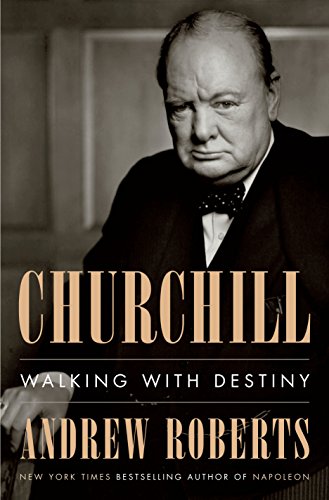
  • Churchill: Walking with Destiny

    NEW YORK TIMES BESTSELLER

    One of The Wall Street Journal’s Ten Best Books of 2018
    One of The Economist’s Best Books of 2018
    One of The New York Timess Notable Books of 2018

    “Unarguably the best single-volume biography of Churchill . . . A brilliant feat of storytelling, monumental in scope, yet put together with tenderness for a man who had always believed that he would be Britain’s savior.” —Wall Street Journal

    In this landmark biography of Winston Churchill based on extensive new material, the true genius of the man, statesman and leader can finally be fully seen and understood–by the bestselling, award-winning author of Napoleon and The Storm of War.

    When we seek an example of great leaders with unalloyed courage, the person who comes to mind is Winston Churchill: the iconic, visionary war leader immune from the consensus of the day, who stood firmly for his beliefs when everyone doubted him. But how did young Winston become Churchill? What gave him the strength to take on the superior force of Nazi Germany when bombs rained on London and so many others had caved? In Churchill, Andrew Roberts gives readers the full and definitive Winston Churchill, from birth to lasting legacy, as personally revealing as it is compulsively readable.

    Roberts gained exclusive access to extensive new material: transcripts of War Cabinet meetings, diaries, letters and unpublished memoirs from Churchill’s contemporaries. The Royal Family permitted Roberts–in a first for a Churchill biographer–to read the detailed notes taken by King George VI in his diary after his weekly meetings with Churchill during World War II. This treasure trove of access allows Roberts to understand the man in revelatory new ways, and to identify the hidden forces fueling Churchill’s legendary drive.

    We think of Churchill as a hero who saved civilization from the evils of Nazism and warned of the grave crimes of Soviet communism, but Roberts’s masterwork reveals that he has as much to teach us about the challenges leaders face today–and the fundamental values of courage, tenacity, leadership and moral conviction.


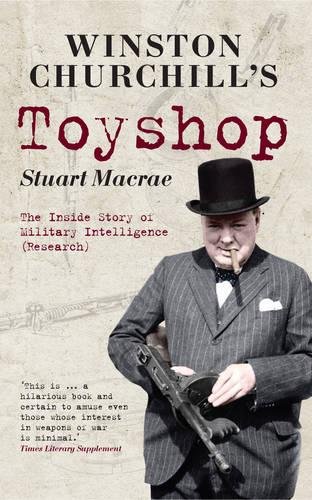
  • Winston Churchill’s Toyshop: The Inside Story of Military Intelligence (Research)

    The inside story of one of the most famous of all the ‘back rooms’ of the Second World War – and of the men and women who worked for it. Conceived by Winston Churchill to circumvent the delays, frustrations and inefficiencies of the service ministries, Department M.D.1. earned from its detractors the soubriquet ‘Winston Churchill’s Toyshop’, yet from a tiny underground workshop housed in the cellars of the London offices of Radio Normandie in Portland Place, and subsequently from the ‘stockbroker Tudor’ of a millionaire’s country mansion in Buckinghamshire, came an astonishing array of secret weapons ranging from the ‘sticky bomb’ and ‘limpet mine’ to giant bridge-carrying assault tanks, as well as the PIAT, a tank-destroying, hand-held mortar. Written by Colonel Stuart Macrae, who helped found M.D.1. and was its second-in-command throughout its life, the story is told of this relatively unknown establishment and the weapons it developed which helped destroy innumerable enemy tanks, aircraft and ships.

  • GERMAN NAVY SINKS BRITISH CARRIER GLORIOUS

    Berlin, Germany · June 8, 1940 In an operation remarkable for its precision and bold­ness, Germany launched Opera­tion Weser­uebung, the invasion of Norway on April 9, 1940, seized its capital, Oslo, and captured the impor­tant port of Narvik in Northern Nor­way. Nar­vik boasted an ice-free harbor during the long Scan­di­na­vian winters, and it was the rail…

  • FINNISH AID TO DISRUPT NAZI ORE IMPORTS

    London, England · December 19, 1939 In the afternoon of August 23, 1939, Adolf Hitler’s foreign secretary Joachim von Ribben­trop appeared in Moscow’s Krem­lin fortress to sign off on the Nazi-Soviet Non­ag­gres­sion Pact. The 10‑year pact, also known by the twin sur­names of the Soviet foreign minister Vyacheslav Molotov and the German foreign minister Ribben­trop, was…

  • U-BOATS TO BRING ENGLAND TO HEEL

    Berlin, Germany · November 29, 1939 On this date in 1939, nearly 3 months after the Wehr­macht (German armed forces) over­ran neigh­boring Poland, launching World War War II in Europe, German dicta­tor Adolf Hitler issued Fuehrer Direc­tive Num­ber 9, the first of 2 direc­tives on mea­sures his coun­try would have to take to ren­der the…

  • HISTORIC COVENTRY CATHEDRAL FIRESTORM VICTIM

    Coventry, England · November 14, 1940 On this date in 1940 the first firestorm of the war was inflicted on Coven­try, Eng­land, a city of almost 240,000 people, during the Ger­man Blitz against that coun­try. Ger­man “path­finder” bombers flying along radio-direction beams tar­geted the medi­e­val cathe­dral city and indus­trial-muni­tions cen­ter in the English Mid­lands. Nearly…