D-DAY

  • SOVIET BLITZKRIEG KNOCKS GERMANS OFF BALANCE

    Moscow, Soviet Union • June 23, 1944 On this date in 1944 along a 450-mile front some 2.4 mil­lion Soviet front­line and support troops, 5,200 tanks, and 5,300 air­craft smashed through German lines in present-day Bela­rus (White Russia and Belo­russia in some earlier sources). Sabo­tage of rail net­works and bridges by guer­rillas several days before June 23 impeded German…

  • ALLIES DISRUPT GERMAN DEFENSES IN FRANCE

    London, England • June 1, 1944 In June 1942 members of the French Resis­tance pro­vided British intel­li­gence with a copy of the top-secret blue­print of portions of Adolf Hitler’s Atlan­tic Wall—part of the defenses against the anti­ci­pated Allied in­va­sion of West­ern Europe. The map had been spirited from the office of the German public works…

  • NAZIS DEPLOY MIDGET SUBS IN FRANCE

    Off the Normandy Coast, France • May 29, 1944 The German Kriegsmarine experimented with a half-dozen stealthy combat vessels that could send torpe­does crashing into Allied ships. Perhaps the most unusual was the Neger (“Negro,” a play on the name of its designer, Richard Mohr, i.e., Moor). Almost 25 ft long, the battery-powered Neger was shaped…

  • U.S. FIFTH ARMY IN RACE TO ROME

    With Maj. Gen. Mark Clark in Italy • May 25, 1944 In 1943–1944 the centerpiece of German defenses in Italy was the Gus­tav Line, whose most famous bas­tion was cen­tered on the his­toric Bene­dic­tine abbey of Monte Cas­sino. Thou­sands of Ger­man soldiers and con­scripted Ital­ian civil­ians worked hard to strengthen the line, 65 miles north of the…

  • NAZI V-1 FLYING BOMBS TERRORIZE LONDON

    London, England · June 13, 1944 Beginning on this date in 1944 in London, one week after the Allied D‑Day landings in Nor­mandy, France (Opera­tion Over­lord), the Germans unleashed their pilot­less flying “retali­a­tion wea­pon,” Ver­geltungs­waffe‑1, on England. Adolf Hitler crowed to his rocket pio­neer Wern­her von Braun, “This will be retri­bu­tion against England. With it…

  • ALLIED REWARDS LIKELY FROM RADAR STATION RAID

    London, England • February 27, 1942 Under the cover of darkness on this date in 1942, 119 British para­troopers kicked off Opera­tion Biting when they para­chuted into Nazi-occu­pied Nor­mandy close to a German radar sta­tion in the parish (com­mune) of La Poterie-Cap-d’An­ti­fer, 12 miles/­19 km north of the large French har­bor of Le Havre. A num­ber of what…

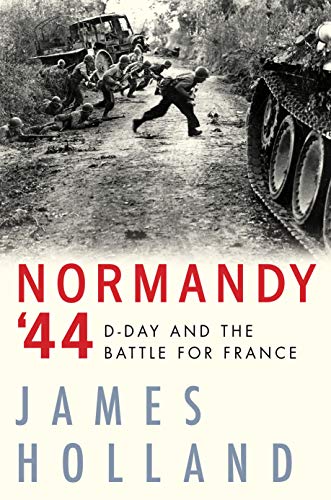
  • Normandy ’44: D-Day and the Epic 77-Day Battle for France

    D-Day, June 6, 1944, and the seventy-six days of bitter fighting in Normandy that followed the Allied landing, have become the defining episode of World War II in the west―the object of books, films, television series, and documentaries. Yet as familiar as it is, as James Holland makes clear in his definitive history, many parts of the OVERLORD campaign, as it was known, are still shrouded in myth and assumed knowledge.

    Drawing freshly on widespread archives and on the testimonies of eye-witnesses, Holland relates the extraordinary planning that made Allied victory in France possible; indeed, the story of how hundreds of thousands of men, and mountains of materiel, were transported across the English Channel, is as dramatic a human achievement as any battlefield exploit. The brutal landings on the five beaches and subsequent battles across the plains and through the lanes and hedgerows of Normandy―a campaign that, in terms of daily casualties, was worse than any in World War I―come vividly to life in conferences where the strategic decisions of Eisenhower, Rommel, Montgomery, and other commanders were made, and through the memories of paratrooper Lieutenant Dick Winters of Easy Company, British corporal and tanker Reg Spittles, Thunderbolt pilot Archie Maltbie, German ordnance officer Hans Heinze, French resistance leader Robert Leblanc, and many others.

    For both sides, the challenges were enormous. The Allies confronted a disciplined German army stretched to its limit, which nonetheless caused tactics to be adjusted on the fly. Ultimately ingenuity, determination, and immense materiel strength―delivered with operational brilliance―made the difference. A stirring narrative by a pre-eminent historian, Normandy ‘44 offers important new perspective on one of history’s most dramatic military engagements and is an invaluable addition to the literature of war.


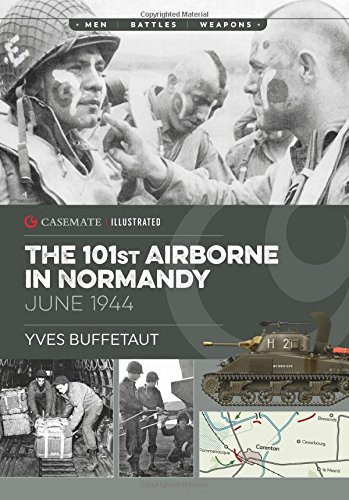
  • The 101st Airborne in Normandy: June 1944 (Casemate Illustrated)

    101st Airborne Division was activated in August 1942 in Louisiana, and its first combat mission was Operation Overlord. On D-Day—June 6, 1944—101st and 82nd Airborne dropped onto the Cotentin peninsula hours before the landings, tasked with capturing bridges and positions, taking out German strongpoints and batteries, and securing the exits from Utah and Omaha Beaches. Things did not initially go smoothly for 101st Airborne, with cloud and antiaircraft fire disrupting the drops, resulting in some units landing scattered over a large area outside their designated drop zones and having to waste time assembling—stymied by lost or damaged radio equipment—or trying to achieve their objectives with severely reduced numbers.

    Casualties were high in some areas due to heavy pre-registered German fire. Nevertheless, the paratroopers fought on and they did manage to secure the crucial beach exits, even if they only achieved a tenuous hold on some other positions. A few days later, 101st Airborne were tasked with attacking the German-held city of Carentan as part of the consolidation of the US beachheads and establishment of a defensive line against the anticipated German counteroffensive. The 101st forced their way into Carentan on 10 and 11 June. The Germans withdrew the following day, and a counteroffensive was put down by elements of the 2nd Armored Division.

    This fully illustrated book details the planning of the airborne element of D-Day, and the execution of the plans until the troops were withdrawn to prepare for the next big airborne operation, Market Garden.

    Table of Contents

    Planning and Preparation
    Airborne Invasion
    “E” is for Easy
    The 101st in Carentan

  • U.S. MORTALLY WOUNDS JAPANESE NAVY

    Philippine Sea, North Pacific Ocean • June 19, 1944 On this date in 1944 a huge gale hit the two gigan­tic arti­ficial harbors known as Mul­berry har­bors that the British had built in England, floated across the English Chan­nel, and depos­ited on Normandy’s beaches seve­ral days after the Allies’ June 6 inva­sion. The gale inflicted losses…

  • BELGIAN PORT OF ANTWERP FALLS TO BRITISH 2ND ARMY

    Antwerp, Belgium • September 4, 1944 Almost three months after D-Day British troops, assisted by mem­bers of the Belgian resis­tance, entered Antwerp on this date in 1944. They seized Belgium’s port on the Scheldt River before the Germans could destroy its instal­la­tions. Opening Western Europe’s largest deep-water port, whose 10 square miles of docks, 20 miles of…