EUROPEAN THEATER

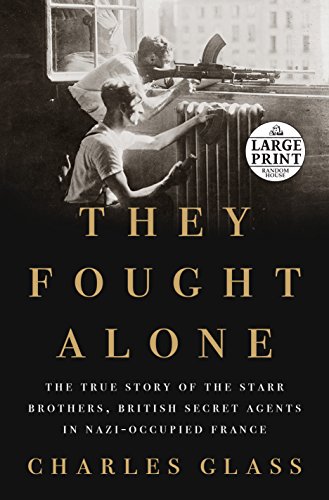
  • They Fought Alone: The True Story of the Starr Brothers, British Secret Agents in Nazi-Occupied France

    From the bestselling author of Americans in Paris and The Deserters, the untold story of Britain’s Special Operations Executive, one of World War II’s most important secret fighting forces

    As far as the public knew, Britain’s Special Operations Executive did not exist. After the defeat of the French Army, Prime Minister Winston Churchill created the top-secret espionage operation to “set Europe ablaze,” and the SOE remained below the radar until the end of World War II. The agents infiltrated Nazi-occupied France, parachuting behind enemy lines and hiding in plain sight, quietly but forcefully recruiting, training, and arming the local French résistants willing to aid in sabotage of the German war machine. The SOE would not only change the course of the war, but the very nature of combat itself. Of the many brave men and women conscripted, two Anglo-American recruits, the Starr brothers, stood out to become legendary figures to the guerillas, assassins, and saboteurs they led.

    While both brothers were sent across the channel to organize against the Germans, their fates in war could hardly have been more different. Captain George Starr commanded networks of résistants in southwest France, cutting German communications, destroying weapons factories, and delaying the arrival of Nazi troops to Normandy by seventeen days after D-Day. Younger brother Lieutenant John Starr laid groundwork for resistance in the Burgundy countryside until he was betrayed, captured, tortured and imprisoned at Gestapo headquarters and forced labor camps. Feats of boldness and bravado were many, but appalling scandals, including George’s supposed torture and execution of Nazis prisoners, and John’s alleged collaboration with his German captors, overshadowed them all. At the war’s end, Britain, France, and the United States awarded both brothers medals for heroism, and George would become one of only three among thousands of SOE operatives to achieve the rank of colonel. Yet, their battle honors did little to allay post-war allegations against them, and when they returned to England, their government accused both brothers of war crimes.

    Here, for the first time, is the story of one of the last secret organizations of World War II, and of two brothers whose ordeals during and after the war challenged the accepted myths of Britain’s wartime resistance in occupied France. Written with complete and unrivaled access to only recently declassified documents from Britain’s SOE, family letters, diaries, and court records, along with interviews from surviving wartime Resistance fighters, They Fought Alone is a real-life thriller. Renowned journalist and war correspondent Charles Glass exposes a dramatic tale of spies, sabotage, and the daring men and women who risked everything to change the course of World War II.
  • ALLIES ASSAULT ITALIAN MAINLAND SOUTH OF ROME

    Gulf of Salerno, Italy • September 9, 1943 On this date in 1943 in Italy, the Allies from their strong­holds in North Africa and Sicily invaded the boot-shaped Ital­ian main­land at the his­toric port of Salerno 29 miles/­47 km south­east of Naples (Opera­tion Ava­lanche), with diver­sionary land­ings at Reggio di Cala­bria (Opera­tion Bay­town, Septem­ber 3, 1943), which lay…

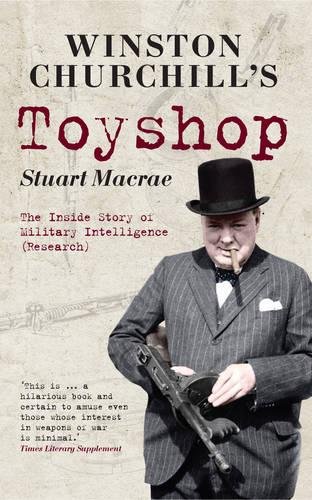
  • Winston Churchill’s Toyshop: The Inside Story of Military Intelligence (Research)

    The inside story of one of the most famous of all the ‘back rooms’ of the Second World War – and of the men and women who worked for it. Conceived by Winston Churchill to circumvent the delays, frustrations and inefficiencies of the service ministries, Department M.D.1. earned from its detractors the soubriquet ‘Winston Churchill’s Toyshop’, yet from a tiny underground workshop housed in the cellars of the London offices of Radio Normandie in Portland Place, and subsequently from the ‘stockbroker Tudor’ of a millionaire’s country mansion in Buckinghamshire, came an astonishing array of secret weapons ranging from the ‘sticky bomb’ and ‘limpet mine’ to giant bridge-carrying assault tanks, as well as the PIAT, a tank-destroying, hand-held mortar. Written by Colonel Stuart Macrae, who helped found M.D.1. and was its second-in-command throughout its life, the story is told of this relatively unknown establishment and the weapons it developed which helped destroy innumerable enemy tanks, aircraft and ships.

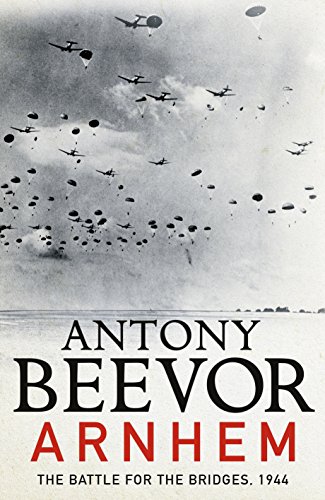
  • Arnhem: The Battle for the Bridges, 1944

    The great airborne battle for the bridges in 1944 by Britain’s Number One bestselling historian and author of the classic Stalingrad On 17 September 1944, General Kurt Student, the founder of Nazi Germany’s parachute forces, heard the growing roar of aero engines. He went out on to his balcony above the flat landscape of southern Holland to watch the vast air armada of Dakotas and gliders,carrying the British 1st Airborne and the American 101st and 82nd Airborne Divisions. He gazed up in envy at the greatest demonstration of paratroop power ever seen. Operation Market Garden, the plan to end the war by capturing the bridges leading to the Lower Rhine and beyond, was a bold concept: the Americans thought it unusually bold for Field Marshal Montgomery. But the cost of failure was horrendous, above all for the Dutch who risked everything to help. German reprisals were cruel and lasted until the end of the war. The British fascination for heroic failure has clouded the story of Arnhem in myths, not least that victory was possible when in fact the plan imposed by Montgomery and General ‘Boy’ Browning was doomed from the start. Antony Beevor, using many overlooked and new sources from Dutch, British, American, Polish and German archives, has reconstructed the terrible reality of this epic clash. Yet this book, written in Beevor’s inimitable and gripping narrative style, is about much more than a single dramatic battle. It looks into the very heart of war.

  • GERMANS CRUSH DUTCH DEFENSES

    Rotterdam, The Netherlands • May 14, 1940 On this date in 1940 in Holland, the German Luft­waffe bombed Rotter­dam’s medi­e­val city cen­ter, killing nearly 1,000 people and leaving 85,000 home­less. Rather than endure more fero­cious bombings—leaf­lets dropped on Utrecht indi­cated it was next Dutch city in German cross­hairs—the Dutch Army surren­dered the next day. The German…

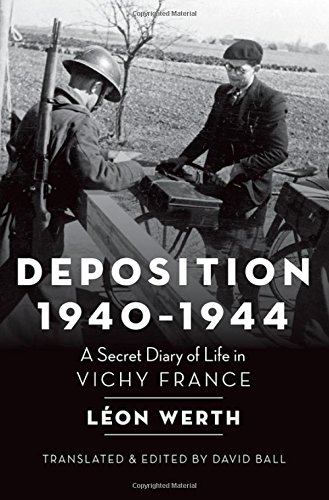
  • Deposition 1940-1944: A Secret Diary of Life in Vichy France

    Historians agree: the diary of Léon Werth (1878-1955) is one of the most precious–and readable–pieces of testimony ever written about life in France under Nazi occupation and the Vichy regime. Werth was a free-spirited and unclassifiable writer. He is the author of eleven novels, art and dance criticism, acerbic political reporting, and memorable personal essays. He was Jewish, and left Paris in June 1940 to hide out in his wife’s country house in Saint-Amour, a small village in the Jura Mountains. His short memoir 33 Days recounts his struggle to get there. Deposition tells of daily life in the village, on nearby farms and towns, and finally back in Paris, where he draws the portrait of a Resistance network in his apartment and writes an eyewitness report of the insurrection that freed the city in August, 1944.

    From Saint-Amour, we see both the Resistance in the countryside, derailing troop trains, punishing notorious collaborators–and growing repression: arrests, torture, deportation, and executions. Above all, we see how Vichy and the Occupation affect the lives of farmers and villagers and how their often contradictory attitudes evolve from 1940-1944. Werth’s ear for dialogue and novelist’s gift for creating characters animate the diary: in the markets and in town, we meet real French peasants and shopkeepers, railroad men and the patronne of the café at the station, schoolteachers and gendarmes. They come off the page alive, and the countryside and villages come alive with them.

    With biting irony, Werth records, almost daily, what Vichy-German propaganda was saying on the radio and in the press. We follow the progress of the war as people did then, day by day. These entries make interesting, often amusing reading, a stark contrast with his gripping entries on the persecution and deportation of the Jews. Deposition is a varied and complex piece of living history, and a pleasure to read.

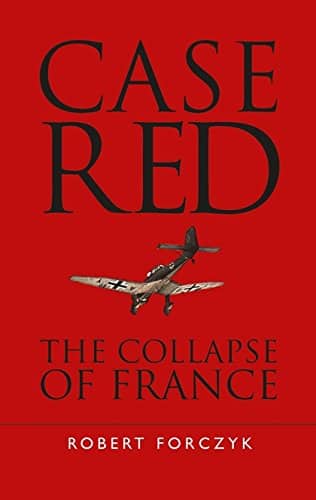
  • Case Red: The Collapse of France

    Although the story of the German Fall Gelb offensive against France, Belgium, and Holland in May 1940 is well known, most accounts tend to stop with the conclusion of the evacuation of the British Expeditionary Force (BEF) from Dunkirk on June 4, 1940. The German operation that actually conquered metropolitan France, Fall Rot (Case Red), is usually glossed over in brief. Nor are many people aware today that there was a second BEF in France, which was also successfully evacuated by sea. The current literature on the Western campaign of 1940 essentially spotlights the German drive to the English Channel and the Dunkirk evacuation then skips ahead to the French armistice, skipping over the military, political, and human drama of France’s collapse in June 1940.

    Indeed, some of the most interesting military operations of the 1940 campaign were conducted in June 1940, as the Allies mounted a vigorous counterattack at Abbeville (including the British 1st Armoured Division–the first time that the British Army employed an armored division in combat) and then mounted a tough defense along the Somme River. Unlike the easy breakthrough at Sedan, the Germans had to fight hard to break through the Weygand Line. Churchill decided to send a second BEF to France to support the French, but the Germans finally achieved a decisive breakthrough before it could be effectively deployed. The British were forced to mount a second evacuation from the ports of Le Havre, Cherbourg, Brest, and St. Nazaire, which rescued over 200,000 troops, although the transport RMS Lancastria was sunk by German bombers, with the loss of over 4,000 troops. While France was in its death throes, politicians and soldiers debated what to do–flee to England or North Africa or to seek an armistice.

    The drama of the final three weeks of military operations in France in June 1940 has never effectively been captured on paper, but this is a story that needs to be told since it had great impact on the course of World War II and inter-Allied relations. This book will also address the initial German exploitation of France and how the windfall of captured military equipment, fuel and industrial resources enhanced the Third Reich’s ability to attack its next foe–the Soviet Union.

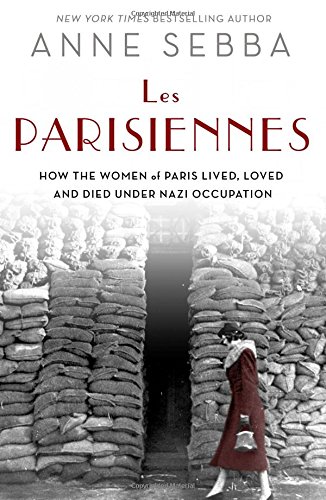
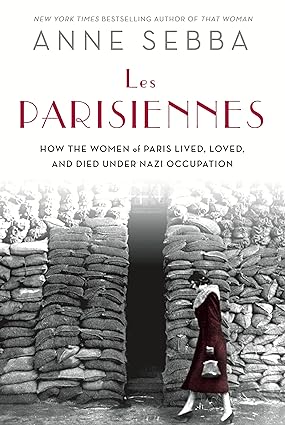
  • Les Parisiennes: How the Women of Paris Lived, Loved, and Died Under Nazi Occupation

    “Anne Sebba has the nearly miraculous gift of combining the vivid intimacy of the lives of women during The Occupation with the history of the time. This is a remarkable book.” ―Edmund de Waal, New York Times bestselling author of The Hare with the Amber Eyes

    New York Times bestselling author Anne Sebba explores a devastating period in Paris’s history and tells the stories of how women survived―or didn’t―during the Nazi occupation.

    Paris in the 1940s was a place of fear, power, aggression, courage, deprivation, and secrets. During the occupation, the swastika flew from the Eiffel Tower and danger lurked on every corner. While Parisian men were either fighting at the front or captured and forced to work in German factories, the women of Paris were left behind where they would come face to face with the German conquerors on a daily basis, as waitresses, shop assistants, or wives and mothers, increasingly desperate to find food to feed their families as hunger became part of everyday life.

    When the Nazis and the puppet Vichy regime began rounding up Jews to ship east to concentration camps, the full horror of the war was brought home and the choice between collaboration and resistance became unavoidable. Sebba focuses on the role of women, many of whom faced life and death decisions every day. After the war ended, there would be a fierce settling of accounts between those who made peace with or, worse, helped the occupiers and those who fought the Nazis in any way they could.

  • CHURCHILL ADDRESSES CANADIAN LAWMAKERS

    Ottawa, Canada • December 30, 1941 On December 28, 1941, British Prime Minister Winston Chur­chill left Wash­ing­ton’s Union Station, the capital’s major train station, for Canada. Six days ear­lier Chur­chill and his mili­tary and civil­ian advisers had arrived in the United States aboard the Royal Navy’s newly com­mis­sioned battle­ship, the HMS Duke of York, to…

  • | | |

    Red Wind over the Balkans: The Soviet offensive south of the Danube, September-October 1944

    This book describes two Soviet offensive operations carried out during September and October 1944. The first was the operation for the occupation of Bulgaria – known as the ‘Bulgarian operation’; the second was the Belgrade offensive operation, which was carried out immediately after the Bulgarian operation. Although separate, the two operations were closely linked to each other: the first was conducted in an almost peaceful manner, which saved resources. This necessitated that the Soviet Command carried out the second operation promptly, which seriously endangered the encirclement of German Army Group position in the Southern Balkans. Pressed by the advancing Red Army, the German troops withdrew from the territories of Greece and Albania. They also relocated fresh forces from the Western Balkans to the Bulgarian-Yugoslav Border in order to build up a defense line.

    The book describes in detail the heavy battles during the Belgrade offensive operation. Both combatants suffered from the same problems: heavy mountainous terrain; poor roads and infrastructure; and severe weather conditions. This is one of the few Soviet offensives which started without a large superiority of their forces over those of the enemy. The German soldiers were trained to fight in mountainous conditions, and the Soviets were not. The Soviet armament was more modern, but heavier. Additionally, it was not designed to move on the narrow and steep mountain roads. Therefore, the success of this offensive operation was unclear for a long time. The German Command was but a step away from turning Belgrade into a fortress, and slowing down the war in the region for months. The Soviet troops won, but as a result of very tough fighting. After Bulgaria joined the Allied forces, its military forces were subject to the command of the 3rd Ukrainian Front. The commander of the Front used this new ally to the max – thus conserving Soviet forces. There is also a short description of the activities of the Bulgarian troops, who undertook a secondary offensive from the Aegean Sea to the town of Nis in Southern Serbia.

    The book describes the operations of both ground and air forces. Special attention is paid to the Soviet tank and mechanized units which participated in both operations, and the book benefits from a detailed set of daily statistics and accompanying analysis which has not been attempted before. As well as a detailed narrative, the author also provides information covering camouflage, markings and unit insignia. The authoritative text is supported by more than 400 photographs (the majority of them previously unpublished); full-color profiles showing the aforementioned camouflage, markings and unit insignia; and also full-color battle maps. This book is a result of the author’s years spent studying documents from the Russian Federation’s Central Archives of the Ministry of Defense and the Bulgarian State Military Historical Archives. Such a detailed study on this topic has not appeared before – and the author’s work is unlikely to be superseded.