EUROPEAN THEATER

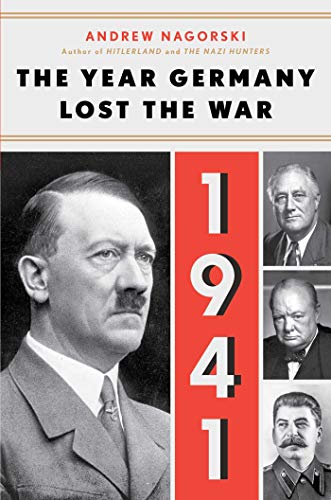
  • 1941: The Year Germany Lost the War

    Bestselling historian Andrew Nagorski takes a fresh look at the decisive year 1941, when Hitler’s miscalculations and policy of terror propelled Churchill, FDR, and Stalin into a powerful new alliance that defeated Nazi Germany.

    In early 1941, Hitler’s armies ruled most of Europe. Churchill’s Britain was an isolated holdout against the Nazi tide, but German bombers were attacking its cities and German U-boats were attacking its ships. Stalin was observing the terms of the Nazi-Soviet Pact, and Roosevelt was vowing to keep the United States out of the war. Hitler was confident that his aim of total victory was within reach.

    \By the end of 1941, all that changed. Hitler had repeatedly gambled on escalation and lost: by invading the Soviet Union and committing a series of disastrous military blunders; by making mass murder and terror his weapons of choice, and by rushing to declare war on the United States after Japan’s attack on Pearl Harbor. Britain emerged with two powerful new allies—Russia and the United States. By then, Germany was doomed to defeat.

    Nagorski illuminates the actions of the major characters of this pivotal year as never before. 1941: The Year Germany Lost the War is a stunning examination of unbridled megalomania versus determined leadership. It also reveals how 1941 set the Holocaust in motion, and presaged the postwar division of Europe, triggering the Cold War. 1941 was a year that forever defined our world.
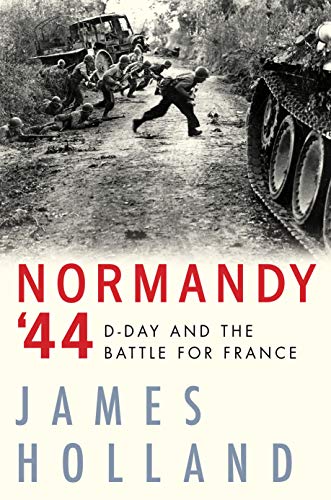
  • Normandy ’44: D-Day and the Epic 77-Day Battle for France

    D-Day, June 6, 1944, and the seventy-six days of bitter fighting in Normandy that followed the Allied landing, have become the defining episode of World War II in the west―the object of books, films, television series, and documentaries. Yet as familiar as it is, as James Holland makes clear in his definitive history, many parts of the OVERLORD campaign, as it was known, are still shrouded in myth and assumed knowledge.

    Drawing freshly on widespread archives and on the testimonies of eye-witnesses, Holland relates the extraordinary planning that made Allied victory in France possible; indeed, the story of how hundreds of thousands of men, and mountains of materiel, were transported across the English Channel, is as dramatic a human achievement as any battlefield exploit. The brutal landings on the five beaches and subsequent battles across the plains and through the lanes and hedgerows of Normandy―a campaign that, in terms of daily casualties, was worse than any in World War I―come vividly to life in conferences where the strategic decisions of Eisenhower, Rommel, Montgomery, and other commanders were made, and through the memories of paratrooper Lieutenant Dick Winters of Easy Company, British corporal and tanker Reg Spittles, Thunderbolt pilot Archie Maltbie, German ordnance officer Hans Heinze, French resistance leader Robert Leblanc, and many others.

    For both sides, the challenges were enormous. The Allies confronted a disciplined German army stretched to its limit, which nonetheless caused tactics to be adjusted on the fly. Ultimately ingenuity, determination, and immense materiel strength―delivered with operational brilliance―made the difference. A stirring narrative by a pre-eminent historian, Normandy ‘44 offers important new perspective on one of history’s most dramatic military engagements and is an invaluable addition to the literature of war.

  • LONDON’S ST. PAUL’S SURVIVES OVERNIGHT HIT

    London, England • April 16, 1941 This night and early the next morning in 1941, when London’s his­toric St. Paul’s Cathe­dral was bombed and damaged, marked the start of the final phase of the Blitz (Septem­ber 7, 1940, to May 21, 1941), which reached its climax on May 10 with a deadly raid that hit the House of Com­mons,…

  • MASSIVE ESCAPE OF GERMAN POWs

    Bridgend, South Wales • March 10, 1945 Twenty-two miles west of the Welch capital, Cardiff, was a British prisoner-of-war camp built to house mainly Ger­man but also some Ital­ian pri­soners. Cap­able of accom­mo­dating 2,000 in­mates, the camp was called Island Farm. On this date in 1945, 67 POWs (one source says as many as 84 POWs) escaped from…

  • U.S., BRITISH LEADERS FORMULATE WAR PLANS FOR 1942

    Washington, D.C • December 22, 1941 On this date in 1941 the Japanese public glimpsed their first photos in the news­paper Asahi Shimbun of their country’s devas­tating attack on the U.S. Pacific Fleet at Pearl Harbor, Hawaii, the worst mili­tary catas­trophe in Amer­i­can history. On the same date, Presi­dent Frank­lin D. Roose­velt, British Prime Minis­ter…

  • ALLIES DENOUNCE NAZI KILLING OF JEWS

    Washington, D.C. and London, England • December 17, 1942 In remarks he made to 14 senior Nazis at a top-secret con­fer­ence in the fashion­able Berlin suburb of Wann­see on Janu­ary 22, 1942, 38‑year-old SS-Ober­gruppen­fuehrer Rein­hard Hey­drich, chief of the Reich Security Head [or Main] Office as also head of the German secret police apparatus, spoke of…

  • MEDICAL AIR EVAC PLANE VANISHES OVER ALBANIA

    Bari, Italy • November 8, 1943 On this date in 1943, 13 U.S. Army flight nurses, 13 young enlisted medics, and 3 flight crew boarded a Douglas C‑53 trans­port in Sicily for a 90‑minute flight to Bari on the Italian main­land. As a unit of the 807th Medical Air Evacu­a­tion Squa­dron, the team’s assign­ment was to…

  • CANADIAN-BRITISH FORCE TASKED TO OPEN ANTWERP PORT

    Antwerp, Belgium • November 1, 1944 After the Allied breakout from Nor­mandy in North­western France begin­ning on August 13, 1944, German forces stub­bornly held the French and Belgian English Chan­nel ports. Thus the Western Allies were forced to bring all supplies for their rapidly east­ward advancing armies from the Mul­berry arti­fi­cial harbor they had opened off…

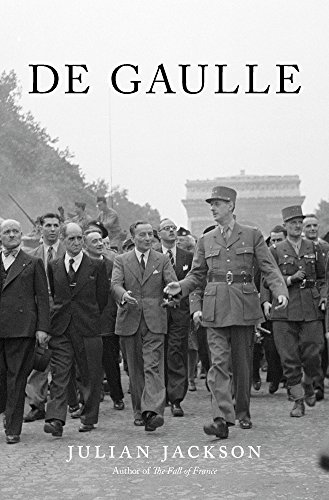
  • De Gaulle

    “A masterly study of Charles de Gaulle…that leaves not a scintilla of doubt about his greatness.”
    Sunday Times

    “In crafting the finest one-volume life of de Gaulle in English, Julian Jackson has come closer than anyone before him to demystifying this conservative at war with the status quo, for whom national interests were inseparable from personal honor.”
    ―Richard Norton Smith, Wall Street Journal

    In the early summer of 1940, when France was overrun by German troops, one junior general who had fought in the trenches in Verdun refused to accept defeat. He fled to London, where he took to the radio to address his compatriots back home. “Whatever happens,” he said, “the flame of French resistance must not be extinguished and will not be extinguished.” At that moment, Charles de Gaulle entered history.

    For the rest of the war, de Gaulle insisted he and his Free French movement were the true embodiment of France. Through sheer force of personality he inspired French men and women to risk their lives to resist the Nazi occupation. Sometimes aloof but confident in his leadership, he quarreled violently with Churchill and Roosevelt. Yet they knew they would need his help to rebuild a shattered Europe. Thanks to de Gaulle, France was recognized as one of the victorious Allies when Germany was finally defeated. Then, as President of the Fifth Republic, he brought France to the brink of a civil war over his controversial decision to pull out of Algeria. He challenged American hegemony, took France out of NATO, and twice vetoed British entry into the European Community in his pursuit of what he called “a certain idea of France.”

    Julian Jackson’s magnificent biography, the first major reconsideration in over twenty years, captures this titanic figure as never before. Drawing on the extensive resources of the recently opened de Gaulle archives, Jackson reveals the conservative roots of de Gaulle’s intellectual formation, sheds new light on his relationship with Churchill, and shows how he confronted riots at home and violent independence movements from the Middle East to Vietnam. No previous biography has so vividly depicted this towering figure whose legacy remains deeply contested.