FRANCE

  • CHURCHILL ORDERS DUNKIRK RESCUE

    London, England · May 19, 1940 Following Britain and France’s decla­ra­tion of war on Ger­many on Septem­ber 3, 1939, neither of the Allies com­mitted to launching a signi­fi­cant land offen­sive against Adolf Hitler’s Ger­many as punish­ment for the invasion of its eastern neighbor, Poland. The most the Brit­ish were pre­pared to do was deploy a 315,000‑man…

  • GERMANS OVERWHELM DUTCH DEFENDERS

    Rotterdam, Netherlands · May 14, 1940 On this date in 1940 in Holland, the Ger­man Luft­waffe bombed Rotter­dam’s medi­e­val city cen­ter, killing nearly 1,000 people and leaving 85,000 home­less. Rather than endure more bombings—leaf­lets dropped on Utrecht indi­cated it was next Dutch city in Ger­man cross­hairs—the Dutch army surren­dered the next day. The Ger­man offen­sive against the…

  • DRY RUN INVASION ENDS TRAGICALLY

    Slapton Sands, Devonshire Coast, Southwest England · April 28, 1944 Shortly after midnight on this date in 1944 Ger­man torpe­do boats (E-boats, or Schnell­boote in Ger­man) on a rou­tine patrol out of Cher­bourg in occupied France sud­denly found them­selves in the middle of Oper­a­tion (or Exer­cise) Tiger (code­named T‑4), a con­voy of eight Amer­i­can LSTs…

  • ALLIES PLEDGE MUTUAL ASSISTANCE

    London, England · April 13, 1939 Following the Nazi occupation of Czecho­slo­va­kia’s Ger­man-speaking Sude­ten­land in Octo­ber 1938 and the in­va­sion and in­cor­po­ra­tion of the rest of Czecho­slo­va­kia into the Reich in mid-March 1939, Great Brit­ain, France, Poland, Greece, and Roma­nia entered into mutu­al assist­ance pacts in case of a mili­tary in­va­sion by “a Euro­pean power,”…

  • HITLER, MUSSOLINI HOLD SUMMIT

    Brenner Pass, Austria · March 18, 1940 On this date in 1940 on the Austro-Italian border, German leader Adolf Hitler and Ital­ian strong­man Benito Musso­lini met for their fifth face-to-face meeting. Hitler had requested the sum­mit in order to force Il Duce (Italian, “the leader”) to take sides within the frame­work of the so-called Pact…

  • EISENHOWER TAKES COMMAND OF LIBERATION ARMY

    London, England · January 15, 1944 On this date in 1944 Gen. Dwight D. Eisenhower assumed com­mand of the Allied Expe­di­tion­ary Force pre­paring to lib­er­ate France from the strangle­hold of Adolf Hitler’s Nazi Ger­many. A month earlier Presi­dent Franklin D. Roose­velt had desig­nated the 53‑year‑old army gen­e­ral Su­preme Allied Com­mand­er for Opera­tion Over­lord, the inva­sion of…

  • VOTERS WANT UNION WITH GERMANY

    Saarbruecken, Saarland, Germany · January 13, 1935 On this date in 1935 Germans held a plebiscite in the only part of Ger­many that remained under for­eign occu­pa­tion following their country’s defeat in World War I—the Saar region, or Saar­land in German. The wealth of its coal de­pos­its and their large-scale in­dus­trial exploi­ta­tion, coupled with its loca­tion…

  • HITLER PRESSES POLAND OVER DANZIG ENCLAVE

    Berlin, Germany · January 5, 1939 On this date in 1939, eight months before the armed forces of Nazi Ger­many surged over Polish borders to launch World War II in Europe, Ger­man Chan­cellor Adolf Hitler told Poland’s visiting Foreign Min­is­ter Józef Beck that Ger­many would guar­an­tee his coun­try’s fron­tiers were a “final settle­ment” reached over the…

  • | |

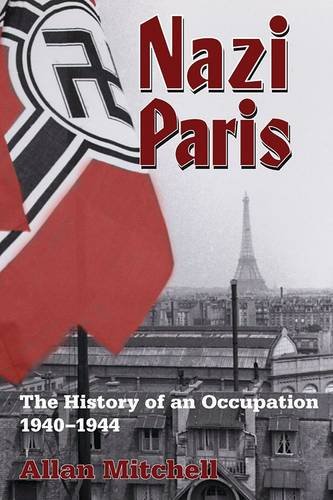
    Nazi Paris: The History of an Occupation, 1940-1944

    CHOICE OUTSTANDING ACADEMIC TITLE 2009

    “…an essential book. It provides precise facts and figures for many issues that have heretofore been presented in impressionistic terms.” · The International History Review

    Basing his extensive research into hitherto unexploited archival documentation on both sides of the Rhine, Allan Mitchell has uncovered the inner workings of the German military regime from the Wehrmacht’s triumphal entry into Paris in June 1940 to its ignominious withdrawal in August 1944. Although mindful of the French experience and the fundamental issue of collaboration, the author concentrates on the complex problems of occupying a foreign territory after a surprisingly swift conquest. By exploring in detail such topics as the regulation of public comportment, economic policy, forced labor, culture and propaganda, police activity, persecution and deportation of Jews, assassinations, executions, and torture, this study supersedes earlier attempts to investigate the German domination and exploitation of wartime France. In doing so, these findings provide an invaluable complement to the work of scholars who have viewed those dark years exclusively or mainly from the French perspective.