FRANCE

  • CITIZENS WITNESS LIBERATION BY FIRELIGHT

    Sainte-Mère-Église, Liberated France • June 5, 1944 On this date in 1944 the stolid citizens of Sainte-Mère-Église, located near the cen­ter of the Coten­tin Penin­sula in Nor­mandy, France, retired to their beds on the eve of the largest air- and sea­borne inva­sion in history—Oper­a­tion Over­lord. As early as 1942, U.S. mili­tary planners had been eyeing…

  • ALLIES DISRUPT GERMAN DEFENSES IN FRANCE

    London, England • June 1, 1944 In June 1942 members of the French Resis­tance pro­vided British intel­li­gence with a copy of the top-secret blue­print of portions of Adolf Hitler’s Atlan­tic Wall—part of the defenses against the anti­ci­pated Allied in­va­sion of West­ern Europe. The map had been spirited from the office of the German public works…

  • NAZIS DEPLOY MIDGET SUBS IN FRANCE

    Off the Normandy Coast, France • May 29, 1944 The German Kriegsmarine experimented with a half-dozen stealthy combat vessels that could send torpe­does crashing into Allied ships. Perhaps the most unusual was the Neger (“Negro,” a play on the name of its designer, Richard Mohr, i.e., Moor). Almost 25 ft long, the battery-powered Neger was shaped…

  • GERMANY INVADES FRANCE, LOW COUNTRIES

    Paris, France • May 10, 1940 On this date in 1940 the German Wehrmacht (armed forces) began its western offen­sive, the dual con­quest of France, like Great Britain at war with Nazi Germany since Septem­ber 3, 1939, and the neutral Low Coun­tries. The year before, on Octo­ber 9, 1939, five weeks after setting in motion the con­quest…

  • HITLER, MUSSOLINI HOLD SUMMIT

    Brenner Pass, Austria • March 18, 1940 On this date in 1940 on the Austro-Italian border, German leader Adolf Hitler and Ital­ian strong­man Benito Musso­lini met for their fifth face-to-face meeting. Hitler had requested the sum­mit in order to force Il Duce (Italian, “the leader”) to take sides within the frame­work of the so-called Pact of…

  • GERMAN TROOPS ENTER PARIS; FRENCH GOVERNMENT FLEES

    Paris, Occupied France · June 14, 1940 On this date in 1940 German troops marched into a half-empty Paris, forcing the French govern­ment to move to Tours, then to Bor­deaux on the French Atlantic coast, where for the third time since the Franco-Prussian war of 1870–71 it set up an im­promptu national head­quarters. In a…

  • ALLIES PLEDGE MUTUAL ASSISTANCE VS. AXIS

    London, England • April 13, 1939 Following the Nazi occupation of Czecho­slo­va­kia’s Ger­man-speaking Sude­ten­land in Octo­ber 1938 and the in­va­sion and in­cor­po­ra­tion of the rest of Czecho­slo­va­kia into the Reich in mid-March 1939, Great Britain, France, Poland, Greece, and Roma­nia entered into mutu­al assist­ance pacts in case of a mili­tary in­va­sion by “a Euro­pean power,”…

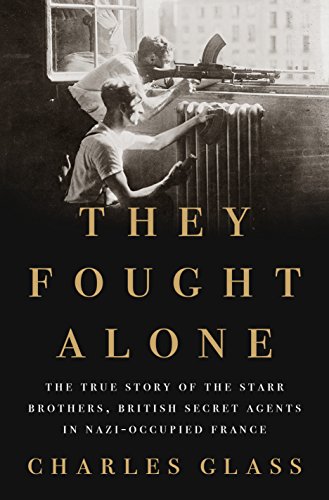
  • They Fought Alone: The True Story of the Starr Brothers, British Secret Agents in Nazi-Occupied France

    “Highly detailed and fast-paced, Charles Glass’s They Fought Alone is a must-read for those whose passion is the Resistance literature of World War II.” —Alan Furst, author of A Hero of France

    From the bestselling author of Americans in Paris and The Deserters, the astounding story of Britain’s Special Operations Executive, one of World War II’s most important secret fighting forces

    As far as the public knew, Britain’s Special Operations Executive (SOE) did not exist. After the defeat of the French Army and Britain’s retreat from the Continent in June 1940, Prime Minister Winston Churchill created the top-secret espionage operation to “set Europe ablaze.” The agents infiltrated Nazi-occupied territory, parachuting behind enemy lines and hiding in plain sight, quietly but forcefully recruiting, training, and arming local French résistants to attack the German war machine. SOE would not only change the course of the war, but the nature of combat itself. Of the many brave men and women conscripted, two Anglo-American recruits, the Starr brothers, stood out to become legendary figures to the guerillas, assassins, and saboteurs they led.

    While both brothers were sent across the channel to organize against the Germans, their fates in war could hardly have been more different. Captain George Starr commanded networks of résistants in southwest France, cutting German communications, destroying weapons factories, and delaying the arrival of Nazi troops to Normandy by seventeen days after D-Day. Younger brother Lieutenant John Starr laid groundwork for resistance in the Burgundy countryside until he was betrayed, captured, tortured, and imprisoned by the Nazis in France and sent to a series of concentration camps in Germany and Austria. Feats of boldness and bravado were many, but appalling scandals, including George’s supposed torture and execution of Nazis prisoners, and John’s alleged collaboration with his German captors, overshadowed them all. At the war’s end, Britain, France, and the United States awarded both brothers medals for heroism, and George would become one of only three among thousands of SOE operatives to achieve the rank of colonel. Yet, their battle honors did little to allay postwar allegations against them, and when they returned to England, their government accused both brothers of heinous war crimes.

    Here, for the first time, is the story of one of the great clandestine organizations of World War II, and of two heroic brothers whose ordeals during and after the war challenged the accepted myths of Britain’s wartime resistance in occupied France. Written with complete and unrivaled access to only recently declassified documents from Britain’s SOE files, French archives, family letters, diaries, and court records, along with interviews from surviving wartime Resistance fighters, They Fought Alone is a real-life thriller. Renowned journalist and war correspondent Charles Glass exposes a dramatic tale of spies, sabotage, and the daring men and women who risked everything to change the course of World War II.


  • GERMANS CRUSH DUTCH DEFENSES

    Rotterdam, The Netherlands • May 14, 1940 On this date in 1940 in Holland, the German Luft­waffe bombed Rotter­dam’s medi­e­val city cen­ter, killing nearly 1,000 people and leaving 85,000 home­less. Rather than endure more fero­cious bombings—leaf­lets dropped on Utrecht indi­cated it was next Dutch city in German cross­hairs—the Dutch Army surren­dered the next day. The German…

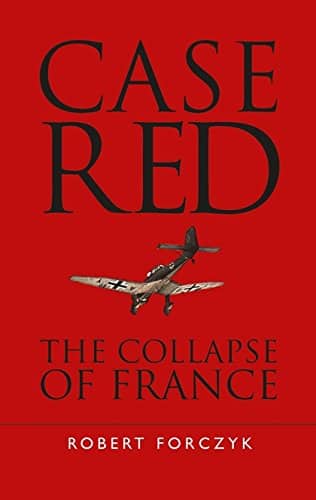
  • Case Red: The Collapse of France

    Although the story of the German Fall Gelb offensive against France, Belgium, and Holland in May 1940 is well known, most accounts tend to stop with the conclusion of the evacuation of the British Expeditionary Force (BEF) from Dunkirk on June 4, 1940. The German operation that actually conquered metropolitan France, Fall Rot (Case Red), is usually glossed over in brief. Nor are many people aware today that there was a second BEF in France, which was also successfully evacuated by sea. The current literature on the Western campaign of 1940 essentially spotlights the German drive to the English Channel and the Dunkirk evacuation then skips ahead to the French armistice, skipping over the military, political, and human drama of France’s collapse in June 1940.

    Indeed, some of the most interesting military operations of the 1940 campaign were conducted in June 1940, as the Allies mounted a vigorous counterattack at Abbeville (including the British 1st Armoured Division–the first time that the British Army employed an armored division in combat) and then mounted a tough defense along the Somme River. Unlike the easy breakthrough at Sedan, the Germans had to fight hard to break through the Weygand Line. Churchill decided to send a second BEF to France to support the French, but the Germans finally achieved a decisive breakthrough before it could be effectively deployed. The British were forced to mount a second evacuation from the ports of Le Havre, Cherbourg, Brest, and St. Nazaire, which rescued over 200,000 troops, although the transport RMS Lancastria was sunk by German bombers, with the loss of over 4,000 troops. While France was in its death throes, politicians and soldiers debated what to do–flee to England or North Africa or to seek an armistice.

    The drama of the final three weeks of military operations in France in June 1940 has never effectively been captured on paper, but this is a story that needs to be told since it had great impact on the course of World War II and inter-Allied relations. This book will also address the initial German exploitation of France and how the windfall of captured military equipment, fuel and industrial resources enhanced the Third Reich’s ability to attack its next foe–the Soviet Union.