FRENCH RESISTANCE

  • CHURCHILL-DE GAULLE MISSTEP ON D-DAY EVE

    London, England · June 2, 1944 In June 1943 in Algeria, North Africa, the Free French founded the French Com­mit­tee of National Libera­tion. Much poli­tical maneu­vering was needed to merge the Free French, whose nu­cleus con­sisted of French­men who had escaped Ger­man cap­ture at Dun­kirk (May 26 to June 4, 1940), with poli­ti­cians and armed forces from…

  • ALLIES DISRUPT GERMAN DEFENSES IN FRANCE

    London, England · June 1, 1944 In June 1942 members of the French Resis­tance pro­vided British intel­li­gence with a copy of the top-secret blue­print of portions of Adolf Hitler’s Atlan­tic Wall—part of the defenses against the anti­ci­pated Allied in­va­sion of West­ern Europe. The map had been spirited from the office of the Ger­man public works…

  • FRANCE BEGINS TO EMPTY ITSELF OF JEWS

    Paris, Occupied France · May 27, 1942 On May 10, 1940, Adolf Hitler, having ended Poland’s exis­tence in Sep­tem­ber 1939, turned his wrath on the demo­cra­cies in the West. The Nether­lands and Bel­gium capit­u­lated to his war ma­chine in May. Repre­sen­ta­tives of Marshal Philippe Pétain, who had recently been named premier of the French Third…

  • EISENHOWER TAKES COMMAND OF LIBERATION ARMY

    London, England · January 15, 1944 On this date in 1944 Gen. Dwight D. Eisenhower assumed com­mand of the Allied Expe­di­tion­ary Force pre­paring to lib­er­ate France from the strangle­hold of Adolf Hitler’s Nazi Ger­many. A month earlier Presi­dent Franklin D. Roose­velt had desig­nated the 53‑year‑old army gen­e­ral Su­preme Allied Com­mand­er for Opera­tion Over­lord, the inva­sion of…

  • | |

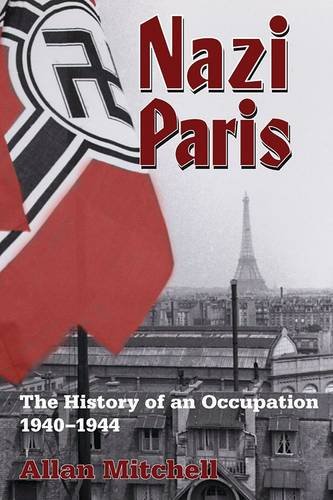
    Nazi Paris: The History of an Occupation, 1940-1944

    CHOICE OUTSTANDING ACADEMIC TITLE 2009

    “…an essential book. It provides precise facts and figures for many issues that have heretofore been presented in impressionistic terms.” · The International History Review

    Basing his extensive research into hitherto unexploited archival documentation on both sides of the Rhine, Allan Mitchell has uncovered the inner workings of the German military regime from the Wehrmacht’s triumphal entry into Paris in June 1940 to its ignominious withdrawal in August 1944. Although mindful of the French experience and the fundamental issue of collaboration, the author concentrates on the complex problems of occupying a foreign territory after a surprisingly swift conquest. By exploring in detail such topics as the regulation of public comportment, economic policy, forced labor, culture and propaganda, police activity, persecution and deportation of Jews, assassinations, executions, and torture, this study supersedes earlier attempts to investigate the German domination and exploitation of wartime France. In doing so, these findings provide an invaluable complement to the work of scholars who have viewed those dark years exclusively or mainly from the French perspective.