Dismantling Democracy
BRAND NEW, Exactly same ISBN as listed, Please double check ISBN carefully before ordering.


BRAND NEW, Exactly same ISBN as listed, Please double check ISBN carefully before ordering.

Soon to be a major motion picture from Pascal Pictures, starring Tom Holland.
Based on the true story of a forgotten hero, the #1 Amazon Charts bestseller Beneath a Scarlet Sky is the triumphant, epic tale of one young man’s incredible courage and resilience during one of history’s darkest hours.
Pino Lella wants nothing to do with the war or the Nazis. He’s a normal Italian teenager—obsessed with music, food, and girls—but his days of innocence are numbered. When his family home in Milan is destroyed by Allied bombs, Pino joins an underground railroad helping Jews escape over the Alps, and falls for Anna, a beautiful widow six years his senior.
In an attempt to protect him, Pino’s parents force him to enlist as a German soldier—a move they think will keep him out of combat. But after Pino is injured, he is recruited at the tender age of eighteen to become the personal driver for Adolf Hitler’s left hand in Italy, General Hans Leyers, one of the Third Reich’s most mysterious and powerful commanders.
Now, with the opportunity to spy for the Allies inside the German High Command, Pino endures the horrors of the war and the Nazi occupation by fighting in secret, his courage bolstered by his love for Anna and for the life he dreams they will one day share.
Fans of All the Light We Cannot See, The Nightingale, and Unbroken will enjoy this riveting saga of history, suspense, and love.
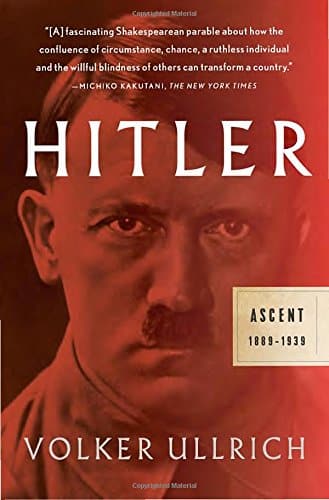
Winner of the Los Angeles Times Book Prize for Biography
A New York Times bestseller, this major new biography of Hitler puts an emphasis on the man himself: his personality, his temperament, and his beliefs.
Volker Ullrich’s Hitler, the first in a two-volume biography, has changed the way scholars and laypeople alike understand the man who has become the personification of evil. Drawing on previously unseen papers and new scholarly research, Ullrich charts Hitler’s life from his childhood through his experiences in the First World War and his subsequent rise as a far-right leader. Focusing on the personality behind the policies, Ullrich creates a vivid portrait of a man and his megalomania, political skill, and horrifying worldview. Hitler is a landmark biography with unsettling resonance in these times.
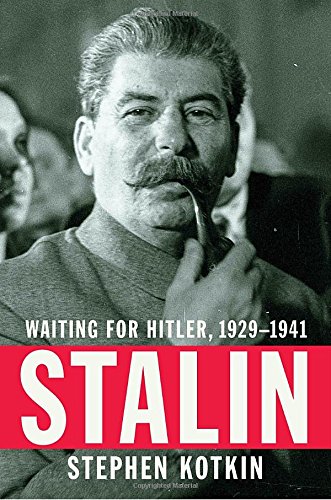
Pulitzer Prize-finalist Stephen Kotkin has written the definitive biography of Joseph Stalin, from collectivization and the Great Terror to the conflict with Hitler’s Germany that is the signal event of modern world history
In 1929, Joseph Stalin, having already achieved dictatorial power over the vast Soviet Empire, formally ordered the systematic conversion of the world’s largest peasant economy into “socialist modernity,” otherwise known as collectivization, regardless of the cost.
What it cost, and what Stalin ruthlessly enacted, transformed the country and its ruler in profound and enduring ways. Building and running a dictatorship, with life and death power over hundreds of millions, made Stalin into the uncanny figure he became. Stephen Kotkin’s Stalin: Waiting for Hitler, 1929–1941 is the story of how a political system forged an unparalleled personality and vice versa.
The wholesale collectivization of some 120 million peasants necessitated levels of coercion that were extreme even for Russia, and the resulting mass starvation elicited criticism inside the party even from those Communists committed to the eradication of capitalism. But Stalin did not flinch. By 1934, when the Soviet Union had stabilized and socialism had been implanted in the countryside, praise for his stunning anti-capitalist success came from all quarters. Stalin, however, never forgave and never forgot, with shocking consequences as he strove to consolidate the state with a brand new elite of young strivers like himself. Stalin’s obsessions drove him to execute nearly a million people, including the military leadership, diplomatic and intelligence officials, and innumerable leading lights in culture.
While Stalin revived a great power, building a formidable industrialized military, the Soviet Union was effectively alone and surrounded by perceived enemies. The quest for security would bring Soviet Communism to a shocking and improbable pact with Nazi Germany. But that bargain would not unfold as envisioned. The lives of Stalin and Hitler, and the fates of their respective dictatorships, drew ever closer to collision, as the world hung in the balance.
Stalin: Waiting for Hitler, 1929–1941 is a history of the world during the build-up to its most fateful hour, from the vantage point of Stalin’s seat of power. It is a landmark achievement in the annals of historical scholarship, and in the art of biography.
Ottawa, Canada • December 30, 1941 On December 28, 1941, British Prime Minister Winston Churchill left Washington’s Union Station, the capital’s major train station, for Canada. Six days earlier Churchill and his military and civilian advisers had arrived in the United States aboard the Royal Navy’s newly commissioned battleship, the HMS Duke of York, to…
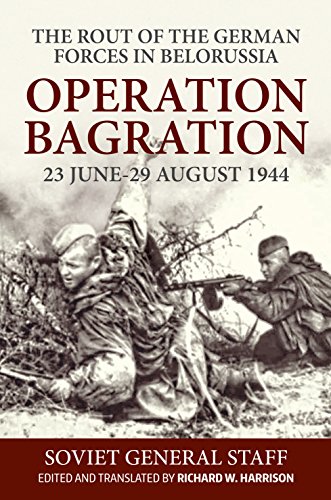
This book describes two Soviet offensive operations carried out during September and October 1944. The first was the operation for the occupation of Bulgaria – known as the ‘Bulgarian operation’; the second was the Belgrade offensive operation, which was carried out immediately after the Bulgarian operation. Although separate, the two operations were closely linked to each other: the first was conducted in an almost peaceful manner, which saved resources. This necessitated that the Soviet Command carried out the second operation promptly, which seriously endangered the encirclement of German Army Group position in the Southern Balkans. Pressed by the advancing Red Army, the German troops withdrew from the territories of Greece and Albania. They also relocated fresh forces from the Western Balkans to the Bulgarian-Yugoslav Border in order to build up a defense line.
The book describes in detail the heavy battles during the Belgrade offensive operation. Both combatants suffered from the same problems: heavy mountainous terrain; poor roads and infrastructure; and severe weather conditions. This is one of the few Soviet offensives which started without a large superiority of their forces over those of the enemy. The German soldiers were trained to fight in mountainous conditions, and the Soviets were not. The Soviet armament was more modern, but heavier. Additionally, it was not designed to move on the narrow and steep mountain roads. Therefore, the success of this offensive operation was unclear for a long time. The German Command was but a step away from turning Belgrade into a fortress, and slowing down the war in the region for months. The Soviet troops won, but as a result of very tough fighting. After Bulgaria joined the Allied forces, its military forces were subject to the command of the 3rd Ukrainian Front. The commander of the Front used this new ally to the max – thus conserving Soviet forces. There is also a short description of the activities of the Bulgarian troops, who undertook a secondary offensive from the Aegean Sea to the town of Nis in Southern Serbia.
The book describes the operations of both ground and air forces. Special attention is paid to the Soviet tank and mechanized units which participated in both operations, and the book benefits from a detailed set of daily statistics and accompanying analysis which has not been attempted before. As well as a detailed narrative, the author also provides information covering camouflage, markings and unit insignia. The authoritative text is supported by more than 400 photographs (the majority of them previously unpublished); full-color profiles showing the aforementioned camouflage, markings and unit insignia; and also full-color battle maps. This book is a result of the author’s years spent studying documents from the Russian Federation’s Central Archives of the Ministry of Defense and the Bulgarian State Military Historical Archives. Such a detailed study on this topic has not appeared before – and the author’s work is unlikely to be superseded.
Stalingrad, Soviet Union • November 1, 1942 By one German count, over five million Red Army soldiers had been taken prisoner since Adolf Hitler unleashed Operation Barbarossa, the invasion of the Soviet Union begun 16 months earlier. As for the number of Soviet service personnel killed and disabled, there was only a rough estimate, but clearly…
Prague, Czechoslovakia • August 3, 1945 Following Germany’s defeat in 1945, Czechoslovakia’s president Edvard Beneš pursued a policy of “no mercy” toward the roughly three million ethnic Germans and Hungarians living in his country. The 61‑year-old Beneš had held the same office of president in prewar Czechoslovakia when, abandoned by his French and British allies,…
The Berghof, Bavaria, Germany • July 11, 1944 Adolf Hitler had been the target of four assassination attempts before he became head of state in January 1933 and perhaps two dozen afterwards. On this date in 1944 Lt. Col. Claus von Stauffenberg arrived at the Berghof on the Obersalzberg, Hitler’s Bavarian retreat near Berchtesgaden, carrying a…
Berlin, Germany • July 1, 1937 On this date in 1937 the Gestapo (German secret police) arrested outspoken Lutheran theologian and pastor Martin Niemoeller. The next year Niemoeller, still incarcerated, was tried by a three-judge “special court” (a Nazi Sondergericht) for activities against the State. Niemoeller’s court-appointed defense counsel defended the cleric, insisting Niemoeller had raised…