PACIFIC THEATER

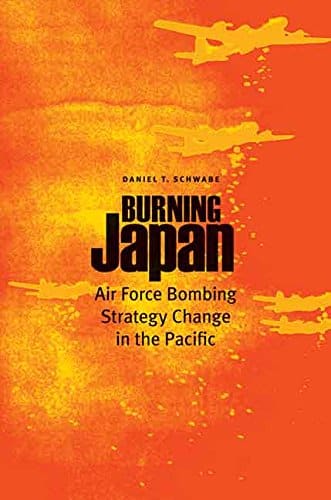
  • Burning Japan: Air Force Bombing Strategy Change in the Pacific

    Between the grinding battles of the Philippines, Iwo Jima, and Okinawa and the finality of the atomic bomb strikes on Hiroshima and Nagasaki, the U.S. Air Force conducted a bombing campaign against the Japanese home islands that escalated to new levels of destruction.


    Burning Japan is an investigation of how and why the air force shifted its tactics against Japan from a precision bombing strategy to area attacks. The guiding doctrine of the 1930s and 1940s called for focused attacks on specific targets deep behind enemy lines. Eager to prove itself, the nascent Army Air Force at first lauded the indispensability of strategic bombardment in areas otherwise unreachable by the army or navy. But when strategic bombing failed to yield the desired results in Europe and in initial efforts against Japan, the United States switched tactics, a shift that culminated in the area firebombing of nearly every major Japanese metropolis and the burning of sixty-six cities to the ground.


    Daniel T. Schwabe closely examines the planning and implementation of these incendiary missions to determine how an organization dedicated to precision decided on such a dramatic change in tactics. Ultimately, Schwabe maintains, this strategic reimagining helped create a comprehensive offensive strategy that did immense amounts of destruction which crippled Japan and brought an end to World War II.
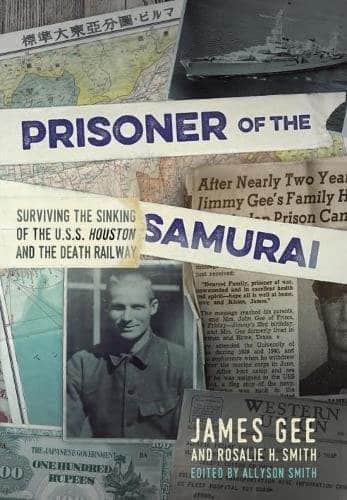

     

  • Prisoner of the Samurai: Surviving the Sinking of the USS Houston and the Death Railway

    During World War II, Lt. Rosalie Hamric was an R.N., serving as Charge Nurse in the Psychiatric Ward of the Guantanamo Bay Naval Hospital. At the end of the war, a group of liberated prisoners of war from Southeast Asia, survivors of the sinking of the USS Houston in 1942, was sent to the ward for treatment. Many were encouraged to write down their experiences as part of their therapy. One, James Gee, PFC, USMC did a particularly detailed job. His account covers the sinking of the Houston, his rescue by a Japanese ship, and his experiences in Japanese camps over the next three years.

    Initially a prisoner in Java forced to load and unload enemy ships, then in Batavia, he was then transferred to Burma where he worked on the “death railway,” living on the banks of the River Kwai. Those who survived the hard labor and harsh conditions there would be sent onto Thailand, then Singapore before arriving in Japan in 1945, spending the last few months of the war working in coal mines just 40 miles outside Nagasaki. Rosalie worked his accounts into a manuscript, which following her sudden death, languished in an attic for over thirty years. Now rediscovered, James’s story can be told to a new generation.

  • JAPAN TO WORLD: FRENCH INDOCHINA IS NOW OURS

    Saigon (Ho Chi Minh City), French Indochina • July 25, 1941 On September 21, 1937, Japanese planes bombed the capi­tal of China, Nan­king, shortly after igniting the Second Sino-Japa­nese War. Presi­dent Franklin D. Roose­velt expressed the shock of “every civil­ized man and woman” over “the ruth­less bombing” of Chinese civil­ians. Gen­er­ally, how­ever, U.S. and Euro­pean reac­tion…

  • DUTCH SURRENDER EAST INDIES

    Batavia (Jakarta), Dutch East Indies • March 8, 1942 The mineral- and oil-rich Dutch East Indies (today’s Indo­nesia) was Japan’s next colo­nial tar­get in the Pacific Theater—this after Allied resis­tance had col­lapsed in the British Crown colony of Sin­ga­pore (Febru­ary 15, 1942) and all but did so in the U.S. Philip­pines with Gen. Douglas Mac­Arthur’s forces holed…

  • CHURCHILL ADDRESSES CANADIAN LAWMAKERS

    Ottawa, Canada • December 30, 1941 On December 28, 1941, British Prime Minister Winston Chur­chill left Wash­ing­ton’s Union Station, the capital’s major train station, for Canada. Six days ear­lier Chur­chill and his mili­tary and civil­ian advisers had arrived in the United States aboard the Royal Navy’s newly com­mis­sioned battle­ship, the HMS Duke of York, to…

  • U.S. DECLARES WAR ON JAPAN

    Washington, D.C. • December 8, 1941 At 12:30 p.m. on this this rainy and blustery day in 1941, standing before a joint ses­sion of the U.S. Con­gress and a world listening by radio, the 32nd Presi­dent of the United States, Franklin D. Roose­velt, laid seve­ral type­written sheets on the speaker’s podium. The day before, the…

  • RECORD YEAR-END DELIVERY OF B-29s

    Washington, D.C. · December 31, 1943 By this date in 1943 Boeing delivered its 92nd B‑29 Super­for­tress to the U.S. govern­ment after the giant bomber began rolling off the assem­bly line the pre­vious Septem­ber. Even before the coun­try was at war and govern­ment funds had been allo­cated, Boeing had produced a proto­type of the long-range…

  • CHURCHILL ADDRESSES U.S. AND CANADIAN LAWMAKERS

    Ottawa, Canada · December 30, 1941 On December 28, 1941, British Prime Minister Winston Chur­chill left Wash­ing­ton’s Union Sta­tion for Canada. Six days ear­lier Chur­chill and his mili­tary and civil­ian advisers had arrived in the nation’s capi­tal to meet with their Amer­i­can and Cana­dian counter­parts. The visit by the two heads of state between Christ­mas…