PEARL HARBOR

  • JAPANESE SEIZE RABAUL, AUSSIE ISLAND OUTPOST

    Darwin, Northern Territory, Australia • January 23, 1942 On this date in 1942, over a month after Pearl Harbor, 20,000 Japa­nese Marines quickly over­ran the 1,400‑man Aus­tra­lian gar­ri­son at Rabaul, New Brit­ain, the largest island in the Bis­marck Archi­pel­ago (labeled “Niu Briten” on map below). Rabaul’s cap­ture was impor­tant because of its prox­im­ity to the Caro­line…

  • U.S., BRITISH LEADERS FORMULATE WAR PLANS FOR 1942

    Washington, D.C • December 22, 1941 On this date in 1941 the Japanese public glimpsed their first photos in the news­paper Asahi Shimbun of their country’s devas­tating attack on the U.S. Pacific Fleet at Pearl Harbor, Hawaii, the worst mili­tary catas­trophe in Amer­i­can history. On the same date, Presi­dent Frank­lin D. Roose­velt, British Prime Minis­ter…

  • ROOSEVELT, CHURCHILL TO PLOT WAR ON AXIS ENEMY

    Aboard HMS Duke of York • December 12, 1941 On this date in 1941 British Prime Minister Winston Chur­chill, fearing that the im­medi­ate im­pact of Japan’s attack on the U.S. naval and air bases at Pearl Harbor in Hawaii would be a retreat into an “Amer­ica-comes-first” pos­ture, boarded the British battle­ship HMS Duke of York,…

  • JAPAN DELIVERS FINAL PEACE OFFER TO U.S.

    Washington, D.C. • November 20, 1941 On this date in 1941 in Washington, Japanese ambassador Kichisa­burō Nomura pre­sented his govern­ment’s final pro­posal for peace in the Asia Pacific region. Through much of 1941, Ambas­sador Nomura had nego­ti­ated with U.S. Secre­tary of State Cordell Hull to resolve fes­tering bi­lat­eral issues. Chief among the issues were the…

  • JAPAN’S LEADER KONOE RESIGNS, TŌJŌ REPLACEMENT?

    Tokyo, Japan • October 16, 1941 On this date in 1941 three-time Prime Minister of Japan Prince Fumimaro Konoe resigned from office. Konoe (also rendered Konoye) had lost the sup­port of cabi­net and Army minis­ter Gen. Hideki Tōjō, who called for a firmer line with the admin­is­tra­tion of Presi­dent Franklin D. Roose­velt over the U.S….

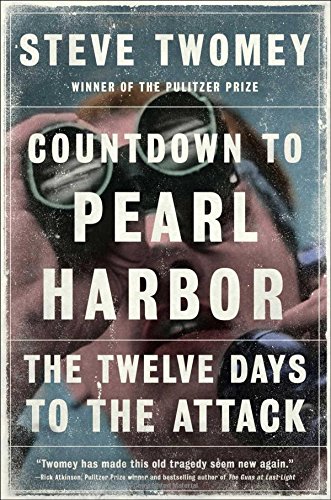
  • Countdown to Pearl Harbor: The Twelve Days to the Attack

    A Smithsonian Top History Book of 2016
    A Japan Times Best Book About Japan of 2016

    A fascinating look at the twelve days leading up to the Japanese attack on Pearl Harbor—the warnings, clues and missteps—by a Pulitzer Prize–winning reporter.

    In Washington, DC, in late November 1941, admirals compose the most ominous message in Navy history to warn Hawaii of possible danger, but they write it too vaguely. They think precautions are being taken, but never check to see if they are. A key intelligence officer wants more warnings sent, but he is on the losing end of a bureaucratic battle and can’t get the message out. American sleuths have pierced Japan’s most vital diplomatic code, and Washington believes it has a window on the enemy’s soul—but it does not.

    In a small office at Pearl Harbor, overlooking the battleships at the heart of America’s seafaring power, the Commander of the Pacific Fleet tries to figure out how much danger he really faces. His intelligence unit has lost track of Japan’s biggest aircraft carriers, but assumes they are resting in a port far away. The admiral thinks Pearl is too shallow for torpedoes, so he never puts up a barrier. As he frets, a Japanese spy is counting the warships in the harbor and reporting to Tokyo.

    There were false assumptions, and racist ones: The Japanese aren’t very good aviators and they don’t have the nerve or the skill to attempt a strike so far from their home. There were misunderstandings, conflicting desires, painful choices. And there was a naval officer who, on his very first mission as captain of his very first ship, did exactly the right thing. His warning could have averted disaster, but his superiors reacted too leisurely. Japanese planes arrived moments later.

    Twomey’s telescoping of the twelve days leading to the attack unravels the crucial characters and moments, and produces an edge-of-your seat drama with fascinating details about America at this moment in its history. By the end, the reader understands how assumption is the root of disaster, and how sometimes a gamble pays off.


  • DUTCH SURRENDER EAST INDIES

    Batavia (Jakarta), Dutch East Indies • March 8, 1942 The mineral- and oil-rich Dutch East Indies (today’s Indo­nesia) was Japan’s next colo­nial tar­get in the Pacific Theater—this after Allied resis­tance had col­lapsed in the British Crown colony of Sin­ga­pore (Febru­ary 15, 1942) and all but did so in the U.S. Philip­pines with Gen. Douglas Mac­Arthur’s forces holed…

  • CHURCHILL ADDRESSES CANADIAN LAWMAKERS

    Ottawa, Canada • December 30, 1941 On December 28, 1941, British Prime Minister Winston Chur­chill left Wash­ing­ton’s Union Station, the capital’s major train station, for Canada. Six days ear­lier Chur­chill and his mili­tary and civil­ian advisers had arrived in the United States aboard the Royal Navy’s newly com­mis­sioned battle­ship, the HMS Duke of York, to…

  • U.S. DECLARES WAR ON JAPAN

    Washington, D.C. • December 8, 1941 At 12:30 p.m. on this this rainy and blustery day in 1941, standing before a joint ses­sion of the U.S. Con­gress and a world listening by radio, the 32nd Presi­dent of the United States, Franklin D. Roose­velt, laid seve­ral type­written sheets on the speaker’s podium. The day before, the…

  • CHURCHILL ADDRESSES U.S. AND CANADIAN LAWMAKERS

    Ottawa, Canada · December 30, 1941 On December 28, 1941, British Prime Minister Winston Chur­chill left Wash­ing­ton’s Union Sta­tion for Canada. Six days ear­lier Chur­chill and his mili­tary and civil­ian advisers had arrived in the nation’s capi­tal to meet with their Amer­i­can and Cana­dian counter­parts. The visit by the two heads of state between Christ­mas…