PETAIN

  • JAPAN TO GARRISON FRENCH INDOCHINA

    Vichy, France · September 22, 1940 As early as June 1940, after French resistance to the Ger­man con­quest of France crumbled, Japan made over­tures to French author­ities for per­mis­sion to sta­tion troops in French Indo­china (now Viet­nam, Laos, and Cam­bodia) and for their war­ships to take up naval sta­tions off north­ern Indo­chinese ports. On this…

  • VICHY’S PÉTAIN FACES TREASON CHARGES

    Paris, France · July 23, 1945 Following the military defeat of France by Nazi Ger­many in June 1940, World War I hero Marshal Philippe Pétain pro­claimed a new French govern­ment on July 10, 1940. Pétain held the title of “Presi­dent of the Coun­cil” instead of Pre­si­dent of France. His govern­ment, which accorded him extra­ordi­nary powers, was offi­cially…

  • FRENCH POLICE SWEEP PARIS OF JEWS

    Paris, Occupied France · July 16, 1942 On June 22, 1940, repre­sen­tatives of Marshal Philippe Pétain, premier of the French Third Republic, signed a cease­fire with Germany, 44 days after the Wehr­macht had invaded France. Early that October Pétain’s collab­o­ra­tionist Vichy govern­ment—named after the resort com­mu­ni­ty in which his admin­is­tration had settled—approved the first French anti-Semi­tic…

  • FRENCH RESISTANCE TAKES ON WEHRMACHT

    Mont Mouchet, South-Central France · June 20, 1944 During the Allied invasion of France (Operation Overlord), the Maquis and other French resis­tance groups played a role in delaying the arri­val of Ger­man rein­force­ments to the Nor­mandy beach­head as well as in the even­tual Allied vic­tory in France. The FFI (Forces Fran­çaises de l’Inte­rieur for “French…

  • STALIN SEIZES LATVIA, HITLER HALTS WAR IN FRANCE

    Munich, Germany · June 17, 1940 On this date in 1940 Joseph Stalin of the Soviet Union, drawing on pro­vi­sions of the sec­ret pro­to­col in the August 1939 Molotov-Rib­ben­trop Non­aggression Pact with his Nazi ally, ordered an attack on the Baltic state of Lat­via. (The 1939 pro­to­col had already returned divi­dends to the two con­spira­tor…

  • GERMAN TROOPS TAKE PARIS; FRENCH GOV’T FLEES

    Paris, Occupied France · June 14, 1940 On this date in 1940 German troops marched into Paris, forcing the French govern­ment to move to Tours, then to Bor­deaux, where it set up an im­promptu head­quarters. In a futile plea to U.S. Presi­dent Franklin D. Roose­velt, the French govern­ment under Prime Min­is­ter Paul Rey­naud im­plored the…

  • FRANCE BEGINS TO EMPTY ITSELF OF JEWS

    Paris, Occupied France · May 27, 1942 On May 10, 1940, Adolf Hitler, having ended Poland’s exis­tence in Sep­tem­ber 1939, turned his wrath on the demo­cra­cies in the West. The Nether­lands and Bel­gium capit­u­lated to his war ma­chine in May. Repre­sen­ta­tives of Marshal Philippe Pétain, who had recently been named premier of the French Third…

  • | |

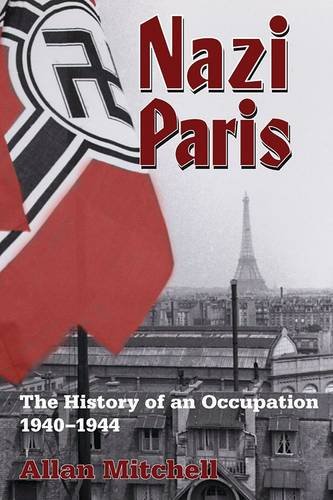
    Nazi Paris: The History of an Occupation, 1940-1944

    CHOICE OUTSTANDING ACADEMIC TITLE 2009

    “…an essential book. It provides precise facts and figures for many issues that have heretofore been presented in impressionistic terms.” · The International History Review

    Basing his extensive research into hitherto unexploited archival documentation on both sides of the Rhine, Allan Mitchell has uncovered the inner workings of the German military regime from the Wehrmacht’s triumphal entry into Paris in June 1940 to its ignominious withdrawal in August 1944. Although mindful of the French experience and the fundamental issue of collaboration, the author concentrates on the complex problems of occupying a foreign territory after a surprisingly swift conquest. By exploring in detail such topics as the regulation of public comportment, economic policy, forced labor, culture and propaganda, police activity, persecution and deportation of Jews, assassinations, executions, and torture, this study supersedes earlier attempts to investigate the German domination and exploitation of wartime France. In doing so, these findings provide an invaluable complement to the work of scholars who have viewed those dark years exclusively or mainly from the French perspective.