ROOSEVELT

  • U.S., BRITISH LEADERS FORMULATE WAR PLANS FOR 1942

    Washington, D.C • December 22, 1941 On this date in 1941 the Japanese public glimpsed their first photos in the news­paper Asahi Shimbun of their country’s devas­tating attack on the U.S. Pacific Fleet at Pearl Harbor, Hawaii, the worst mili­tary catas­trophe in Amer­i­can history. On the same date, Presi­dent Frank­lin D. Roose­velt, British Prime Minis­ter…

  • U-BOATS SET TO TARGET U.S. EAST COAST SHIPPING

    Berlin, Germany • December 13, 1941 On this date in 1941, just 2 days after Germany and the U.S. had declared war on each other, U‑boat Adm. Karl Doenitz initi­ated the Kriegs­marine’s wolf pack cam­paign against ill-pre­pared mer­chant shipping along the Cana­dian and U.S. east­ern and Gulf sea­boards. (Wolf packs con­sisted of a group of…

  • ROOSEVELT, CHURCHILL TO PLOT WAR ON AXIS ENEMY

    Aboard HMS Duke of York • December 12, 1941 On this date in 1941 British Prime Minister Winston Chur­chill, fearing that the im­medi­ate im­pact of Japan’s attack on the U.S. naval and air bases at Pearl Harbor in Hawaii would be a retreat into an “Amer­ica-comes-first” pos­ture, boarded the British battle­ship HMS Duke of York,…

  • JAPAN DELIVERS FINAL PEACE OFFER TO U.S.

    Washington, D.C. • November 20, 1941 On this date in 1941 in Washington, Japanese ambassador Kichisa­burō Nomura pre­sented his govern­ment’s final pro­posal for peace in the Asia Pacific region. Through much of 1941, Ambas­sador Nomura had nego­ti­ated with U.S. Secre­tary of State Cordell Hull to resolve fes­tering bi­lat­eral issues. Chief among the issues were the…

  • FIVE SULLIVAN BROTHERS LOST WITH CRUISER

    Off Savo Island, Solomon Islands, South Pacific • November 13, 1942 Commissioned on February 14, 1942, the light antiaircraft cruiser USS Juneau (CL‑52), named after the capital city of Alaska, first saw ser­vice in the Carib­bean, where it per­formed block­ade patrol in early May off Marti­nique and Gua­de­loupe Islands to pre­vent the escape of Vichy French…

  • JAPAN’S LEADER KONOE RESIGNS, TŌJŌ REPLACEMENT?

    Tokyo, Japan • October 16, 1941 On this date in 1941 three-time Prime Minister of Japan Prince Fumimaro Konoe resigned from office. Konoe (also rendered Konoye) had lost the sup­port of cabi­net and Army minis­ter Gen. Hideki Tōjō, who called for a firmer line with the admin­is­tra­tion of Presi­dent Franklin D. Roose­velt over the U.S….

  • ROOSEVELT, CHURCHILL IN SECRET DISCUSSIONS

    Quebec, Canada • August 18, 1943 On this date in 1943 in Quebec, Canada, President Franklin D. Roose­velt, British Prime Minis­ter Winston Chur­chill, and Cana­dian Prime Minis­ter Mac­kenzie King, along with their Com­bined Chiefs of Staff, set to work plan­ning Opera­tion Over­lord, the 1944 inva­sion of German-occupied France. At this first of two Quebec con­ferences,…

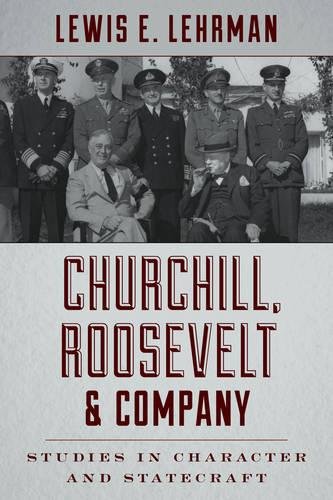
  • Churchill, Roosevelt & Company: Studies in Character and Statecraft

    During World War II the “special relationship” between the United States and Great Britain cemented the alliance that won the war in the West. But the ultimate victory of that partnership has obscured many of the conflicts behind Franklin Roosevelt’s charm and Winston Churchill’s victory signs—the clashes of principles and especially personalities between and within the leadership of the two nations.

    Synthesizing an impressive variety of sources from memoirs and letters to histories and biographies, Lewis E. Lehrman explains how the Anglo-American alliance worked—and occasionally did not work—by presenting portraits and case studies of the men who worked the back channels and back rooms, the generals and the admirals, the secretaries and under secretaries, ambassadors and ministers, responsible for carrying out Roosevelt’s and Churchill’s agendas while also pursuing their own. Such was the conduct of Joseph Kennedy, American ambassador to England often at odds with FDR; generals George C. Marshall and Dwight D. Eisenhower; spymasters William Donovan and William Stephenson; Secretary of State Cordell Hull, whom FDR frequently bypassed in favor of Under Secretary Sumner Welles; the Soviet spy in the leadership cadre of the US Treasury, Harry Dexter White, and his struggle with Lord Keynes; British ambassadors Lord Lothian and Lord Halifax; and, above them all, Roosevelt and Churchill. The President and the Prime Minister had the difficult task, not always well-performed, of managing their subordinates. Churchill and Roosevelt frequently chose to conduct foreign policy directly between themselves, and with Stalin.

    Scrupulous in its research and fair in its judgments, Lehrman’s book reveals the personal diplomacy, the character and statecraft, at the core of the leadership of the Anglo-American alliance.


  • JAPAN TO WORLD: FRENCH INDOCHINA IS NOW OURS

    Saigon (Ho Chi Minh City), French Indochina • July 25, 1941 On September 21, 1937, Japanese planes bombed the capi­tal of China, Nan­king, shortly after igniting the Second Sino-Japa­nese War. Presi­dent Franklin D. Roose­velt expressed the shock of “every civil­ized man and woman” over “the ruth­less bombing” of Chinese civil­ians. Gen­er­ally, how­ever, U.S. and Euro­pean reac­tion…