RUSSIA

  • HITLER PLOTS SOVIETS’ RUIN WITH OPERATION BARBAROSSA

    Berlin, Germany • December 18, 1940 On this date in 1940 in Berlin, one day before receiving the credentials of the new Soviet am­bas­sador to Germany, Adolf Hitler signed Fuehrer Direc­tive 21, Opera­tion Barba­rossa (Unter­neh­men Barba­rossa), thereby ini­ti­ating the secret pre­pa­ra­tions and mili­tary opera­tions that led to the Axis inva­sion of the Soviet Union on June 22,…

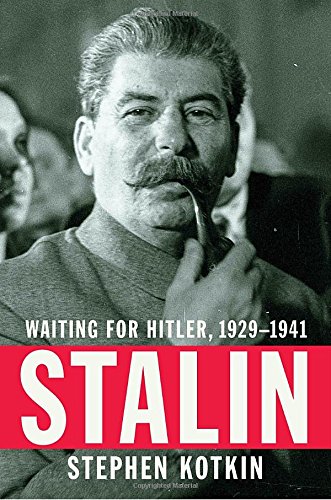
  • Stalin: Waiting for Hitler, 1929-1941

    Pulitzer Prize-finalist Stephen Kotkin has written the definitive biography of Joseph Stalin, from collectivization and the Great Terror to the conflict with Hitler’s Germany that is the signal event of modern world history
     
    In 1929, Joseph Stalin, having already achieved dictatorial power over the vast Soviet Empire, formally ordered the systematic conversion of the world’s largest peasant economy into “socialist modernity,” otherwise known as collectivization, regardless of the cost.
     
    What it cost, and what Stalin ruthlessly enacted, transformed the country and its ruler in profound and enduring ways. Building and running a dictatorship, with life and death power over hundreds of millions, made Stalin into the uncanny figure he became. Stephen Kotkin’s Stalin: Waiting for Hitler, 1929–1941 is the story of how a political system forged an unparalleled personality and vice versa.
     
    The wholesale collectivization of some 120 million peasants necessitated levels of coercion that were extreme even for Russia, and the resulting mass starvation elicited criticism inside the party even from those Communists committed to the eradication of capitalism. But Stalin did not flinch. By 1934, when the Soviet Union had stabilized and socialism had been implanted in the countryside, praise for his stunning anti-capitalist success came from all quarters. Stalin, however, never forgave and never forgot, with shocking consequences as he strove to consolidate the state with a brand new elite of young strivers like himself. Stalin’s obsessions drove him to execute nearly a million people, including the military leadership, diplomatic and intelligence officials, and innumerable leading lights in culture.
     
    While Stalin revived a great power, building a formidable industrialized military, the Soviet Union was effectively alone and surrounded by perceived enemies. The quest for security would bring Soviet Communism to a shocking and improbable pact with Nazi Germany. But that bargain would not unfold as envisioned. The lives of Stalin and Hitler, and the fates of their respective dictatorships, drew ever closer to collision, as the world hung in the balance.
     
    Stalin: Waiting for Hitler, 1929–1941 is a history of the world during the build-up to its most fateful hour, from the vantage point of Stalin’s seat of power. It is a landmark achievement in the annals of historical scholarship, and in the art of biography.

  • HITLER PLANS OPERATION BARBAROSSA, SOVIETS’ RUIN

    Berlin, Germany · December 18, 1940 On this date in 1940 in Berlin, one day before receiving the credentials of the new Soviet am­bas­sador to Germany, Adolf Hitler signed Fuehrer Direc­tive 21, Opera­tion Bar­ba­rossa (Unter­neh­men Bar­ba­rossa), thereby ini­ti­ating the secret pre­pa­ra­tions and mili­tary opera­tions that led to the Axis inva­sion of the Soviet Union on June 22,…

  • HITLER PLANS OPERATION BARBAROSSA, SOVIETS’ RUIN

    Berlin, Germany · December 18, 1940 On this date in 1940 in Berlin, one day before receiving the credentials of the new Soviet am­bas­sador to Germany, Adolf Hitler signed Fuehrer Direc­tive 21, Opera­tion Bar­ba­rossa (Unter­neh­men Bar­ba­rossa), thereby ini­ti­ating the secret pre­pa­ra­tions and mili­tary opera­tions that led to the Axis inva­sion of the Soviet Union on June 22,…

  • Battlefield – Russia: The Eastern Front – As Seen On PBS [Blu-ray]

    Turning sights and cameras to the Eastern front, this intense documentary retells the story of three amazing battles with intimate details of weapons used, the leaders and commanders and their strategies. This set includes The Battle for Russia, The Battle for Stalingrad and The Battle for Berlin . 2010/color-b&w/6 hrs/NR.

  • The Winter War: Russia’s Invasion of Finland, 1939-1940

    “Edwards recounts events, both shameful and heroic, with insight, conviction and considerable wit.”—Publishers Weekly

    On November 30, 1939, the Soviet Union’s Red Army invaded the young nation-state of Finland, in the full expectation of routing the small, ill-equipped Finnish army and annexing the former Russian territory by the end of the year. But Finland held out for 105 bitterly cold, fiercely combative days, until March 15, 1940, when a peace agreement ended the short, savage Winter War.

    At the stirring center of the story lie the resourcefulness and resolve of the Finnish people, who against all military odds—in want of ammunition, food, sleep, and troops—fought a blundering, ineptly commanded Red Army to a standstill. On March 15, they ceded to the Soviet 11 percent of their territory and 30 percent of their economic assets, but none of their national pride.

    The Russians meanwhile had markedly damaged their international standing and effectively ruined their military reputation-to such an extent, as this probing chapter in World War II history demonstrates, that Germany, with proud-blooded Finland as an ally, dared to launch its 1940 invasion of Russia. At the same time, though, the fiasco of the Winter War forced Stalin to acknowledge the shortcomings of the Red Army and to reform it: Germany would fall at Stalingrad in 1941.

    With authority, this skillfully narrated military history unfolds its story of the four-month Soviet-Finnish war and explores its consequences from London to Moscow, from Helsinki to Paris, to Washington, DC. 20 black-and-white illustrations

  • The Winter War: Russia’s Invasion of Finland, 1939-1940

    “Edwards recounts events, both shameful and heroic, with insight, conviction and considerable wit.”—Publishers Weekly

    On November 30, 1939, the Soviet Union’s Red Army invaded the young nation-state of Finland, in the full expectation of routing the small, ill-equipped Finnish army and annexing the former Russian territory by the end of the year. But Finland held out for 105 bitterly cold, fiercely combative days, until March 15, 1940, when a peace agreement ended the short, savage Winter War.

    At the stirring center of the story lie the resourcefulness and resolve of the Finnish people, who against all military odds—in want of ammunition, food, sleep, and troops—fought a blundering, ineptly commanded Red Army to a standstill. On March 15, they ceded to the Soviet 11 percent of their territory and 30 percent of their economic assets, but none of their national pride.

    The Russians meanwhile had markedly damaged their international standing and effectively ruined their military reputation-to such an extent, as this probing chapter in World War II history demonstrates, that Germany, with proud-blooded Finland as an ally, dared to launch its 1940 invasion of Russia. At the same time, though, the fiasco of the Winter War forced Stalin to acknowledge the shortcomings of the Red Army and to reform it: Germany would fall at Stalingrad in 1941.

    With authority, this skillfully narrated military history unfolds its story of the four-month Soviet-Finnish war and explores its consequences from London to Moscow, from Helsinki to Paris, to Washington, DC. 20 black-and-white illustrations

  • BARBAROSSA, OPERATION (JUNE–DECEMBER 1941)

    When June 22 to December 5, 1941 Where The three Baltic states of Estonia, Latvia, and Lithuania, plus present-day Belarus, Ukraine, Moldova, and Western Russia. By July 1941, after Finland had joined the German onslaught to the north of Leningrad, the Eastern Front would eventually stretch from the Baltic Sea in the north to the…

  • LENINGRAD, SIEGE OF (1941–1944)

    When September 8, 1941 to January 27, 1944 (872 days) Where Leningrad (today’s St. Petersburg), Russia Who German Army Group North (on map, Herresgruppe Nord) initially under Field Marshal Wilhelm Ritter von Leeb (1876–1956) with token support to the north and east of Leningrad from German-allied Finnish units under Marshal Carl Gustaf Mannerheim (1867–1951). In…

  • STALINGRAD, BATTLE OF (AUGUST 1942–FEBRUARY 1943)

    When August 23, 1942 to February 2, 1943 Where Stalingrad (today’s Volgograd), an important industrial city of 400,000 people and river and rail terminus on the Volga River Who The German Sixth Army under Gen. Friedrich Paulus (1890–1957); elements of the Fourth Panzer Army under Gen. Hermann Hoth (1885–1971); along with Germany’s satellite armies, the…