

SOVIET UNION

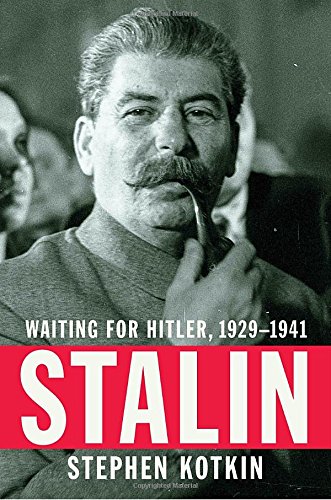
  • Stalin: Waiting for Hitler, 1929-1941

    Pulitzer Prize-finalist Stephen Kotkin has written the definitive biography of Joseph Stalin, from collectivization and the Great Terror to the conflict with Hitler’s Germany that is the signal event of modern world history
     
    In 1929, Joseph Stalin, having already achieved dictatorial power over the vast Soviet Empire, formally ordered the systematic conversion of the world’s largest peasant economy into “socialist modernity,” otherwise known as collectivization, regardless of the cost.
     
    What it cost, and what Stalin ruthlessly enacted, transformed the country and its ruler in profound and enduring ways. Building and running a dictatorship, with life and death power over hundreds of millions, made Stalin into the uncanny figure he became. Stephen Kotkin’s Stalin: Waiting for Hitler, 1929–1941 is the story of how a political system forged an unparalleled personality and vice versa.
     
    The wholesale collectivization of some 120 million peasants necessitated levels of coercion that were extreme even for Russia, and the resulting mass starvation elicited criticism inside the party even from those Communists committed to the eradication of capitalism. But Stalin did not flinch. By 1934, when the Soviet Union had stabilized and socialism had been implanted in the countryside, praise for his stunning anti-capitalist success came from all quarters. Stalin, however, never forgave and never forgot, with shocking consequences as he strove to consolidate the state with a brand new elite of young strivers like himself. Stalin’s obsessions drove him to execute nearly a million people, including the military leadership, diplomatic and intelligence officials, and innumerable leading lights in culture.
     
    While Stalin revived a great power, building a formidable industrialized military, the Soviet Union was effectively alone and surrounded by perceived enemies. The quest for security would bring Soviet Communism to a shocking and improbable pact with Nazi Germany. But that bargain would not unfold as envisioned. The lives of Stalin and Hitler, and the fates of their respective dictatorships, drew ever closer to collision, as the world hung in the balance.
     
    Stalin: Waiting for Hitler, 1929–1941 is a history of the world during the build-up to its most fateful hour, from the vantage point of Stalin’s seat of power. It is a landmark achievement in the annals of historical scholarship, and in the art of biography.

  • STRUGGLE FOR STALINGRAD INTENSIFIES

    Stalingrad, Soviet Union • November 1, 1942 By one German count, over five million Red Army sol­diers had been taken pri­soner since Adolf Hitler unleashed Opera­tion Bar­ba­rossa, the inva­sion of the Soviet Union begun 16 months ear­lier. As for the num­ber of Soviet ser­vice per­son­nel killed and dis­abled, there was only a rough esti­mate, but clearly…

  • FINNISH AID TO DISRUPT NAZI ORE IMPORTS

    London, England · December 19, 1939 In the afternoon of August 23, 1939, Adolf Hitler’s foreign secretary Joachim von Ribben­trop appeared in Moscow’s Krem­lin fortress to sign off on the Nazi-Soviet Non­ag­gres­sion Pact. The 10‑year pact, also known by the twin sur­names of the Soviet foreign minister Vyacheslav Molotov and the German foreign minister Ribben­trop, was…

  • HITLER PLANS OPERATION BARBAROSSA, SOVIETS’ RUIN

    Berlin, Germany · December 18, 1940 On this date in 1940 in Berlin, one day before receiving the credentials of the new Soviet am­bas­sador to Germany, Adolf Hitler signed Fuehrer Direc­tive 21, Opera­tion Bar­ba­rossa (Unter­neh­men Bar­ba­rossa), thereby ini­ti­ating the secret pre­pa­ra­tions and mili­tary opera­tions that led to the Axis inva­sion of the Soviet Union on June 22,…

  • ROOSEVELT’S “VICTORY PLAN” LEAKED

    Chicago, Illinois · December 4, 1941 Early in July 1941, four months after the U.S. Congress had en­acted the Lend-Lease Pro­gram that began assisting Great Brit­ain and China in their defense against the aggressor states of Nazi Ger­many, Fas­cist Italy, and Im­perial Japan, Presi­dent Franklin D. Roose­velt asked his Sec­re­taries of War and the Navy…

  • FREE FRENCH PILOTS TO FLY WITH SOVIET AIR FORCE

    Moscow, Soviet Union · November 28, 1942 On this date in 1942 twelve Free French pilots and their ground crews, flying from newly lib­er­ated Syria in the East­ern Med­i­ter­ra­nean, landed at their Iva­novo training cen­ter, 125 miles north­east of the Soviet capital, Moscow. Earlier in the year, in March, Gen. Charles de Gaulle, leader of the…

  • SOVIETS BEGIN ENCIRCLING GERMAN SIXTH ARMY AT STALINGRAD

    Stalingrad, Soviet Union · November 19, 1942 On this date in 1942 the Soviets kicked off Operation Uranus, Phase I of the Red Army’s en­circle­ment of Gen. Fried­rich Paulus’ Sixth Army (the single-largest Ger­man troop for­ma­tion), as well as the Ger­man Fourth Panzer Army and the Third and Fourth Roma­nian armies at Stalin­grad (today’s Volgo­grad)….

  • CATACLYSMIC STRUGGLE CONTINUES AT STALINGRAD

    Stalingrad, Soviet Union · November 1, 1942 By one German count, over five million Red Army sol­diers had been taken pri­soner since Adolf Hitler unleashed Opera­tion Bar­ba­rossa, the inva­sion of the Soviet Union begun 16 months ear­lier. As for the num­ber of Soviet ser­vice per­son­nel killed and dis­abled, there was only a rough esti­mate, but clearly…

  • MOSCOW BOLSTERS DEFENSES AGAINST GERMAN SIEGE

    Moscow, Soviet Union · October 19, 1941 On this date in 1941, the day the official “state of siege” was declared in the Soviet capi­tal of Mos­cow, Red Army forces from the Soviet Far East and Sibe­ria began arriving on the Rus­sian Front. Soviet dicta­tor Joseph Stalin was con­vinced that evac­u­ating most of his troops…