THIRD REICH

  • GERMAN ANTI-WAR NOVEL DEBUTS

    Berlin, Germany • January 29, 1929 On this date in 1929 Erich Maria Remarque’s All Quiet on the Western Front (German, Im Westen Nichts Neues) debuted in book form after being seri­al­ized in a German news­paper in late 1928. In the story Remarque, who was a con­script during the First World War, described the German…

  • SOVIETS TRAP GERMANS IN HUNGARY’S CAPITAL

    Budapest, Hungary • January 4, 1945 In March 1944 Adolf Hitler ordered the Wehrmacht (German armed forces) to occupy his wavering Axis ally Hun­gary, whose oil reserves and fuel storage tanks at Nagy­kanizsa (German, Gross­kirchen) south­west of the capi­tal Buda­pest in the Lake Balaton (German, Plattensee) area had grown stra­te­gi­cally more impor­tant to the German…

  • U.S., BRITISH LEADERS FORMULATE WAR PLANS FOR 1942

    Washington, D.C • December 22, 1941 On this date in 1941 the Japanese public glimpsed their first photos in the news­paper Asahi Shimbun of their country’s devas­tating attack on the U.S. Pacific Fleet at Pearl Harbor, Hawaii, the worst mili­tary catas­trophe in Amer­i­can history. On the same date, Presi­dent Frank­lin D. Roose­velt, British Prime Minis­ter…

  • CANADIAN-BRITISH FORCE TASKED TO OPEN ANTWERP PORT

    Antwerp, Belgium • November 1, 1944 After the Allied breakout from Nor­mandy in North­western France begin­ning on August 13, 1944, German forces stub­bornly held the French and Belgian English Chan­nel ports. Thus the Western Allies were forced to bring all supplies for their rapidly east­ward advancing armies from the Mul­berry arti­fi­cial harbor they had opened off…

  • The Bitter Taste of Victory: Life, Love and Art in the Ruins of the Reich

    When Germany surrendered in May 1945 it was a nation reduced to rubble. Immediately, America, Britain, Soviet Russia, and France set about rebuilding in their zones of occupation. Most urgent were physical needs–food, water, and sanitation–but from the start the Allies were also anxious to indoctrinate the German people in the ideas of peace and civilization.

    Denazification and reeducation would be key to future peace, and the arts were crucial guides to alternative, less militaristic ways of life. In an extraordinary extension of diplomacy, over the next four years, many writers, artists, actors, and filmmakers were dispatched by Britain and America to help rebuild the country their governments had spent years bombing. Ernest Hemingway, Martha Gellhorn, Marlene Dietrich, George Orwell, Lee Miller, W. H. Auden, Stephen Spender, Billy Wilder, and others undertook the challenge of reconfiguring German society. In the end, many of them became disillusioned by the contrast between the destruction they were witnessing and the cool politics of reconstruction.

    While they may have had less effect on Germany than Germany had on them, the experiences of these celebrated figures, never before told, offer an entirely fresh view of post-war Europe. The Bitter Taste of Victory is a brilliant and important addition to the literature of World War II.


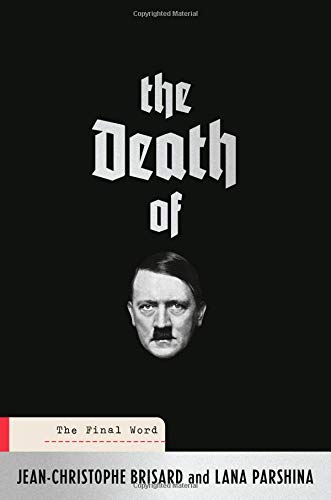
  • The Death of Hitler: The Final Word

    On April 30, 1945, Hitler committed suicide in his bunker as the Red Army closed in on Berlin. Within four days the Soviets had recovered his body. But the truth about what the Russian secret services found was hidden from history, when, three months later, Stalin officially declared to Truman and Churchill that Hitler was still alive and had escaped abroad. Reckless rumors about what really happened to Hitler began to spread like wildfire and, even today, they have not been put to rest. Until now.

    In 2017, after two years of painstaking negotiations with the Russian authorities, award-winning investigative journalists Jean-Christophe Brisard and Lana Parshina gained access to confidential Soviet files that finally revealed the truth behind the incredible hunt for Hitler’s body.

    Their investigation includes new eyewitness accounts of Hitler’s final days, exclusive photographic evidence and interrogation records, and exhaustive research into the power struggle that ensued between Soviet, British, and American intelligence services. And for the first time since the end of World War II, official, cutting-edge forensic tests have been completed on the human remains recovered from the bunker graves–a piece of skull with traces of a lethal bullet, a fragment of bone, and teeth.

    In The Death of Hitler–written as thrillingly as any spy novel–Brisard and Parshina debunk all previous conspiracy theories about the death of the Führer. With breathtaking precision and immediacy they penetrate one of the most powerful and controversial secret services to take readers inside Hitler’s bunker in its last hours–and solve the most notorious cold case in history.

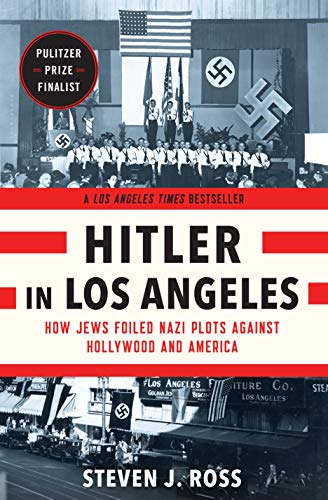
  • Hitler in Los Angeles: How Jews Foiled Nazi Plots Against Hollywood and America

    A 2018 FINALIST FOR THE PULITZER PRIZE

    The chilling, little-known story of the rise of Nazism in Los Angeles, and the Jewish leaders and spies they recruited who stopped it.

    No American city was more important to the Nazis than Los Angeles, home to Hollywood, the greatest propaganda machine in the world. The Nazis plotted to kill the city’s Jews and to sabotage the nation’s military installations: plans existed for hanging twenty prominent Hollywood figures such as Al Jolson, Charlie Chaplin, and Samuel Goldwyn; for driving through Boyle Heights and machine-gunning as many Jews as possible; and for blowing up defense installations and seizing munitions from National Guard armories along the Pacific Coast.

    U.S. law enforcement agencies were not paying close attention–preferring to monitor Reds rather than Nazis–and only Leon Lewis and his daring ring of spies stood in the way. From 1933 until the end of World War II, attorney Leon Lewis, the man Nazis would come to call “the most dangerous Jew in Los Angeles,” ran a spy operation comprised of military veterans and their wives who infiltrated every Nazi and fascist group in Los Angeles. Often rising to leadership positions, this daring ring of spies uncovered and foiled the Nazi’s disturbing plans for death and destruction.

    Featuring a large cast of Nazis, undercover agents, and colorful supporting players, Hitler in Los Angeles, by acclaimed historian Steven J. Ross, tells the story of Lewis’s daring spy network in a time when hate groups had moved from the margins to the mainstream.

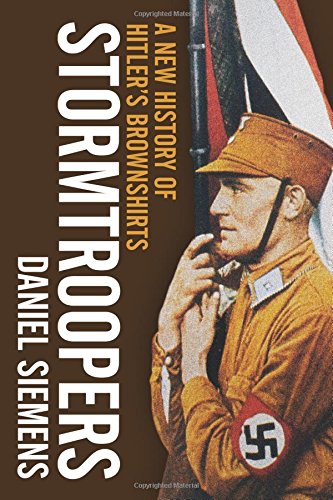
  • Stormtroopers: A New History of Hitler’s Brownshirts

    The first full history of the Nazi Stormtroopers whose muscle brought Hitler to power, with revelations concerning their longevity and their contributions to the Holocaust

    Germany’s Stormtroopers engaged in a vicious siege of violence that propelled the National Socialists to power in the 1930s. Known also as the SA or Brownshirts, these “ordinary” men waged a loosely structured campaign of intimidation and savagery across the nation from the 1920s to the “Night of the Long Knives” in 1934, when Chief of Staff Ernst Röhm and many other SA leaders were assassinated on Hitler’s orders.
     
    In this deeply researched history, Daniel Siemens explores not only the roots of the SA and its swift decapitation but also its previously unrecognized transformation into a million-member Nazi organization, its activities in German-occupied territories during World War II, and its particular contributions to the Holocaust. The author provides portraits of individual members and their victims and examines their milieu, culture, and ideology. His book tells the long-overdue story of the SA and its devastating impact on German citizens and the fate of their country.

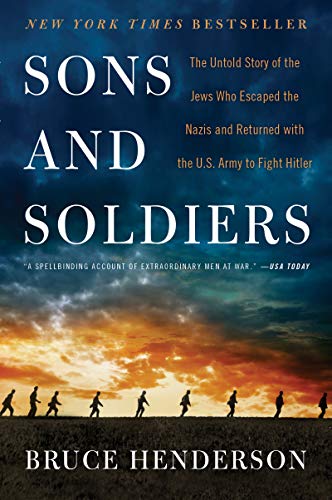
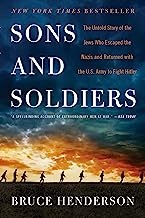
  • Sons and Soldiers: The Untold Story of the Jews Who Escaped the Nazis and Returned with the U.S. Army to Fight Hitler

    NEW YORK TIMES BESTSELLER • “An irresistible history of the WWII Jewish refugees who returned to Europe to fight the Nazis.” —Newsday

    They were young Jewish boys who escaped from Nazi-occupied Europe and resettled in America. After the United States entered the war, they returned to fight for their adopted homeland and for the families they had left behind. Their stories tell the tale of one of the U.S. Army’s greatest secret weapons.

    Sons and Soldiers begins during the menacing rise of Hitler’s Nazi party, as Jewish families were trying des-perately to get out of Europe. Bestselling author Bruce Henderson captures the heartbreaking stories of parents choosing to send their young sons away to uncertain futures in America, perhaps never to see them again. As these boys became young men, they were determined to join the fight in Europe. Henderson describes how they were recruited into the U.S. Army and how their unique mastery of the German language and psychology was put to use to interrogate German prisoners of war.

    These young men—known as the Ritchie Boys, after the Maryland camp where they trained—knew what the Nazis would do to them if they were captured. Yet they leapt at the opportunity to be sent in small, elite teams to join every major combat unit in Europe, where they collected key tactical intelligence on enemy strength, troop and armored movements, and defensive positions that saved American lives and helped win the war. A postwar army report found that nearly 60 percent of the credible intelligence gathered in Europe came from the Ritchie Boys.

    Sons and Soldiers draws on original interviews and extensive archival research to vividly re-create the stories of six of these men, tracing their journeys from childhood through their escapes from Europe, their feats and sacri-fices during the war, and finally their desperate attempts to find their missing loved ones. Sons and Soldiers is an epic story of heroism, courage, and patriotism that will not soon be forgotten.