THIRD REICH

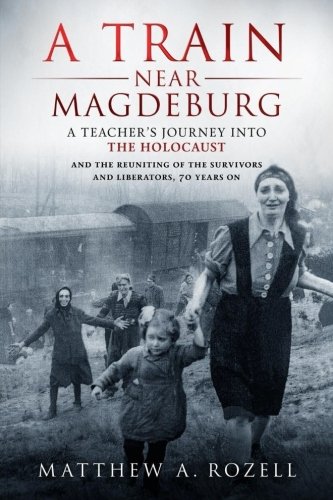
  • A Train Near Magdeburg: A Teacher’s Journey into the Holocaust, and the reuniting of the survivors and liberators, 70…

    What do you do if you are a reluctant soldier, having been shot at, seen your friends killed, and can no longer even remember what your own mother looks like? As a combat soldier fighting your way across Europe, what is the plan when you come across a Holocaust train full of suffering humanity that shocks you to your core, even after you think you have seen it all? And what happens when you get to meet the survivors face to face, two generations later?

    ~ ‘After I got home I cried a lot. My parents couldn’t understand why I couldn’t sleep at times.’-Walter ‘Babe’ Gantz, US Army medic  

    ~From the author of ‘The Things Our Fathers Saw’ World War II eyewitness history series~ 
    In this book, the true story behind an iconic photograph taken at the liberation of a DEATH TRAIN deep in the heart of Nazi Germanybrought to life by the history teacher who discovered it,  and went on to reunite HUNDREDS of Holocaust survivors with the actual American soldiers who saved them! 


    ~ ‘I grew up and spent all my years being angry. This means I don’t have to be angry anymore.’-Paul Arato, Holocaust Survivor

    ~THE HOLOCAUST was a watershed event in history. Drawing on never-before published eye-witness accounts, survivor testimony and memoirs, wartime reports and letters, Matthew Rozell takes us on his journey to uncover the stories behind the incredible 1945 liberation photographs taken by the soldiers who were there. He weaves togethera chronology of the Holocaust as it unfolds across Europe and goes to the authentic sites of the Holocaust to retrace the steps of the survivors and the American soldiers who freed them. His mission culminates in joyful reunions on three continents, seven decades later. Rozell offers his unique perspective on the lessons of the Holocaust for future generations, and the impact that one person, a teacher, can make.
    ~ ‘I survived because of many miracles. But for me to actually meet, shake hands, hug, and cry together with my liberatorsthe ‘angels of life’ who literally gave me back my lifewas just beyond imagination.’-Leslie Meisels, Holocaust Survivor 
    -Featuring testimony from 15 American liberators and over 30 Holocaust survivors
    -73 photographs and illustrations, many never before published
    -10 custom maps
    -502 pages-extensive notes and bibliographical references

    ~ ‘People say it cannot happen here in this country; yes, it can happen here. I was 21 years old. I was there to see it happen!’-Luca Furnari, US Army 

    Included:
    BOOK ONE-THE HOLOCAUST
    BOOK TWO-THE AMERICANS
    BOOK THREE-LIBERATION
    BOOK FOUR-REUNION

    ~ ‘It’s not for my sake, it’s for the sake of humanity, that [you] will remember.’-Steve Barry, Holocaust Survivor


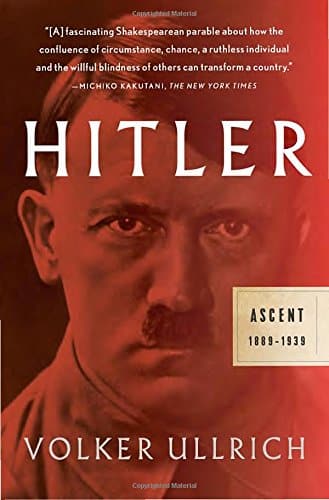
  • Hitler: Ascent, 1889-1939

    Winner of the Los Angeles Times Book Prize for Biography

    A New York Times bestseller, this major new biography of Hitler puts an emphasis on the man himself: his personality, his temperament, and his beliefs.

    Volker Ullrich’s Hitler, the first in a two-volume biography, has changed the way scholars and laypeople alike understand the man who has become the personification of evil. Drawing on previously unseen papers and new scholarly research, Ullrich charts Hitler’s life from his childhood through his experiences in the First World War and his subsequent rise as a far-right leader. Focusing on the personality behind the policies, Ullrich creates a vivid portrait of a man and his megalomania, political skill, and horrifying worldview. Hitler is a landmark biography with unsettling resonance in these times.

  • CHURCHILL ADDRESSES CANADIAN LAWMAKERS

    Ottawa, Canada • December 30, 1941 On December 28, 1941, British Prime Minister Winston Chur­chill left Wash­ing­ton’s Union Station, the capital’s major train station, for Canada. Six days ear­lier Chur­chill and his mili­tary and civil­ian advisers had arrived in the United States aboard the Royal Navy’s newly com­mis­sioned battle­ship, the HMS Duke of York, to…

  • | | |

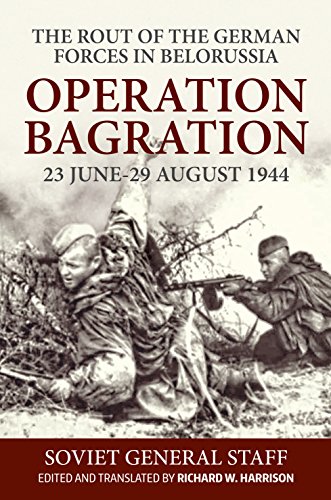
    Red Wind over the Balkans: The Soviet offensive south of the Danube, September-October 1944

    This book describes two Soviet offensive operations carried out during September and October 1944. The first was the operation for the occupation of Bulgaria – known as the ‘Bulgarian operation’; the second was the Belgrade offensive operation, which was carried out immediately after the Bulgarian operation. Although separate, the two operations were closely linked to each other: the first was conducted in an almost peaceful manner, which saved resources. This necessitated that the Soviet Command carried out the second operation promptly, which seriously endangered the encirclement of German Army Group position in the Southern Balkans. Pressed by the advancing Red Army, the German troops withdrew from the territories of Greece and Albania. They also relocated fresh forces from the Western Balkans to the Bulgarian-Yugoslav Border in order to build up a defense line.

    The book describes in detail the heavy battles during the Belgrade offensive operation. Both combatants suffered from the same problems: heavy mountainous terrain; poor roads and infrastructure; and severe weather conditions. This is one of the few Soviet offensives which started without a large superiority of their forces over those of the enemy. The German soldiers were trained to fight in mountainous conditions, and the Soviets were not. The Soviet armament was more modern, but heavier. Additionally, it was not designed to move on the narrow and steep mountain roads. Therefore, the success of this offensive operation was unclear for a long time. The German Command was but a step away from turning Belgrade into a fortress, and slowing down the war in the region for months. The Soviet troops won, but as a result of very tough fighting. After Bulgaria joined the Allied forces, its military forces were subject to the command of the 3rd Ukrainian Front. The commander of the Front used this new ally to the max – thus conserving Soviet forces. There is also a short description of the activities of the Bulgarian troops, who undertook a secondary offensive from the Aegean Sea to the town of Nis in Southern Serbia.

    The book describes the operations of both ground and air forces. Special attention is paid to the Soviet tank and mechanized units which participated in both operations, and the book benefits from a detailed set of daily statistics and accompanying analysis which has not been attempted before. As well as a detailed narrative, the author also provides information covering camouflage, markings and unit insignia. The authoritative text is supported by more than 400 photographs (the majority of them previously unpublished); full-color profiles showing the aforementioned camouflage, markings and unit insignia; and also full-color battle maps. This book is a result of the author’s years spent studying documents from the Russian Federation’s Central Archives of the Ministry of Defense and the Bulgarian State Military Historical Archives. Such a detailed study on this topic has not appeared before – and the author’s work is unlikely to be superseded.

  • U-BOAT TORPEDOES U.S. WARSHIP

    Washington, D.C. • October 17, 1941 Starting on September 1, 1941, two years into the Battle of the Atlantic, U.S. war­ships began es­corting con­voys of Britain-bound mer­chant­men from the North Amer­i­can coast. Con­voys departed from New­found­land off the coast of Canada and ended in the mid-Atlan­tic at Ice­land, a Danish posses­sion whose defense the U.S….

  • CZECH HEAD TELLS GERMAN MINORITY TO GO HOME

    Prague, Czechoslovakia • August 3, 1945 Following Germany’s defeat in 1945, Czechoslovakia’s presi­dent Edvard Beneš pursued a policy of “no mercy” toward the roughly three mil­lion ethnic Ger­mans and Hunga­rians living in his country. The 61‑year-old Beneš had held the same office of presi­dent in pre­war Czecho­slo­vakia when, aban­doned by his French and British allies,…

  • PLOT TO KILL HITLER PUT ON HOLD

    The Berghof, Bavaria, Germany • July 11, 1944 Adolf Hitler had been the target of four assassi­na­tion attempts before he became head of state in January 1933 and perhaps two dozen after­wards. On this date in 1944 Lt. Col. Claus von Stauf­fen­berg arrived at the Berg­hof on the Ober­salzberg, Hitler’s Bava­rian retreat near Berch­tes­gaden, carrying a…

  • NAZIS JAIL OUTSPOKEN PASTOR MARTIN NIEMOELLER

    Berlin, Germany • July 1, 1937 On this date in 1937 the Gestapo (German secret police) arrested out­spoken Lutheran theo­logian and pastor Martin Nie­moeller. The next year Nie­moeller, still incar­ce­rated, was tried by a three-judge “special court” (a Nazi Sonder­gericht) for acti­vi­ties against the State. Nie­moeller’s court-appointed defense coun­sel defended the cleric, insisting Nie­moeller had raised…

  • GERMAN NAVY SINKS BRITISH CARRIER GLORIOUS

    Berlin, Germany · June 8, 1940 In an operation remarkable for its precision and bold­ness, Germany launched Opera­tion Weser­uebung, the invasion of Norway on April 9, 1940, seized its capital, Oslo, and captured the impor­tant port of Narvik in Northern Nor­way. Nar­vik boasted an ice-free harbor during the long Scan­di­na­vian winters, and it was the rail…