U.S. NAVY

  • MUSTARD GAS TRAGEDY IN BARI HARBOR

    Bari, Italy • December 2, 1943 World War I combatants had used a variety of poi­son gases on each other ranging from inca­pa­ci­tating and tem­po­rarily blinding the enemy to gases that burned the body, destroyed the lungs, and lique­fied tis­sues. Some­times their use had un­in­tended con­se­quences, as when the gases inflicted casu­al­ties on the users…

  • ACE U.S. SUB TANG LOST

    Off the China Coast • October 25, 1944 By October 1944 U.S. Navy submarine Tang and her skip­per Richard O’Kane were leg­en­dary. (O’Kane had earlier made a name for him­self aboard the U.S. Navy sub Wahoo as exec­u­tive officer under Dud­ley Walker “Mush” Mor­ton.) The Tang, a 312‑ft Balao-class sub­ma­rine, was credited during the war…

  • U-BOAT SHOOTS SHIPWRECK SURVIVORS

    U-852 in Mid-Atlantic Ocean • March 13, 1944 On this date in 1944 German U‑boat 852, skippered by 28‑year‑old Heinz-Wilhelm Eck, tor­pe­doed the British-chartered Greek freighter SS Peleus as it steamed west across the Atlantic from Free­town, Sierra Leone, to Buenos Aires, Argen­tina. After the Peleus sank, U‑852 patrolled the large debris field for five…

  • WAKE’S U.S. DEFENDERS SURRENDER TO JAPANESE

    Wake Island, Western Pacific Ocean • December 23, 1941 On this date in 1941 Wake Island defenders surrendered after 2 attack waves of 1,000 Japa­nese marines each stormed the beaches. Two days earlier, in their largest attack yet on Wake Island, the Japa­nese had sent 49 aircraft, dive bombers and fighters both, to knock out the last of…

  • U-BOATS SET TO TARGET U.S. EAST COAST SHIPPING

    Berlin, Germany • December 13, 1941 On this date in 1941, just 2 days after Germany and the U.S. had declared war on each other, U‑boat Adm. Karl Doenitz initi­ated the Kriegs­marine’s wolf pack cam­paign against ill-pre­pared mer­chant shipping along the Cana­dian and U.S. east­ern and Gulf sea­boards. (Wolf packs con­sisted of a group of…

  • FIVE SULLIVAN BROTHERS LOST WITH CRUISER

    Off Savo Island, Solomon Islands, South Pacific • November 13, 1942 Commissioned on February 14, 1942, the light antiaircraft cruiser USS Juneau (CL‑52), named after the capital city of Alaska, first saw ser­vice in the Carib­bean, where it per­formed block­ade patrol in early May off Marti­nique and Gua­de­loupe Islands to pre­vent the escape of Vichy French…

  • MEDICAL AIR EVAC PLANE VANISHES OVER ALBANIA

    Bari, Italy • November 8, 1943 On this date in 1943, 13 U.S. Army flight nurses, 13 young enlisted medics, and 3 flight crew boarded a Douglas C‑53 trans­port in Sicily for a 90‑minute flight to Bari on the Italian main­land. As a unit of the 807th Medical Air Evacu­a­tion Squa­dron, the team’s assign­ment was to…

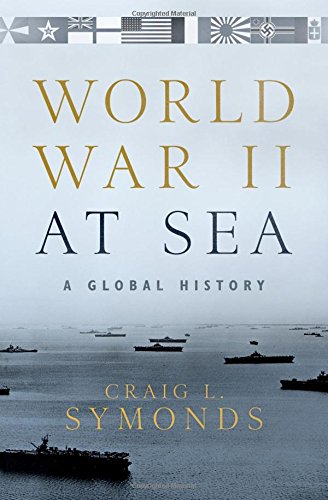
  • World War II at Sea: A Global History

    Author of Lincoln and His Admirals (winner of the Lincoln Prize), The Battle of Midway (Best Book of the Year, Military History Quarterly), and Operation Neptune, (winner of the Samuel Eliot Morison Award for Naval Literature), Craig L. Symonds has established himself as one of the finest naval historians at work today. World War II at Sea represents his crowning achievement: a complete narrative of the naval war and all of its belligerents, on all of the world’s oceans and seas, between 1939 and 1945.

    Opening with the 1930 London Conference, Symonds shows how any limitations on naval warfare would become irrelevant before the decade was up, as Europe erupted into conflict once more and its navies were brought to bear against each other. World War II at Sea offers a global perspective, focusing on the major engagements and personalities and revealing both their scale and their interconnection: the U-boat attack on Scapa Flow and the Battle of the Atlantic; the “miracle” evacuation from Dunkirk and the pitched battles for control of Norway fjords; Mussolini’s Regia Marina-at the start of the war the fourth-largest navy in the world-and the dominance of the Kidö Butai and Japanese naval power in the Pacific; Pearl Harbor then Midway; the struggles of the Russian Navy and the scuttling of the French Fleet in Toulon in 1942; the landings in North Africa and then Normandy. Here as well are the notable naval leaders-FDR and Churchill, both self-proclaimed “Navy men,” Karl Dönitz, François Darlan, Ernest King, Isoroku Yamamoto, Erich Raeder, Inigo Campioni, Louis Mountbatten, William Halsey, as well as the hundreds of thousands of seamen and officers of all nationalities whose live were imperiled and lost during the greatest naval conflicts in history, from small-scale assaults and amphibious operations to the largest armadas ever assembled.

    Many have argued that World War II was dominated by naval operations; few have shown and how and why this was the case. Symonds combines precision with story-telling verve, expertly illuminating not only the mechanics of large-scale warfare on (and below) the sea but offering wisdom into the nature of the war itself.


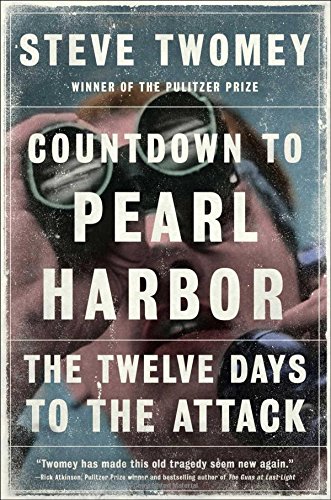
  • Countdown to Pearl Harbor: The Twelve Days to the Attack

    A Smithsonian Top History Book of 2016
    A Japan Times Best Book About Japan of 2016

    A fascinating look at the twelve days leading up to the Japanese attack on Pearl Harbor—the warnings, clues and missteps—by a Pulitzer Prize–winning reporter.

    In Washington, DC, in late November 1941, admirals compose the most ominous message in Navy history to warn Hawaii of possible danger, but they write it too vaguely. They think precautions are being taken, but never check to see if they are. A key intelligence officer wants more warnings sent, but he is on the losing end of a bureaucratic battle and can’t get the message out. American sleuths have pierced Japan’s most vital diplomatic code, and Washington believes it has a window on the enemy’s soul—but it does not.

    In a small office at Pearl Harbor, overlooking the battleships at the heart of America’s seafaring power, the Commander of the Pacific Fleet tries to figure out how much danger he really faces. His intelligence unit has lost track of Japan’s biggest aircraft carriers, but assumes they are resting in a port far away. The admiral thinks Pearl is too shallow for torpedoes, so he never puts up a barrier. As he frets, a Japanese spy is counting the warships in the harbor and reporting to Tokyo.

    There were false assumptions, and racist ones: The Japanese aren’t very good aviators and they don’t have the nerve or the skill to attempt a strike so far from their home. There were misunderstandings, conflicting desires, painful choices. And there was a naval officer who, on his very first mission as captain of his very first ship, did exactly the right thing. His warning could have averted disaster, but his superiors reacted too leisurely. Japanese planes arrived moments later.

    Twomey’s telescoping of the twelve days leading to the attack unravels the crucial characters and moments, and produces an edge-of-your seat drama with fascinating details about America at this moment in its history. By the end, the reader understands how assumption is the root of disaster, and how sometimes a gamble pays off.