WESTERN FRONT

  • DUTCH PAY PRICE, BECOME NAZI VASSALS

    The Hague, Netherlands · May 15, 1940 Following the Dutch surrender on this date in 1940, Adolf Hitler appointed fellow Aus­trian Arthur Seyss-Inquart to be Reichs­kommissar for the Occupied Nether­lands. Previously, long-time Nazi Party mem­ber Seyss-Inquart had served as Reichs­statt­halter (gover­nor) of the new Ger­man pro­vince of Ost­mark, which had once been the inde­pen­dent country of…

  • GERMANS OVERWHELM DUTCH DEFENDERS

    Rotterdam, Netherlands · May 14, 1940 On this date in 1940 in Holland, the Ger­man Luft­waffe bombed Rotter­dam’s medi­e­val city cen­ter, killing nearly 1,000 people and leaving 85,000 home­less. Rather than endure more bombings—leaf­lets dropped on Utrecht indi­cated it was next Dutch city in Ger­man cross­hairs—the Dutch army surren­dered the next day. The Ger­man offen­sive against the…

  • DRY RUN INVASION ENDS TRAGICALLY

    Slapton Sands, Devonshire Coast, Southwest England · April 28, 1944 Shortly after midnight on this date in 1944 Ger­man torpe­do boats (E-boats, or Schnell­boote in Ger­man) on a rou­tine patrol out of Cher­bourg in occupied France sud­denly found them­selves in the middle of Oper­a­tion (or Exer­cise) Tiger (code­named T‑4), a con­voy of eight Amer­i­can LSTs…

  • SOVIETS CAPTURE NUCLEAR PHYSICS INSTITUTE

    Berlin, Germany · April 25, 1945 In the same month World War II began in Europe, Septem­ber 1939, the German Army Wea­pons Agency (Heeres­waffen­amt, or HWA) placed all pro­grams asso­ci­ated with the nation’s nas­cent nu­cle­ar energy pro­ject under its autho­rity. The wea­pons pro­gram even­tu­ally ex­panded into three main efforts: setting up a nu­cle­ar re­ac­tor, pro­ducing…

  • REWARDS LIKELY FROM RADAR STATION RAID

    London, England · February 27, 1942 Under the cover of darkness on this date in 1942, over 100 British para­troopers kicked off Opera­tion Biting when they para­chuted into Nazi-occu­pied Nor­mandy close to a Ger­man radar sta­tion in the tiny vil­lage of La Poterie-Cap-d’An­tifer, 12 miles north of the large French har­bor of Le Havre. A num­ber of…

  • 2ND LIEUTANANT KILLS/WOUNDS 50 ENEMY

    Near Holtzwihr, Colmar Area, Northeastern France · January 26, 1945 On this date in 1945 U.S. Army Second Lt. Audie Murphy, age 20, com­manded an infan­try com­pany when it came under attack from two hun­dred Ger­man infan­try­men and a half dozen tanks on the out­skirts of Holtz­wihr, near Col­mar in north­eastern France. Armed with an M1 car­bine,…

  • EISENHOWER TAKES COMMAND OF LIBERATION ARMY

    London, England · January 15, 1944 On this date in 1944 Gen. Dwight D. Eisenhower assumed com­mand of the Allied Expe­di­tion­ary Force pre­paring to lib­er­ate France from the strangle­hold of Adolf Hitler’s Nazi Ger­many. A month earlier Presi­dent Franklin D. Roose­velt had desig­nated the 53‑year‑old army gen­e­ral Su­preme Allied Com­mand­er for Opera­tion Over­lord, the inva­sion of…

  • | |

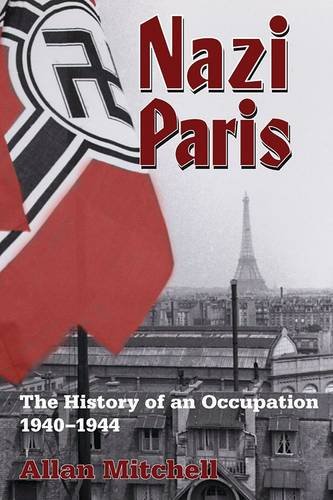
    Nazi Paris: The History of an Occupation, 1940-1944

    CHOICE OUTSTANDING ACADEMIC TITLE 2009

    “…an essential book. It provides precise facts and figures for many issues that have heretofore been presented in impressionistic terms.” · The International History Review

    Basing his extensive research into hitherto unexploited archival documentation on both sides of the Rhine, Allan Mitchell has uncovered the inner workings of the German military regime from the Wehrmacht’s triumphal entry into Paris in June 1940 to its ignominious withdrawal in August 1944. Although mindful of the French experience and the fundamental issue of collaboration, the author concentrates on the complex problems of occupying a foreign territory after a surprisingly swift conquest. By exploring in detail such topics as the regulation of public comportment, economic policy, forced labor, culture and propaganda, police activity, persecution and deportation of Jews, assassinations, executions, and torture, this study supersedes earlier attempts to investigate the German domination and exploitation of wartime France. In doing so, these findings provide an invaluable complement to the work of scholars who have viewed those dark years exclusively or mainly from the French perspective.